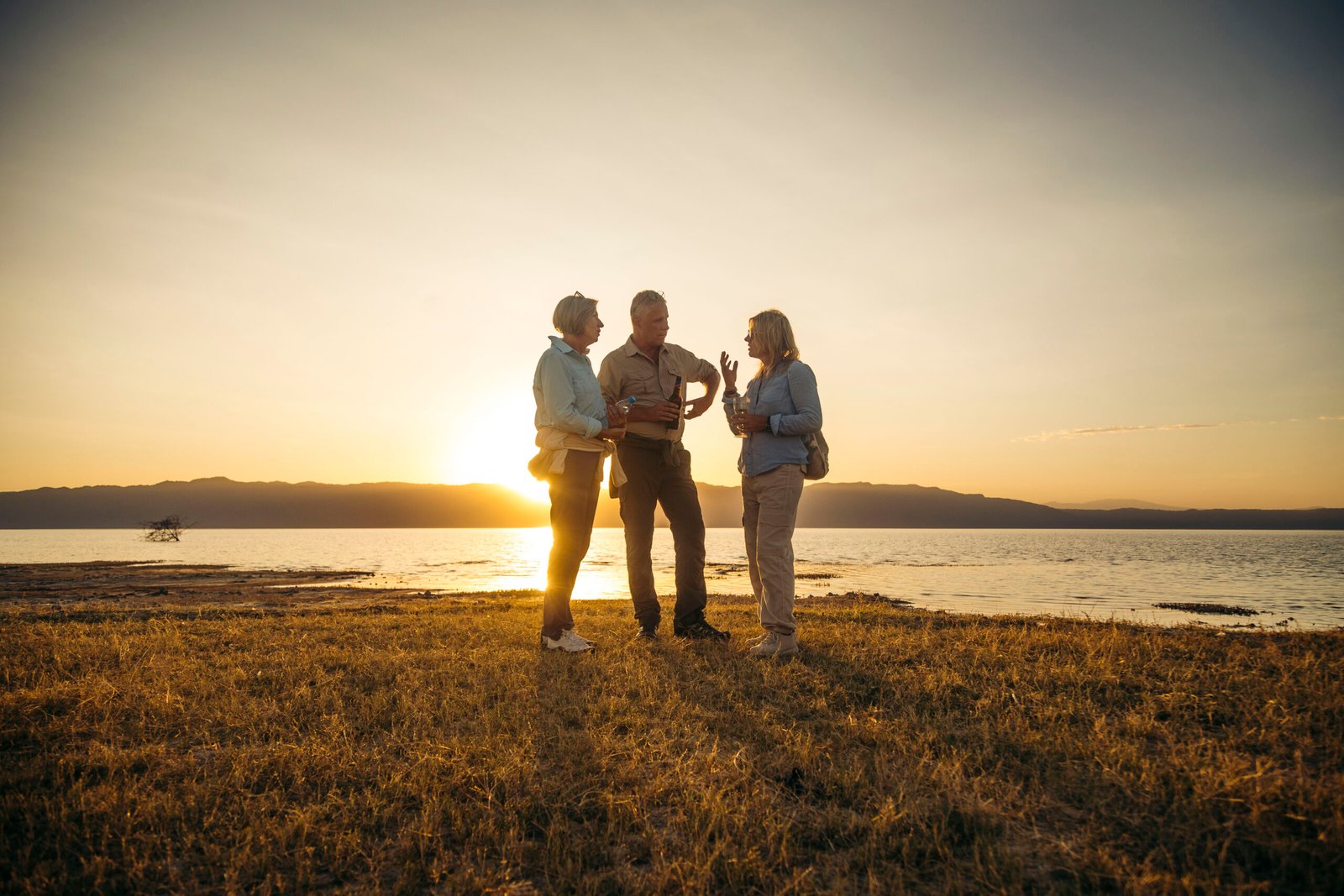
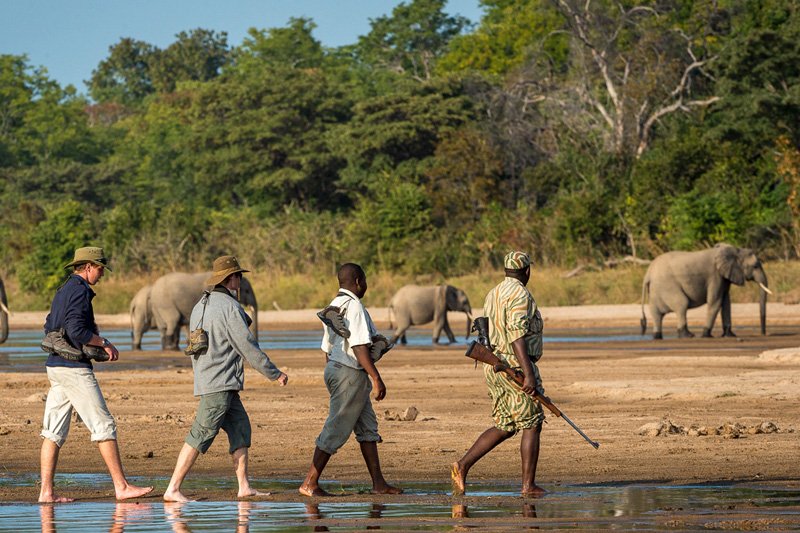
A walking safari in Tanzania is one of the most rewarding ways to experience the African wilderness. Instead of watching wildlife only from a safari vehicle, you step into the landscape with an experienced guide and authorised armed ranger, moving slowly through the bush and learning to see nature in a more detailed way.
On foot, the safari becomes less about covering distance and more about understanding what is around you. You notice tracks pressed into the soil, animal droppings, birds calling from the trees, insect trails, seed pods, medicinal plants, skulls, feathers and the scent of wild sage after rain. You may see elephants, giraffes, zebras, antelopes or buffalo from a safe distance, but the real value of a walking safari is learning how every part of the ecosystem connects.
At EKO Tanzania Adventures, we arrange carefully planned walking safaris in Tanzania’s authorised protected areas. Every walk follows park regulations, is led by qualified guides and rangers where required, and is designed around safety, wildlife respect and your fitness level.
To plan your Tanzania walking safari, contact EKO Tanzania Adventures on WhatsApp at +255 761 353 184, call +255 761 353 184, or email info@ekotanzaniaadventures.com / ekotanzaniaadventure@gmail.com.
What Is a Walking Safari?
A walking safari is a guided wilderness experience conducted on foot in a designated and authorised part of a protected area. Unlike hiking up a mountain, the purpose is not to reach a summit or cover a long route. The purpose is to observe the natural environment at ground level.
A typical walking safari may last from one to four hours, depending on the location, weather, guest fitness, wildlife conditions and park regulations. Longer walks may also be possible in selected areas with advance arrangements.
Tanzania National Parks promotes walking safaris as an immersive activity conducted with certified rangers. Official TANAPA information also confirms that guided walking safaris are available in destinations such as Tarangire, Arusha and selected wilderness areas of Serengeti, with ranger requirements applying.
A walking safari is not a self-guided bush walk. Guests must never walk independently in wildlife areas. It is a professionally managed activity with safety procedures in place.
Why Choose a Walking Safari in Tanzania?
Most visitors imagine a Tanzania safari as a 4×4 vehicle crossing wide plains. That remains a fantastic way to see wildlife, especially in Serengeti National Park and Ngorongoro Crater. But walking adds a completely different dimension.
From a vehicle, you see the large picture. On foot, you discover the small details that support the entire ecosystem.
During a walking safari, you may learn how to identify:
- Lion, leopard, hyena and elephant tracks
- Giraffe, zebra and antelope droppings
- Birds from their calls and feathers
- Animal pathways through grass and woodland
- Termite mounds and their ecological role
- Trees, medicinal plants and traditional uses
- Insects, beetles, butterflies and spiders
- Signs that predators or herbivores passed through recently
- Changes in soil, grassland and water sources
The experience often feels more personal because you are not separated from the environment by a vehicle. You hear the wind clearly, feel the texture of the ground and understand why a guide can read the bush almost like a map.
Is a Walking Safari Safe?
Yes—when it is properly organised, conducted in an approved area and led by an experienced professional team. Safety is always the first priority.
EKO Tanzania Adventures arranges walking safaris with the required park guidance and ranger support. In protected areas, walking activities are controlled by authorities and can only take place under their rules. TANAPA publications note that walking safaris are accompanied by an armed ranger or approved guide in relevant parks.
The ranger is there to manage safety, not to create risky close encounters. Wildlife is always given space. If animals are nearby, the guide and ranger assess the situation and decide whether to stop, change direction or return along a safer route.
Before every walk, guests receive a safety briefing. You will be told how to move quietly, where to stand, how to respond if wildlife is seen and why it is important to follow instructions immediately.
Essential Walking Safari Safety Rules
A walking safari is enjoyable because it is calm and respectful. The following rules are simple but essential:
- Always stay close to your guide and ranger.
- Walk in the line or formation requested by the ranger.
- Do not walk ahead of the guide.
- Keep your voice low.
- Do not run, shout or make sudden movements.
- Never approach an animal for a better photograph.
- Do not feed wildlife or leave food behind.
- Do not pick up animal bones, feathers, plants or other natural items unless your guide says it is allowed.
- Tell your guide if you feel tired, unwell or uncomfortable.
- Follow all park and ranger instructions without debate.
These rules are not designed to reduce the experience. They are what make a wildlife walk responsible and safe.
Best Places for Walking Safaris in Tanzania
Walking safari availability depends on park rules, permits, weather, wildlife movements and the specific route. Not every national park permits the same kind of walking activity, and arrangements must be confirmed before travel.
Tarangire National Park
Tarangire National Park is a strong choice for a Northern Circuit walking safari. The park is known for its baobab trees, elephants, seasonal wildlife movement and varied woodland landscapes.
TANAPA identifies guided walking safaris as one of the ways visitors can experience Tarangire beyond a vehicle game drive.
A Tarangire walk may focus on:
- Elephant tracks and feeding signs
- Acacia woodland ecology
- Baobab trees
- Birdlife
- Termite mounds
- Antelope tracks
- Seasonal water sources
- Smaller wildlife and plant life
It is a perfect addition for travellers who want a more active Tanzania safari without taking on a strenuous trek.
Arusha National Park
Arusha National Park is one of the best places for a first walking safari because of its beautiful landscapes, forest, open grassland, views of Mount Meru and diverse habitats.
The park offers a very different atmosphere from Serengeti. You may walk through forest areas with colobus monkeys, see giraffes in open landscapes, listen to birds and enjoy views toward Mount Meru. TANAPA information highlights walking safari opportunities in Arusha National Park and notes ranger-guided activity requirements.
Arusha National Park works especially well for:
- Guests staying in Arusha before or after safari
- Families with suitable-aged children
- Birdwatchers
- Photographers
- Kilimanjaro climbers wanting a light acclimatisation activity
- Travellers with only one extra day available
Serengeti National Park
Serengeti is famous for vehicle safaris and the Great Migration, but selected wilderness walking experiences can also be arranged in authorised zones. TANAPA states that walking safaris in Serengeti are normally accompanied by an armed park ranger and are offered in eastern and northern parts of the park.
A Serengeti walking safari is very different from driving through central Seronera. It is usually more focused on remote landscapes, animal signs, birdlife, geology and the feeling of being in a vast open ecosystem.
Because Serengeti is a major wildlife area, walking activities require careful advance planning. We will confirm the availability, location and park conditions before adding it to your itinerary.
Ruaha National Park
For travellers exploring southern Tanzania, Ruaha is one of the country’s most appealing wilderness destinations for walking. It is vast, wild and known for its rugged landscapes, baobabs, river systems and strong sense of remoteness.
TANAPA guidance states that Ruaha walking safaris can be short or long, that a ranger should be booked in advance from park headquarters and that visitors should never walk without the required ranger support.
Ruaha is ideal for travellers who want a less crowded safari experience and have time for a deeper, more wilderness-focused itinerary.
Saadani National Park
Saadani National Park offers a unique combination of bush and coast. It can be a good choice for travellers who want to combine wildlife, walking and the Indian Ocean in one journey.
Official TANAPA information includes walking safari fees and ranger/guide service requirements for Saadani.
This is a different style of Tanzania safari, suitable for guests who want something beyond the standard Northern Circuit route.
What Wildlife Can You See on Foot?
Walking safaris are not designed to get close to dangerous animals. You may see large wildlife from a safe distance, but sightings are never guaranteed and should not be the only reason to book a walk.
Possible sightings can include:
- Giraffes
- Zebras
- Warthogs
- Impalas and gazelles
- Dik-diks
- Baboons and monkeys
- Buffalo from a safe distance
- Elephants from a safe distance
- Birds of prey and smaller birds
- Lizards, butterflies and insects
- Tracks of lions, leopards, hyenas and other predators
Many guests are surprised that the smallest discoveries become their favourite memories. A dung beetle rolling a ball, the fresh track of an elephant herd, a tiny chameleon, a weaver bird nest or the scent of crushed wild herbs can make a walking safari feel remarkably real.
A Typical Walking Safari Experience
Your experience begins with a short briefing from the guide and ranger. They will explain the route, expected duration, safety procedures and what you may see.
You then start walking slowly through the approved area. There is no need to rush. The guide may stop frequently to point out tracks, trees, bones, insects or signs of animal behaviour.
The walk usually includes moments of silence. This is when you notice the natural sounds around you: birds calling, leaves moving, insects buzzing or distant hoofbeats.
Your guide may explain:
- Which animal made a track
- How old the track is likely to be
- How animals use wind direction
- Why elephants choose certain trees
- How predators use cover
- How herbivores stay alert
- Which plants may be used traditionally
- How termites influence soil and vegetation
At the end of the walk, you return to the vehicle, camp or lodge with a deeper understanding of the landscape you have been travelling through.
What Should You Wear and Bring?
Comfortable, neutral-coloured clothing is best for a walking safari. Avoid very bright colours, strong perfume and noisy clothing.
We recommend:
- Lightweight long trousers
- Neutral-coloured shirt or light jacket
- Comfortable closed walking shoes or hiking boots
- Hat and sunglasses
- Sunscreen
- Refillable water bottle
- Insect repellent
- Small camera or binoculars
- Light rain jacket in green season
Avoid carrying large bags or unnecessary items. Keep your hands free where possible and follow your guide’s instructions about cameras and phones.
Who Can Join a Walking Safari?
Walking safaris can suit many travellers, but they are not identical for every guest. The route, pace and minimum age rules can vary by protected area.
A walking safari is generally suitable for:
- Couples
- Honeymooners
- Families with children who meet the park’s age requirements
- Small private groups
- Birdwatchers
- Wildlife photographers
- Nature lovers
- Active safari travellers
- Guests who want a more educational experience
You do not need to be an athlete. Most short walks are designed at a gentle pace. However, you should be comfortable walking on uneven ground and standing for periods while the guide explains wildlife signs.
Tell us in advance if you have mobility concerns, health conditions or a preference for a short and easy route. We can recommend the most suitable option.
Best Time for a Walking Safari in Tanzania
Walking safaris can be arranged throughout much of the year, depending on the destination. Early morning and late afternoon are generally the most comfortable times because temperatures are cooler and wildlife is often more active.
Dry-season conditions can make walking easier in some areas because trails are firmer and vegetation is less dense. Green-season walks can be beautiful too, with fresh grass, flowers, active birdlife and dramatic skies.
The best time depends on your wider Tanzania itinerary. If you are travelling for the Great Migration, we can advise whether a walking experience can fit around your Serengeti route. If you are climbing Kilimanjaro, an Arusha National Park walk may be a good addition before or after your trek. If you are visiting Tarangire, a guided walk can add variety to your game-drive days.
Combine a Walking Safari with a Tanzania Itinerary
A walking safari fits easily into a tailor-made trip. Here is one example:
Day 1: Arrive at Kilimanjaro International Airport and transfer to Arusha.
Day 2: Guided walking safari in Arusha National Park.
Day 3: Travel to Tarangire National Park for a daytime game drive.
Day 4: Guided walking safari in an approved Tarangire area, subject to permits.
Day 5: Ngorongoro Crater safari.
Days 6–8: Serengeti game drives and optional approved walking activity where available.
Day 9: Return to Arusha or fly to Zanzibar for a beach holiday.
This itinerary can be adjusted for private groups, families, photographers, couples and luxury travellers.
Why Book Your Walking Safari with EKO Tanzania Adventures?
Walking in a wildlife area requires local knowledge, proper permits and careful coordination. EKO Tanzania Adventures makes sure the experience is professionally arranged and suited to your travel plans.
When you book with us, you receive:
- Tailor-made Tanzania safari planning
- Walking safari arrangements in approved areas
- Ranger and guide coordination where required
- Honest advice about availability and safety
- Private and group safari options
- Safari vehicle transfers and accommodation planning
- Support before and during your trip
- Tanzania-based local knowledge
- Responsible wildlife-viewing practices
We do not promise risky close encounters or unrealistic wildlife sightings. Instead, we create a genuine safari experience where you can learn, explore and appreciate Tanzania’s natural world with confidence.
Book Your Tanzania Walking Safari Today
A walking safari is one of the best ways to slow down and truly understand the bush. It gives you the chance to experience Tanzania beyond the vehicle: one track, one bird call, one tree and one quiet moment at a time.
Let EKO Tanzania Adventures add a professionally guided walking safari to your Tanzania holiday.
- WhatsApp: +255 761 353 184
- Call: +255 761 353 184
- Email: info@ekotanzaniaadventures.com
- Alternative email: ekotanzaniaadventure@gmail.com
- Website: www.ekotanzaniaadventures.com
Walk with purpose. Learn from the landscape. Experience Tanzania up close.