Kilimanjaro Climbing Cost: 7 Startling Real Price Factors You Should Be Aware of in 2026–2027;The truth is that the price of a Kilimanjaro climb depends on several important factors, including the route you choose, the number of days you spend on the mountain, park and conservation fees, accommodation before and after the climb, the size of your group, guide and crew services, meals, equipment, transportation, and the overall quality of the experience.
Climbing Mount Kilimanjaro is one of those travel experiences that can stay with you for the rest of your life. Standing at 5,895 meters (19,341 feet) above sea level, Kilimanjaro is Africa’s highest mountain and one of the world’s most recognizable trekking destinations. But before you lace up your boots and begin walking toward Uhuru Peak, there is one practical question almost every traveler asks:
How much does it really cost to climb Kilimanjaro?
The answer is not as simple as looking at one advertised price.You may find Kilimanjaro climbing packages advertised at dramatically different prices. One company may offer a climb for what looks like a bargain, while another charges considerably more. It can be difficult to understand why two apparently similar treks can have such different costs.
At Eko Tanzania Adventure, we believe travelers should understand what they are paying for before committing to their adventure. A cheaper price is not always the better deal, particularly when safety, acclimatization, experienced guides, responsible crew treatment, and quality logistics are involved.
This guide explains seven real price factors that can significantly affect the cost of climbing Kilimanjaro in 2026 and 2027. It also explains what you should look for when comparing climbing packages and how to plan a realistic budget.
What Is the Average Cost of Climbing Kilimanjaro?
Before looking at the seven major factors, it is useful to understand the general price range,For international travelers, a properly organized Kilimanjaro climb commonly costs approximately US$1,800 to US$5,000 or more per person, depending on the route, duration, accommodation level, group size, season, and services included.
This is a broad planning range rather than a fixed quotation.
A budget group climb may be closer to the lower end, while a private, premium, or luxury-supported expedition can be substantially more expensive.
At Eko Tanzania Adventure, our approach is to build packages around value, safety, comfort, experienced support, and responsible tourism, rather than simply trying to advertise the lowest possible price.
Remember that the cost of your international flights, visa, travel insurance, personal climbing equipment, tips, and personal spending may be separate from the climbing package.
The 7 Real Price Factors You Should Know
1. The Kilimanjaro Route You Choose
The first major factor affecting the price is your route.
Kilimanjaro has several established climbing routes, and each offers a different experience.
Popular options include:
- Machame Route
- Marangu Route
- Lemosho Route
- Rongai Route
- Northern Circuit
- Umbwe Route
The route affects the price because each one has different logistical requirements, park arrangements, duration, camping or hut accommodation, and transportation requirements.
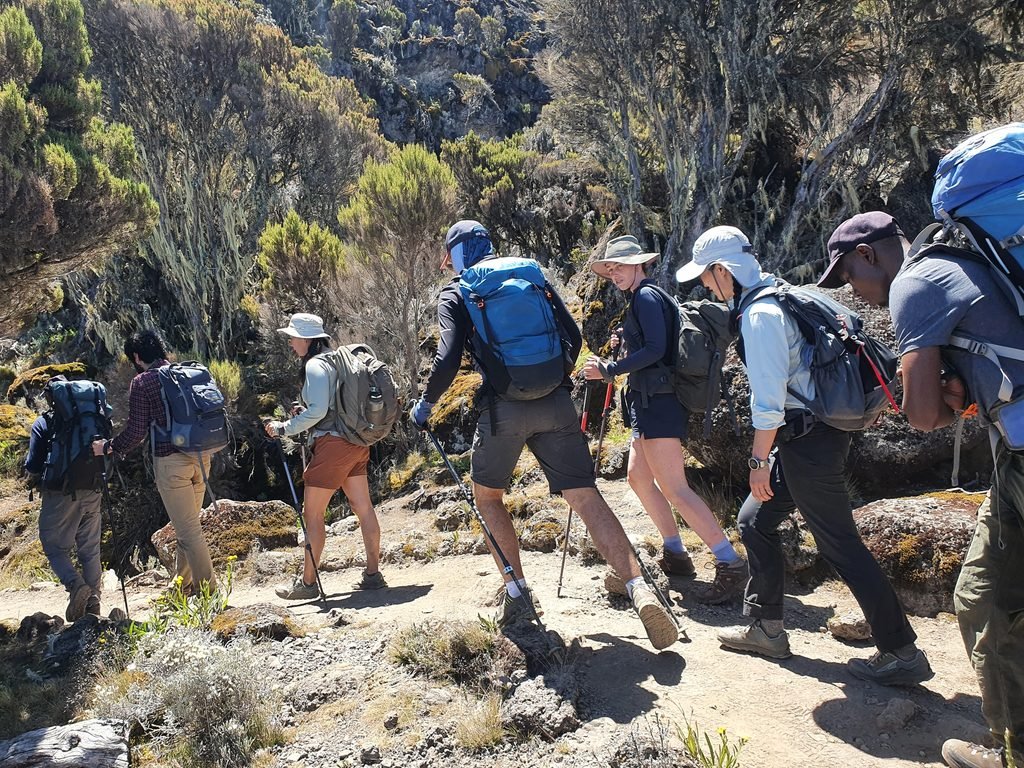
Machame Route
The Machame Route is one of the most popular choices. It is often selected by travelers who want spectacular scenery and a classic trekking experience.
Because it normally involves camping and requires a support crew carrying tents, food, and equipment, the total cost reflects these logistical requirements.
Marangu Route
Marangu is famous for its mountain huts, making it different from camping routes.
Some travelers assume that because you sleep in huts, Marangu must automatically be cheaper. That is not necessarily the case. Park fees, guide services, meals, transportation, staff costs, and other expenses still contribute significantly to the overall package.
Lemosho Route
Lemosho is particularly attractive to travelers who want a longer approach, beautiful scenery, and more time for acclimatization.
Because longer climbs involve additional park fees, meals, crew days, accommodation, and logistics, a Lemosho package generally costs more than a shorter itinerary.
Rongai Route
Rongai approaches Kilimanjaro from the northern side and offers a different trekking experience.
Its logistical arrangements can influence the price, particularly transportation to the starting point and the support required during the trek.
The important lesson: Don’t compare Kilimanjaro prices until you know that you are comparing the same route and number of trekking days.
2. The Number of Days on the Mountain
The second major price factor is the duration of your climb.
A longer trek usually costs more because almost every component of the expedition continues for additional days.
That can include:
- Park fees
- Guide services
- Porter services
- Meals
- Camping equipment
- Campsite fees
- Transportation
- Accommodation
- Crew wages
- Logistics and supplies
For example, a six-day climb will normally cost more than a five-day climb because there is an additional day of mountain operations.
But there is an important point that travelers should consider:
The cheapest itinerary is not necessarily the smartest itinerary.
Kilimanjaro is a high-altitude mountain. Your body needs time to adapt to decreasing oxygen availability.
A rushed itinerary can make acclimatization more difficult. Longer itineraries often provide a more gradual ascent and additional time to adapt.
For many climbers, spending more on an itinerary with better acclimatization opportunities is money well spent.
At Eko Tanzania Adventure, we encourage travelers to think beyond the question of How many days can I afford? and instead ask:
Which itinerary gives me the best balance of safety, acclimatization, enjoyment, and value?
3. Kilimanjaro National Park and Government Fees
One of the biggest costs hidden behind the final price is the collection of official mountain-related fees.
These can include charges associated with:
- Park entry
- Conservation
- Camping
- Hut accommodation where applicable
- Rescue services
- Government-related tourism charges
- Applicable taxes and levies
These costs are not simply optional extras that an operator can eliminate.
This is one reason why extremely low Kilimanjaro prices should be examined carefully.
If one company advertises a climb for dramatically less than most reputable operators, you should ask:
Are the official fees included?
A responsible package should clearly explain what is included and what is excluded.
At Eko Tanzania Adventure, we believe transparency is important. Travelers should receive a clear understanding of where their money is going instead of discovering unexpected charges after arriving in Tanzania.
When comparing packages, ask for a written breakdown of the inclusions.
4. The Size of Your Climbing Group
Another major factor is whether you choose a group climb or private climb.
Group climbs can be more economical because certain operational costs are shared among several travelers.
For example, transportation and some logistical expenses can be distributed across the group.
A private climb is different.
If you want your own itinerary, private guide team, flexible pacing, or a climb organized exclusively for your family or friends, the price per person can increase.
However, private climbing can offer valuable advantages.
You may have greater flexibility regarding:
- Daily walking pace
- Rest stops
- Starting times
- Dietary requirements
- Personal preferences
- Route planning
- Group dynamics
For couples, families, friends, or experienced travelers who value privacy, the additional cost can be worthwhile.
Group climbing
Advantages:
- Lower cost per person
- Opportunity to meet other travelers
- Shared logistics
- Social atmosphere
Private climbing
Advantages:
- More personalized experience
- Greater flexibility
- Private group environment
- Easier customization
There is no universally “best” choice.
The right option depends on your budget, personality, travel style, and priorities.
5. The Quality and Experience of Your Mountain Crew
This is one of the most important factors and one that travelers sometimes overlook when comparing prices.
A Kilimanjaro climb is not just a hotel booking followed by a walk up a mountain.
Your mountain crew plays a critical role in the experience.
Depending on the package, your team may include:
- Mountain guides
- Assistant guides
- Porters
- Cooks
- Camp staff
Experienced guides contribute far more than simply showing you which direction to walk.
They monitor your condition, communicate with the team, manage the daily trekking schedule, provide practical advice, and help coordinate the expedition.
A responsible operator should also take crew welfare seriously.
When comparing climbing companies, ask questions such as:
- How are guides and porters treated?
- Are crew members properly equipped?
- Does the company follow responsible porter practices?
- How experienced are the mountain guides?
- What emergency procedures are in place?
- What type of support is available if a climber becomes unwell?
A very cheap package may sometimes reflect lower staffing levels or reduced operational standards.
Saving money should never come at the expense of your safety or the dignity of the people supporting your climb.
6. Accommodation, Meals, Transfers, and Pre- and Post-Climb Services
Your mountain experience does not begin and end at the park gate.
Many travelers arrive in the Kilimanjaro region before the trek and stay in a hotel in or around Moshi or Arusha.
Depending on your package, you may require:
- Airport transfer
- Hotel accommodation
- Pre-climb briefing
- Mountain transfer
- Accommodation after the trek
- Return transfer to the airport
These services can significantly influence the final cost.
Food is another consideration.
During the climb, you need enough nutritious food to support long trekking days.
A quality mountain menu may include carbohydrates, proteins, fruits, vegetables, snacks, hot drinks, and other energy-rich foods.
Dietary requirements can also affect logistics.
If you are vegetarian, vegan, gluten-free, allergic to certain foods, or have other dietary preferences, tell your operator before the climb.
At Eko Tanzania Adventure, we believe that good planning before departure helps make the experience smoother once you are on the mountain.
7. The Hidden Personal Costs of a Kilimanjaro Climb
The final major factor is everything outside the advertised package price.
This is where travelers sometimes underestimate their total budget.
Your climbing package may not include every expense associated with your Tanzania adventure.
Potential additional costs include:
International flights
Your flights to Tanzania are normally separate from the climbing package.
Visa
Depending on your nationality and circumstances, you may need a Tanzanian visa.
Travel insurance
Travel insurance is extremely important for an international mountain adventure. Make sure your policy covers trekking at the altitude relevant to Kilimanjaro and provides appropriate emergency and evacuation coverage.
Personal equipment
You may need items such as:
- Waterproof hiking boots
- Warm layers
- Thermal underwear
- Waterproof jacket
- Trekking trousers
- Gloves
- Warm hat
- Sleeping bag
- Headlamp
- Trekking poles
- Sunglasses
- Backpack
- Water bottles or hydration system
Some equipment can be rented, depending on availability and your operator’s arrangements.
Tips
Tips for guides, porters, cooks, and other crew members are generally treated separately from the basic package price.
Many climbers choose to budget for tips as part of their overall trip from the beginning.
Personal spending
Don’t forget smaller expenses such as snacks, drinks, souvenirs, laundry, communication, and additional hotel nights.
A Realistic Kilimanjaro Budget for 2026–2027
A useful way to plan is to divide your expenses into three categories.
| Expense | Typical planning consideration |
|---|---|
| Kilimanjaro climbing package | Approximately US$1,800–US$5,000+ depending on itinerary |
| International flights | Highly dependent on origin and booking date |
| Visa | Depends on nationality |
| Travel insurance | Depends on coverage and provider |
| Personal equipment | Depends on what you already own |
| Tips | Budget separately |
| Extra hotel nights | Depends on itinerary |
| Personal spending | Depends on your travel style |
These figures are planning estimates, not a fixed Eko Tanzania Adventure quotation. The final cost should be based on your selected route, dates, group size, accommodation, and services.
Why the Cheapest Kilimanjaro Package Can Be Misleading
When searching online, you may naturally be attracted to the lowest price.
But Kilimanjaro is not the type of adventure where you should compare companies based on price alone.
Imagine two packages.
Package A appears extremely cheap but excludes several major expenses.
Package B costs more but includes park-related fees, experienced guides, meals, transfers, accommodation, equipment support, and comprehensive logistics.
At first glance, Package A looks like the better deal.
After adding all the missing costs, however, the difference may become much smaller.
More importantly, you should consider the quality of the service.
Ask yourself:
What am I actually receiving for the price?
That question is much more useful than simply asking:
Who is cheapest?
How Eko Tanzania Adventure Helps You Plan Your Kilimanjaro Budget
At Eko Tanzania Adventure, our goal is to make the planning process straightforward.
We can help travelers understand the relationship between:
Route , number of days,group size , accommodation services Up To final climbing cost
Rather than forcing every traveler into exactly the same package, the itinerary can be planned around your preferred experience and budget.
Whether you are considering Machame, Marangu, Lemosho, Rongai, or another suitable route, we can help you understand the practical differences.
The goal is not simply to get you onto Kilimanjaro.
The goal is to help you experience the mountain in a way that is organized, responsible, enjoyable, and realistic.
Example: How Your Budget Can Change
Consider two hypothetical travelers.
Traveler One: Budget-conscious group climber
They choose:
- A group climb
- A shorter itinerary
- Standard accommodation
- Shared transportation
- No major equipment rental
- Basic pre- and post-climb arrangements
Their total mountain budget may remain toward the lower end of the general range.
Traveler Two: Private premium climber
They choose:
- A private group
- A longer route
- Additional acclimatization time
- Higher-quality accommodation
- Private transfers
- Equipment rental
- Additional hotel nights
Their cost will naturally be higher.
Neither traveler is necessarily making the wrong decision.
They simply have different priorities.
10 Questions to Ask Before Booking Kilimanjaro
Before paying a deposit, ask your tour operator these questions
How to Save Money Without Sacrificing Quality
Saving money on Kilimanjaro does not necessarily mean choosing the cheapest operator.
Instead, consider these strategies.
Travel as a group
Joining friends or choosing a group climb can reduce the per-person cost.
Choose your route carefully
Different routes have different costs. Choose one that matches your priorities rather than automatically choosing the most expensive option.
Book intelligently
Planning ahead can give you more choice regarding dates, accommodation, and itinerary.
Bring equipment you already own
If you already have quality hiking gear, you may not need to rent everything.
Avoid unnecessary luxury
A comfortable hotel before and after the trek is valuable, but you do not necessarily need the most expensive accommodation.
Prioritize acclimatization
Do not cut trekking days simply to save money if doing so compromises the quality of the expedition.
A slightly more expensive itinerary may provide substantially better value.
Is Kilimanjaro Worth the Cost?
For many travelers, absolutely.
But the value of Kilimanjaro is not measured only by reaching the summit.
It is the experience of watching the landscape change as you climb.
You begin in cultivated areas and forest, continue through changing vegetation, cross high moorland, enter an alpine environment, and eventually approach the stark volcanic landscape near the summit.
Then comes summit night.
You wake during the night, put on your warmest layers, switch on your headlamp, and begin walking upward.
Step by step.
Slowly.
The temperature drops.
The air becomes thinner.
The climb becomes more demanding.
Eventually, if conditions and your health allow, you reach the summit area and stand beneath the African sky.
That moment is difficult to put a price on.
Final Thoughts: Understand the Price Before You Climb
The cost of climbing Kilimanjaro in 2026 and 2027 depends on much more than the number displayed on an online advertisement.
The seven major factors are:
- Your chosen route
- The number of trekking days
- Official park and government-related fees
- Your group size and whether the climb is private
- The quality and experience of your mountain crew
- Accommodation, meals, transfers, and logistics
- Personal expenses such as flights, insurance, equipment, and tips
Understanding these factors makes it much easier to compare Kilimanjaro packages fairly.
At Eko Tanzania Adventure, we believe the best Kilimanjaro experience starts with honest planning. You should know what your package includes, what it does not include, how the itinerary works, and why the price is what it is.
Don’t choose your Kilimanjaro climb simply because it is the cheapest.
Choose an experience that gives you good value, proper preparation, experienced support, responsible logistics, and a realistic opportunity to enjoy the mountain.
Mount Kilimanjaro deserves that kind of preparation.
And your once-in-a-lifetime adventure deserves it too.
Plan Your 2026–2027 Kilimanjaro Adventure with Eko Tanzania Adventure
Whether you are dreaming about the Machame Route, Marangu Route, Lemosho Route, Rongai Route, or another Kilimanjaro itinerary, Eko Tanzania Adventure can help you build a climb around your preferred duration, budget, group size, and travel style.