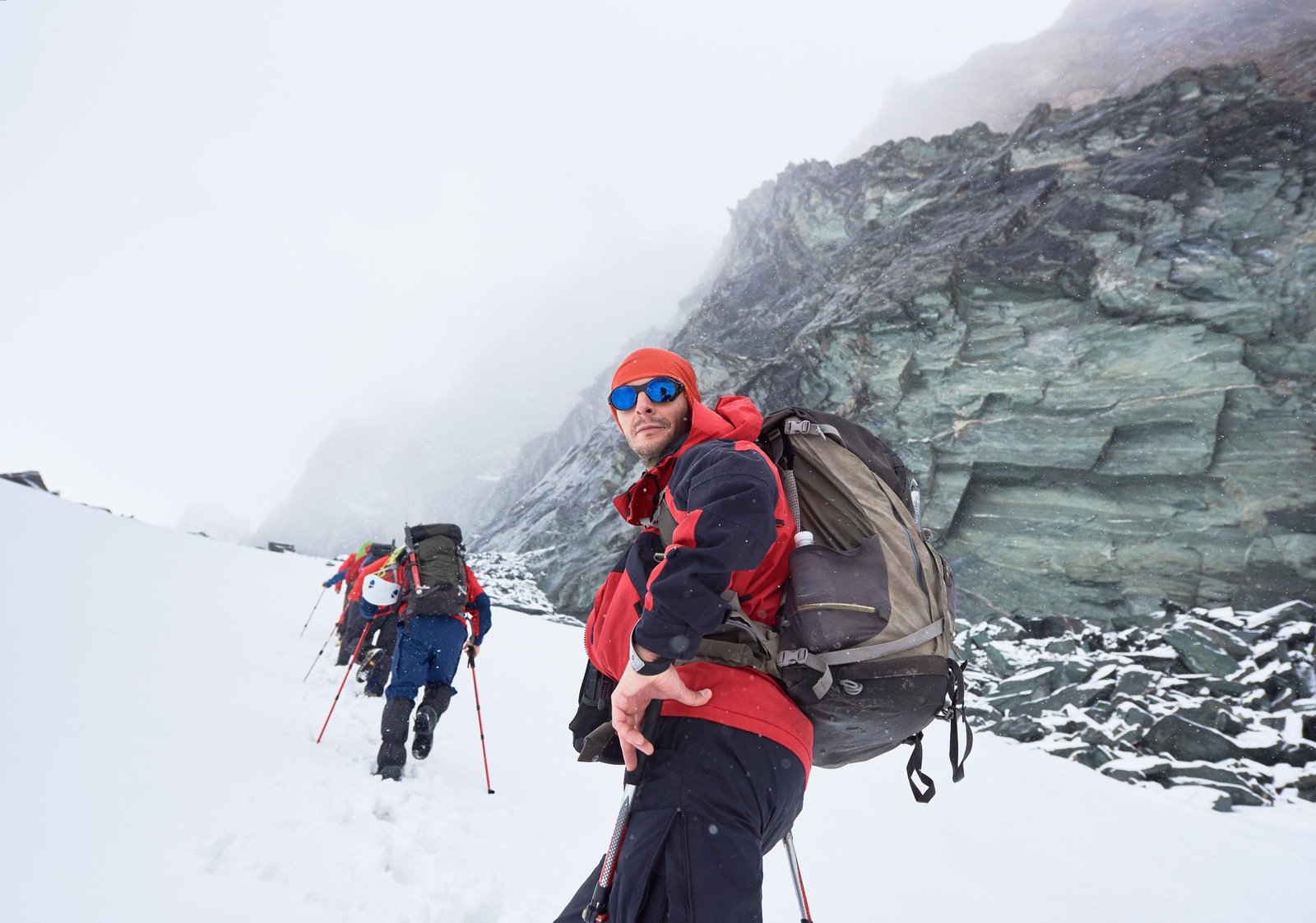
The Ultimate 7-Day Machame Route 2026–2028;Is one of the most popular ways to climb Mount Kilimanjaro, offering an excellent combination of dramatic scenery, varied landscapes, progressive acclimatization, and a challenging summit experience. Often called the “Whiskey Route,” Machame is a trekking route designed for hikers who want to experience Kilimanjaro through a scenic and adventurous trail rather than the shorter, more gradual Marangu Route.
From the rainforest on the lower slopes to the volcanic landscapes around the summit, the journey provides a remarkable progression through several ecological zones before reaching Uhuru Peak at 5,895 metres (19,341 feet).
For travelers planning their climb in 2026, 2027, or 2028, the 7-day itinerary provides a structured schedule that allows more time for acclimatization than shorter Machame itineraries. However, reaching the summit is never guaranteed because altitude affects individuals differently, regardless of fitness.
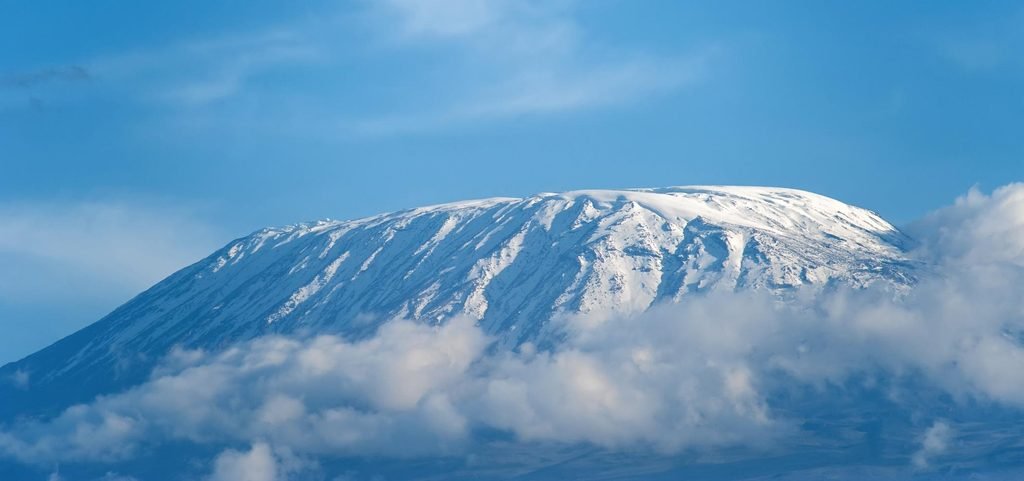
7-Day Machame Route at a Glance:The Ultimate 7-Day Machame Route 2026–2028
| Feature | Details |
|---|---|
| Route | Machame Route |
| Duration | 7 Days |
| Summit | Uhuru Peak |
| Elevation | 5,895 m |
| Starting Point | Machame Gate |
| Ending Point | Mweka Gate |
| Accommodation | Mountain camps |
| Difficulty | Challenging |
| Scenery | Rainforest, moorland, alpine desert and glaciers/summit terrain |
| Best for | Hikers seeking a scenic, progressive Kilimanjaro climb |
| Main advantage | Good itinerary structure for acclimatization |
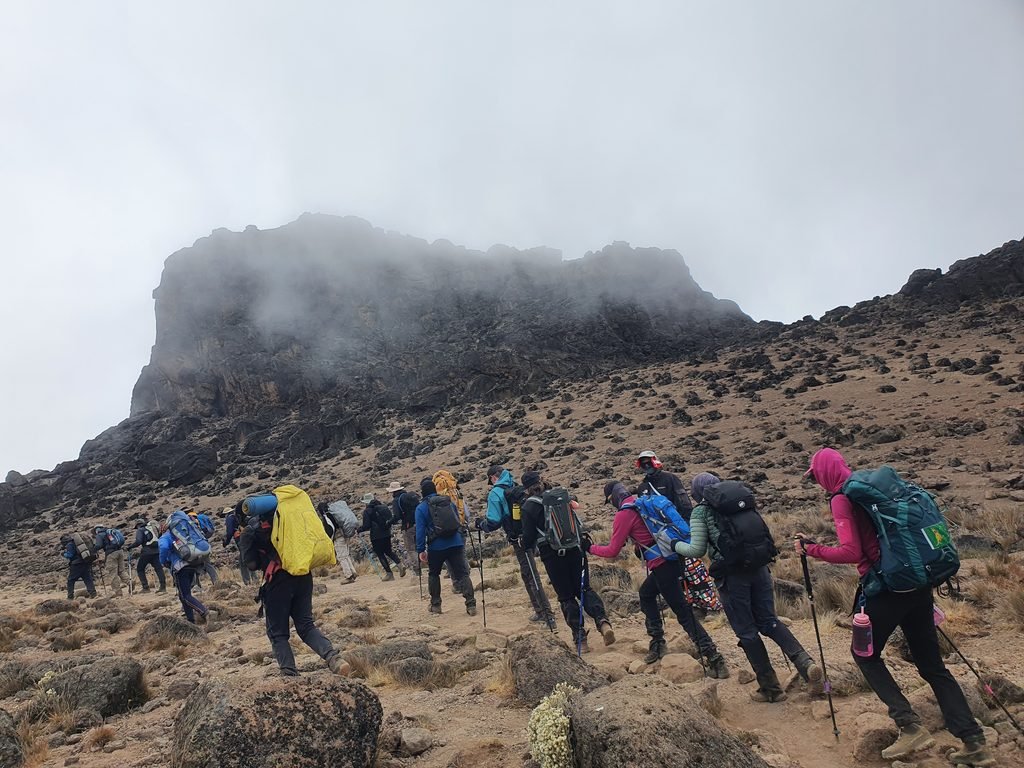
Why Choose the 7-Day Machame Route?:The Ultimate 7-Day Machame Route 2026–2028
The seven-day Machame itinerary gives trekkers more time on the mountain compared with shorter versions of the route.
One of its major characteristics is the opportunity to gradually gain altitude while experiencing different landscapes.
The route passes through:
- Dense montane forest
- Moorland
- Shira Plateau
- Alpine desert
- Rocky high-altitude terrain
- Summit zone
The famous Lava Tower and Barranco Wall sections add to the adventure, while the final summit night provides the ultimate challenge.
Another important advantage is the route’s traditional acclimatization pattern. Climbers gain altitude during the day and descend to a lower camp where possible, helping the body adjust progressively.
7-Day Machame Route Itinerary
Day 1: Machame Gate to Machame Camp
Starting elevation: approximately 1,800 m
Machame Camp: approximately 3,000 m
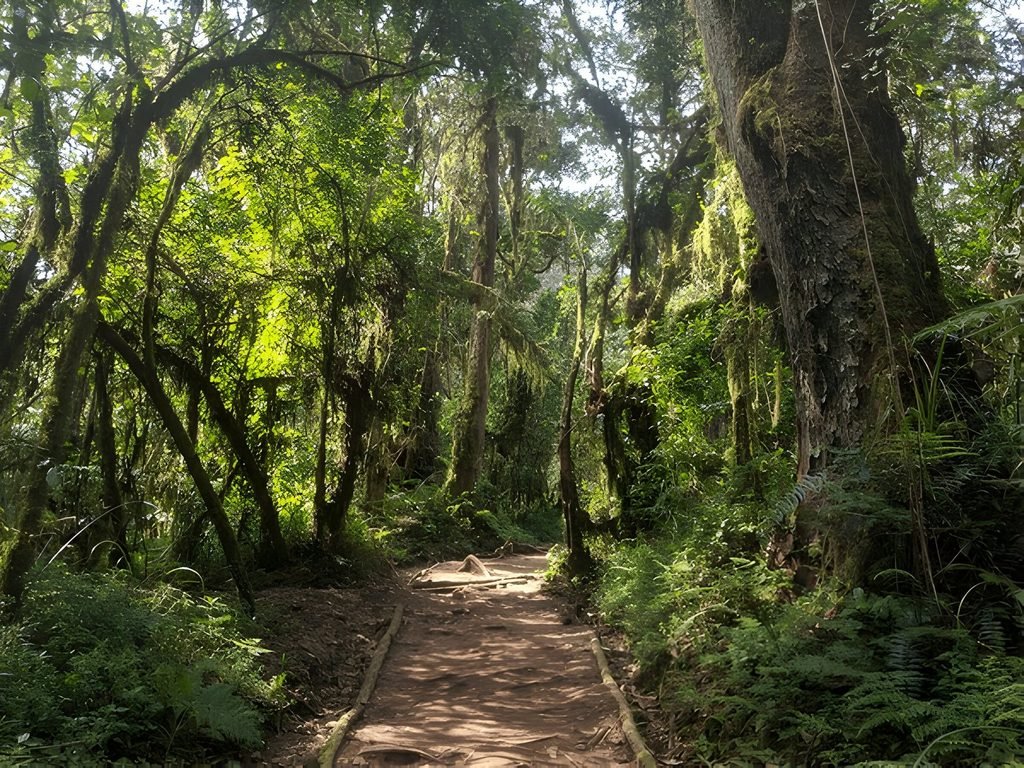
Your adventure begins after registration at Machame Gate.
The first section leads into the beautiful Kilimanjaro rainforest. The environment is generally lush, with tall trees, vegetation, birds, and occasional wildlife.
The trail can be muddy or slippery, particularly during wetter periods, so trekking poles and appropriate footwear can be useful.
After several hours of walking, you reach Machame Camp, where your mountain crew prepares your accommodation and meals.
Overnight: Machame Camp.
Day 2: Machame Camp to Shira Camp
Machame Camp: approximately 3,000 m
Shira Camp: approximately 3,800 m
The second day begins with a significant change in scenery.
As you climb higher, the dense rainforest gradually disappears and is replaced by moorland vegetation.
The trail becomes more open, providing increasingly impressive views of the surrounding landscape.
On clear days, you may also begin to appreciate the scale of Mount Kilimanjaro and its surrounding volcanic environment.
Arriving at Shira Camp gives you an opportunity to rest and begin adjusting to the higher elevation.
Overnight: Shira Camp.
Day 3: Shira Camp to Lava Tower and Barranco Camp
Shira Camp: approximately 3,800 m
Lava Tower: approximately 4,630 m
Barranco Camp: approximately 3,960 m
This is one of the most important acclimatization days of the trek.
You climb toward Lava Tower, reaching more than 4,600 metres before descending toward Barranco Camp.
This follows the useful principle:
Climb high, sleep low.
The body is exposed to a higher altitude during the day before descending to sleep at a lower elevation.
The landscape becomes increasingly dramatic as you move through the alpine desert environment.
Barranco Camp is located beneath the impressive Barranco Wall, creating one of the most memorable camp settings on the Machame Route.
Overnight: Barranco Camp.
Day 4: Barranco Camp to Karanga Camp
Barranco Camp: approximately 3,960 m
Karanga Camp: approximately 4,035 m
The famous Barranco Wall is one of the highlights of this day.
Although the wall can initially look intimidating, the route involves scrambling and careful walking rather than technical rock climbing.
Experienced mountain guides assist trekkers through the more challenging sections.
Once above the wall, the route continues through the alpine desert toward Karanga Camp.
This stage is relatively short compared with some other days, providing useful time for rest and acclimatization.
Overnight: Karanga Camp.
Day 5: Karanga Camp to Barafu Camp
Karanga Camp: approximately 4,035 m
Barafu Camp: approximately 4,640 m
Today you enter the final high-altitude preparation stage.
The landscape becomes increasingly barren as vegetation decreases.
The trail leads toward Barafu Camp, which serves as the main launching point for the summit attempt.
Once at camp, trekkers normally have an early meal, organize their summit equipment, and rest.
This is an important evening because the summit attempt usually begins around midnight or in the early hours of the following morning.
A good night’s rest can be difficult at this altitude, so conserving energy is important.
Overnight: Barafu Camp.
Day 6: Barafu Camp to Uhuru Peak and Millennium Camp
This is the most demanding and rewarding day of the climb.
Barafu Camp to Stella Point
The summit attempt normally begins during the night.
You climb gradually through darkness toward Stella Point on the crater rim.
The altitude, cold, darkness, and steep terrain make this section physically demanding.
Trekkers generally move slowly, following the guide’s pace.
Stella Point to Uhuru Peak
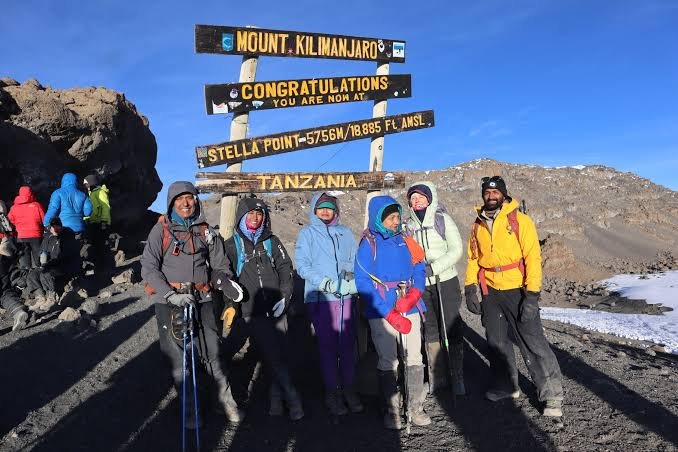
After reaching Stella Point at approximately 5,739 metres, the trail continues around the crater rim toward Uhuru Peak.
Uhuru Peak stands at:
5,895 metres above sea level.
Reaching the summit is the central objective of the entire expedition.
At the summit, trekkers typically spend a limited amount of time because of the extreme altitude before beginning the descent.
Uhuru Peak to Barafu Camp
The descent toward Barafu is considerably faster than the ascent.
After reaching Barafu Camp, you normally take a short rest before continuing downward.
Barafu to Millennium Camp
The route continues toward Millennium Camp at a substantially lower elevation.
The descent provides welcome relief from the extreme summit altitude.
Overnight: Millennium Camp.
Day 7: Millennium Camp to Mweka Gate
Millennium Camp: approximately 3,800 m
Mweka Gate: approximately 1,640 m
The final day is mostly a descent through the rainforest.
After several days in the high-altitude environment, returning to lower elevations can feel refreshing.
The trail eventually reaches Mweka Gate, where the trek officially ends.
After completing registration procedures, trekkers normally meet their transfer vehicle and continue toward their accommodation in the surrounding area.
This is the moment to celebrate the completion of your Kilimanjaro adventure.
The Major Highlights of the Machame Route
1. Beautiful Scenery
Machame is famous for its changing landscapes.
You experience several ecological zones during one expedition, making the route visually diverse.
2. Shira Plateau
The Shira area provides expansive mountain scenery and a dramatic transition from rainforest to high-altitude terrain.
3. Barranco Wall
The Barranco Wall is one of the most recognizable sections of the route.
It provides a hands-on trekking experience without requiring traditional technical climbing equipment.
4. Lava Tower
The Lava Tower area is important for acclimatization and offers a striking volcanic landscape.
5. Uhuru Peak
The ultimate objective is Uhuru Peak, the highest point on Mount Kilimanjaro and the highest point in Africa.
How Difficult Is the 7-Day Machame Route?
The 7-Day Machame Route should be considered a challenging high-altitude trek.
The biggest challenge is not necessarily technical climbing.
Instead, the major difficulties include:
- High altitude
- Long walking days
- Summit-night fatigue
- Cold temperatures
- Steep sections
- Variable weather
- Limited sleep before the summit
- Reduced oxygen at altitude
A person can be physically fit and still experience altitude-related problems.
For this reason, preparation should include both physical training and an understanding of altitude safety.
Training for the 7-Day Machame Route
Preparation should ideally begin several weeks or months before the trek.
Useful training activities include:
Hiking
Regular hiking is one of the best ways to prepare your body for long days on uneven terrain.
Walking uphill Of The Ultimate 7-Day Machame Route 2026–2028
Include hills, stairs, or incline training to strengthen your legs.
Endurance training
Activities such as walking, cycling, swimming, or jogging can help improve cardiovascular endurance.
Strength training
Focus on:
- Legs
- Glutes
- Core
- Lower back
Long-distance walking
Gradually increase the duration of your walks so your body becomes comfortable with extended periods of activity.
Acclimatization on the Machame Route
Altitude acclimatization is one of the most important aspects of Kilimanjaro preparation.
As you climb higher, atmospheric pressure decreases and less oxygen is available.
Some trekkers may experience symptoms such as:
- Headache
- Reduced appetite
- Fatigue
- Nausea
- Dizziness
- Difficulty sleeping
More serious altitude illness can occur and requires immediate attention.
Trekkers should never hide symptoms from their guide in an attempt to continue climbing.
The safest approach is to communicate openly with the mountain crew.
What to Pack for the 7-Day Machame Route
A well-prepared packing list can make the trek significantly more comfortable.
Clothing
Consider bringing:
- Moisture-wicking base layers
- Warm fleece
- Insulated jacket
- Waterproof jacket
- Trekking trousers
- Thermal layers
- Warm hat
- Gloves
- Hiking socks
Footwear
You should have comfortable, properly broken-in hiking boots.
Avoid arriving with completely new footwear for the climb.
Essential equipment:The Ultimate 7-Day Machame Route 2026–2028
Useful items include:
- Headlamp
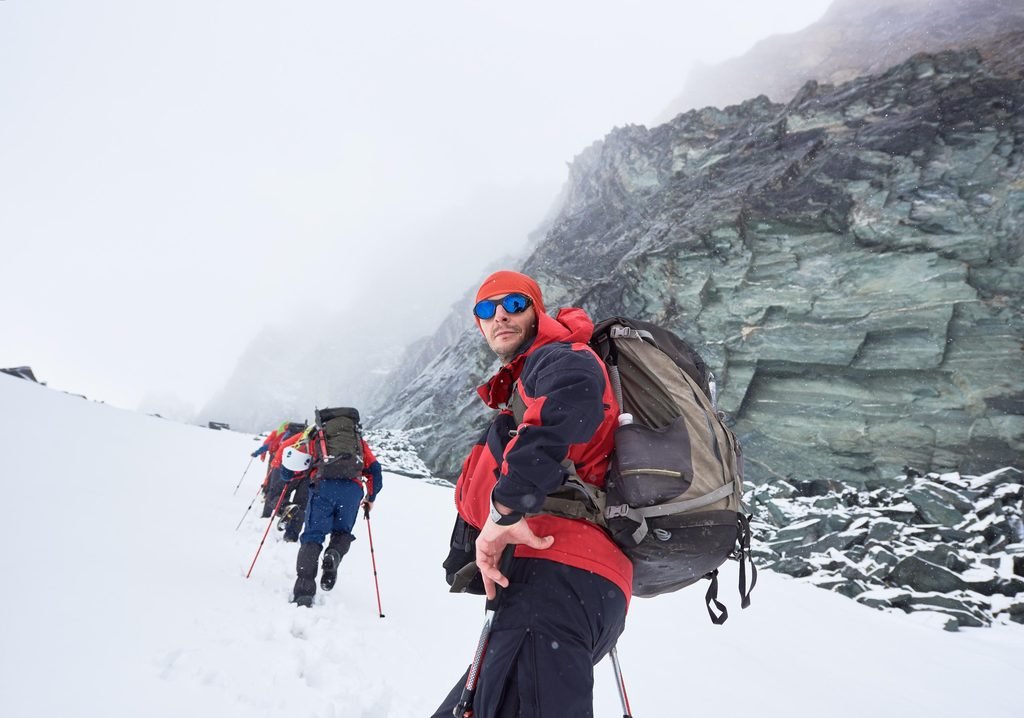
- Trekking poles
- Sleeping bag
- Water bottles or hydration system
- Backpack
- Duffel bag
- Sunglasses
- Sunscreen
- Personal first-aid supplies
- Toiletries
- Personal medications
Your safari or trekking operator should provide a final equipment checklist because included equipment can vary between packages.
Food and Water During the Climb
Nutrition is important during a multi-day mountain expedition.
Meals generally need to provide sufficient carbohydrates, protein, and calories to support long walking days.
Drink water regularly throughout the trek.
At altitude, maintaining hydration is particularly important.
Your mountain crew normally organizes drinking water and meals according to the trekking arrangement, but travelers should confirm exactly what is included before departure.
Best Time for the 7-Day Machame Route
Kilimanjaro can be climbed throughout much of the year, but weather conditions vary by season.
Many trekkers prefer the generally drier periods because trails can be more comfortable and visibility may be better.
The traditionally popular periods include:
- January to February
- June to October
- Some periods around December
The rainy seasons can bring wetter and muddier trail conditions.
However, weather on Kilimanjaro is variable, and conditions can change rapidly even during generally favorable months.
Estimated Cost of the 7-Day Machame Route
The total price depends on several factors, including:
- Number of climbers
- Travel season
- Group or private climb
- Park fees
- Guide and crew services
- Accommodation before and after climbing
- Transfers
- Equipment rental
- Food
- Permits and operational costs
For that reason, travelers should request a detailed quotation rather than relying on a generic online price.
A proper quotation should clearly state:
Included costs + excluded costs + accommodation + transportation + trekking services + payment conditions.
Remember that the cheapest advertised price is not necessarily the final amount you will pay.
Tips for a Successful Machame Climb
Walk slowly
One of the most important principles on Kilimanjaro is maintaining a controlled pace.
Your guide may repeatedly encourage you to walk slowly. This is intentional.
Listen to your guide
Mountain guides monitor the group and can identify potential altitude problems.
Stay hydrated
Drink regularly throughout the day.
Eat even when appetite decreases
High altitude can reduce appetite, but your body still needs energy.
Protect yourself from the sun
UV exposure can be intense at high elevation.
Keep warm
Temperatures can fall significantly at night, particularly around the summit.
Communicate symptoms
Never hide headaches, nausea, dizziness, breathing difficulties, or unusual weakness.
Who Is the 7-Day Machame Route Suitable For?
The route can be suitable for travelers who:
- Enjoy hiking
- Have reasonable physical fitness
- Want a scenic Kilimanjaro experience
- Prefer a longer itinerary over a compressed climb
- Are comfortable camping
- Want to experience different ecological zones
- Understand that high-altitude trekking is physically demanding
However, suitability depends on individual circumstances. Anyone with medical concerns should seek appropriate professional medical advice before undertaking a high-altitude expedition.
Final Thoughts
The Ultimate 7-Day Machame Route 2026–2028 provides an adventurous way to experience Mount Kilimanjaro, from the lush rainforest at the mountain’s lower slopes to the extraordinary high-altitude environment surrounding Uhuru Peak.
The journey combines challenging trekking with dramatic scenery, including the Shira Plateau, Lava Tower, Barranco Wall, Karanga, Barafu, and the summit of Uhuru Peak.
Its seven-day structure gives trekkers more time to adapt to increasing altitude than shorter itineraries, although altitude remains unpredictable and reaching the summit can never be guaranteed.
For travelers preparing for 2026, 2027, or 2028, successful preparation should focus on fitness, appropriate equipment, realistic expectations, acclimatization, and choosing a professional trekking arrangement with experienced mountain support.
The goal is not simply to reach the summit quickly. It is to make the journey safely, patiently, and responsibly while experiencing one of Africa’s most extraordinary mountain adventures.