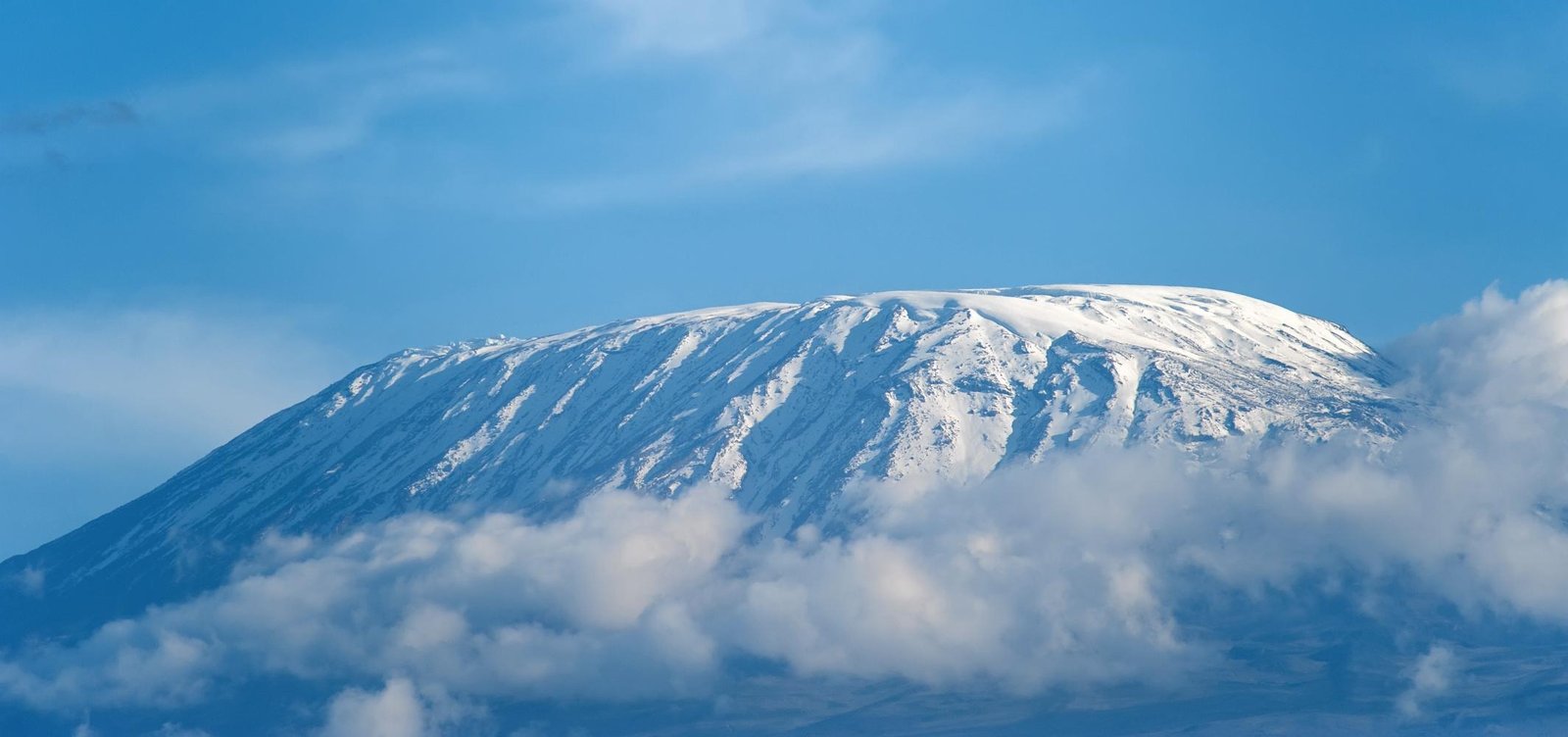
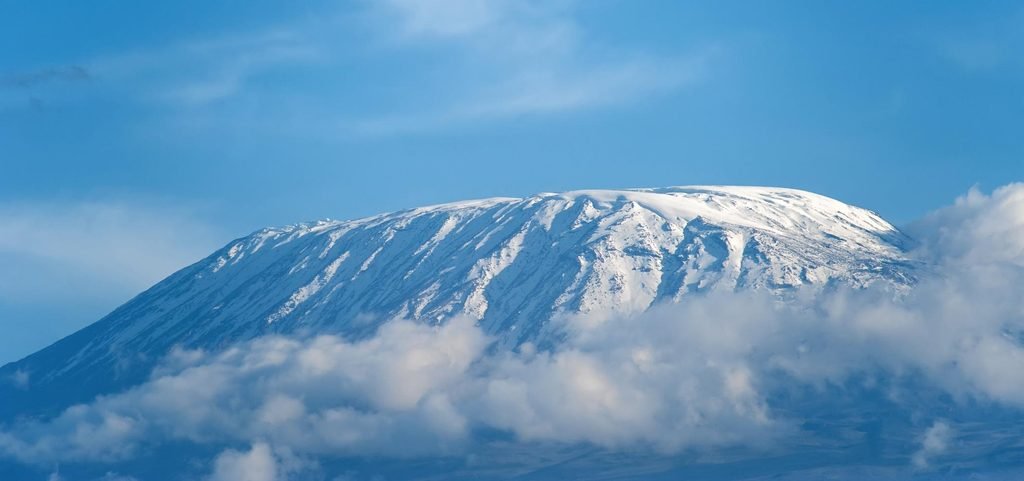
The Best Kilimanjaro Route for Acclimatization: The 8-Day Lemosho Route | 9 Strong Arguments for Selecting This Climb in 2026, 2027 & 2028; If your dream is to stand on Uhuru Peak at 5,895 meters (19,341 feet), choosing the right route is one of the most important decisions you will make. Mount Kilimanjaro is Africa’s highest mountain, and TANAPA notes that climbs generally take 5–8 days depending on the route, with longer itineraries providing more time for acclimatization.
Among the established routes, the 8-Day Lemosho Route is an excellent choice for travelers who want a gradual ascent, spectacular scenery, relatively less crowded trails during the early stages, and a well-paced approach to the summit.
At Eko Tanzania Adventures, we recommend the 8-day Lemosho itinerary for climbers who want to give themselves sufficient time on the mountain rather than trying to reach the summit as quickly as possible.
The route begins on the western side of Kilimanjaro, crosses the beautiful Shira Plateau and eventually joins the southern circuit toward Barranco, Karanga and Barafu before the summit attempt.
Why Choose the 8-Day Lemosho Route?:The Best Kilimanjaro Route for Acclimatization: The 8-Day Lemosho Route | 9 Strong Arguments for Selecting This Climb in 2026, 2027 & 2028
The biggest advantage of this itinerary is simple:
You have more time to adapt to altitude.
Altitude is one of the major challenges of climbing Kilimanjaro. Being physically fit does not automatically mean your body will adapt quickly to high altitude.
That is why a slower itinerary can be a smarter choice.
The 8-day Lemosho route provides a progressive journey from rainforest to high-altitude alpine environments before the final summit push. TANAPA itself advises visitors to choose itineraries with acclimatization days, ascend slowly, stay hydrated and report symptoms promptly to their guide.
9 Strong Reasons to Choose the 8-Day Lemosho Route
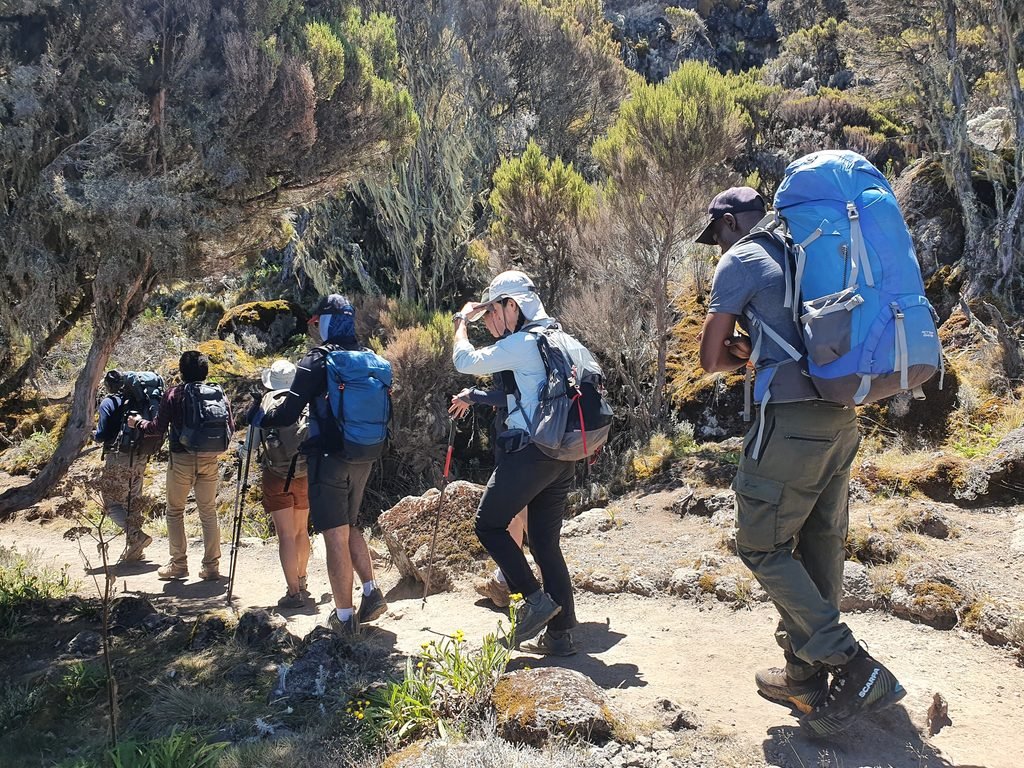
1. Excellent Acclimatization:The Best Kilimanjaro Route for Acclimatization: The 8-Day Lemosho Route | 9 Strong Arguments for Selecting This Climb in 2026, 2027 & 2028
This is the strongest reason to choose Lemosho.
An eight-day schedule gives your body more time to adjust to increasing elevation.
Instead of rushing upward, you gradually move through Kilimanjaro’s ecological zones.
The principle is simple:
Walk high, sleep lower when the itinerary allows, and give your body time to adapt.
No route can eliminate altitude sickness, and no operator can guarantee that you will reach the summit. However, a longer itinerary generally gives climbers a better opportunity to acclimatize than a compressed climb.
The 8-day Lemosho is widely regarded as having a strong balance between duration and acclimatization.
2. Beautiful and Diverse Scenery
Lemosho is not only about reaching the summit.
The journey itself is spectacular.
You begin in the lush montane forest before moving into heath and moorland, then alpine desert and finally the high summit environment.
TANAPA describes Kilimanjaro as having distinct ecological zones, while the park’s wildlife and habitat information highlights the transition from montane forest to moorland, alpine desert and summit icefields.
Along the way, you may encounter:
- Giant heather
- Giant groundsels
- Lobelias
- Shira Plateau
- Lava Tower
- Barranco Valley
- Karanga Valley
- Southern Ice Field views
- Mawenzi Peak
- Kibo
- Uhuru Peak
Every day looks different.
3. A Gradual Start Through the Forest
Your adventure begins at the western side of Kilimanjaro near Londorossi Gate.
The first walking section takes you through montane forest.
The atmosphere is completely different from what you will experience higher on the mountain.
The forest is green and cool, with birds and vegetation surrounding the trail.
Depending on conditions, you may even see some of Kilimanjaro’s forest wildlife. TANAPA notes that species such as black-and-white colobus monkeys and blue monkeys occur in the montane forest.
This gentle beginning allows you to settle into your walking rhythm before reaching the higher elevations.
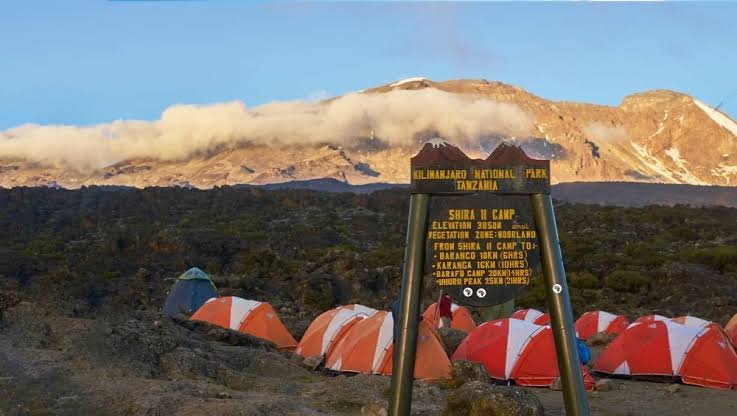
4. The Shira Plateau Is Spectacular:The Best Kilimanjaro Route for Acclimatization: The 8-Day Lemosho Route | 9 Strong Arguments for Selecting This Climb in 2026, 2027 & 2028
One of Lemosho’s great attractions is the Shira Plateau.
As you leave the forest behind, the landscape opens dramatically.
The vegetation becomes shorter, the horizon becomes wider and the mountain feels increasingly wild.
Shira is the remains of one of Kilimanjaro’s volcanic structures; TANAPA identifies Shira as an extinct volcano reaching approximately 3,962 meters.
From the plateau, you can enjoy impressive views toward Kibo and the surrounding mountain landscape.
This is one of the moments when climbers begin to understand the enormous scale of Kilimanjaro.
5. The Route Uses the Southern Circuit
After crossing the western side and Shira Plateau, the route eventually joins Kilimanjaro’s southern circuit.
This is important for acclimatization because the itinerary takes you through progressively higher terrain before returning to lower camps where appropriate.
The route passes major landmarks such as:
Shira , Lava Tower ,Barranco ,Karanga To Barafu
The combination of gradual altitude gain and varied terrain makes the route particularly attractive for climbers seeking a well-paced ascent.
6. You Experience the Famous Barranco Wall
The Barranco Wall is one of the most memorable sections of the climb.
At first glance, it can look intimidating.
But this is not normally a technical rock-climbing section requiring ropes and climbing equipment. Instead, climbers carefully scramble and walk over sections of the wall with the assistance and guidance of their mountain crew.
The climb is physical but rewarding.
Once you reach the top, you can look back toward the valleys and enjoy one of the most impressive views of the trek.
This is also a good example of why an experienced guide matters.
Your guide controls the pace and helps you choose safe movements over the more challenging sections.
7. More Time Means a More Manageable Summit Attempt:The Best Kilimanjaro Route for Acclimatization
Summit night is the hardest part of most Kilimanjaro itineraries.
From Barafu Camp, climbers usually begin the summit attempt during the night.
The goal is to reach Uhuru Peak around sunrise or in the morning, depending on the pace and conditions.
This section is demanding because you are:
- Very high above sea level
- Walking in darkness
- Dealing with cold temperatures
- Physically tired
- Using energy accumulated over several days
The eight-day itinerary does not make summit day easy.
Instead, it gives you more time to prepare for it.
That distinction is important.
Acclimatization improves your chances, but it never guarantees summit success.
8. Less Rushed Than Shorter Routes
One of the biggest mistakes first-time climbers make is focusing only on how quickly they can climb Kilimanjaro.
Kilimanjaro is not a race.
The famous Swahili phrase pole pole means slowly, slowly ,captures the approach perfectly.
A slower pace allows you to conserve energy and gives your guide more opportunity to monitor how you are responding to altitude.
TANAPA’s visitor guidance specifically recommends ascending slowly and reporting altitude symptoms promptly.
This is one reason we recommend the eight-day itinerary to travelers who are not under strict time pressure.
9. A Strong Balance of Scenery, Acclimatization and Adventure
Lemosho is particularly attractive because you do not have to choose between scenery and acclimatization.
You get both.
The route provides:
Scenery: Excellent
Acclimatization: Strong
Adventure: Excellent
Duration: 8 days
Difficulty: Challenging
Crowds: Generally lower in the early western sections before joining busier sections of the mountain.
An independent route comparison similarly describes the standard 8-day Lemosho itinerary as a balance of scenery, acclimatization and relatively low traffic.
Complete 8-Day Lemosho Route Itinerary
Day 1: Londorossi Gate – Mti Mkubwa Camp
Altitude: Approximately 2,100 m to 2,895 m
After breakfast in Moshi or Arusha, your Eko Tanzania Adventures team drives you toward Londorossi Gate.
After completing park procedures, you continue toward the Lemosho trailhead.
Your first hike takes you into the rainforest.
The trail is usually peaceful and surrounded by lush vegetation.
Overnight:
Mti Mkubwa Camp
Hiking:
Approximately 3–4 hours, depending on conditions and pace.
Day 2: Mti Mkubwa – Shira 1 Camp
Today you leave much of the rainforest behind.
The trail climbs toward the Shira Plateau.
The scenery becomes increasingly open, and you begin to experience the dramatic landscape that makes Lemosho special.
Overnight:
Shira 1 Camp
Meals:
Breakfast, lunch and dinner.
Day 3: Shira 1 – Shira 2 – Moir Area
Today you explore the Shira Plateau.
The pace remains controlled, giving you time to acclimatize while enjoying magnificent views.
You may see Kibo rising dramatically in the distance.
Overnight:
Shira area
Meals:
Breakfast, lunch and dinner.
Day 4: Shira – Lava Tower – Barranco Camp
This is an important acclimatization day.
You climb toward the Lava Tower area, reaching a significantly higher elevation before descending toward Barranco.
This follows the classic principle of gaining altitude during the day and sleeping at a lower elevation.
Eventually you arrive at Barranco Camp beneath the impressive Barranco Wall.
Overnight:
Barranco Camp
Meals:
Breakfast, lunch and dinner.
Day 5: Barranco – Karanga Camp
After breakfast, you begin tackling the famous Barranco Wall.
Your guide will assist you through the more challenging sections.
Once above the wall, the trail continues through a spectacular high-altitude landscape.
You eventually reach Karanga Camp.
Overnight:
Karanga Camp
Meals:
Breakfast, lunch and dinner.
Day 6: Karanga – Barafu Camp
Today’s trek takes you toward Barafu Camp.
The landscape becomes increasingly barren as you enter the alpine desert environment.
Barafu is the main preparation point for your summit attempt.
After arriving, you eat, rest and prepare your equipment.
An early dinner is usually followed by sleep before the summit attempt.
Overnight:
Barafu Camp
Meals:
Breakfast, lunch and dinner.
Day 7: Barafu – Uhuru Peak – Mweka Camp
This is the biggest day of your Kilimanjaro adventure.
You wake during the night and begin climbing toward Stella Point.
The trail is steep and demanding.
Your guide maintains a slow, steady pace.
Pole pole.
Eventually, you reach the crater rim.
From Stella Point, you continue toward Uhuru Peak.
And then comes the moment you have been waiting for:
UHURU PEAK – 5,895 METERS
Standing at the summit of Africa is an unforgettable achievement.
After photographs and a short celebration, you begin descending.
You continue toward Mweka Camp for the night.
Overnight:
Mweka Camp
Meals:
Breakfast, lunch and dinner.
Day 8: Mweka Camp – Mweka Gate – Moshi
Your final hiking day is considerably shorter.
You descend through the forest toward Mweka Gate.
After completing park formalities, your vehicle meets you and takes you back to your hotel in Moshi.
You can finally enjoy a hot shower, a comfortable bed and a well-deserved celebration.
End of the climb.
Estimated 8-Day Lemosho Cost for 2026–2028
The exact cost depends on group size, accommodation before and after the climb, season, park fees, crew arrangements and whether you choose a private or group departure.
For planning purposes, a typical 8-day Lemosho package can be budgeted approximately as follows:
| Package Type | Estimated Cost Per Person |
|---|---|
| Group climb, 5–8 people | US$2,400–$3,200 |
| Small group, 3–4 people | US$2,700–$3,500 |
| Private climb, 2 people | US$3,000–$4,000 |
| Private single climber | US$3,500–$4,500+ |
These are planning ranges rather than a fixed quotation. Official park fees and other charges should always be checked against the current TANAPA tariff before confirming a 2026, 2027 or 2028 booking.
For comparison, one currently published 2027 8-day Lemosho group departure is listed at US$3,299 per person, illustrating how operator, departure date and package structure can affect the final price.
What Is Included?
A comprehensive Eko Tanzania Adventures 8-day Lemosho package can include:
- Airport transfer where applicable
- Hotel accommodation before and after the climb
- Professional licensed mountain guides
- Porters
- Mountain cook
- Park entrance fees
- Camping fees
- Rescue fees
- Mountain tents
- Sleeping mats
- Three meals per day on the mountain
- Drinking water
- Summit support
- Transportation to and from the mountain gate
- Government taxes and applicable fees
- Summit certificate
TANAPA confirms that climbing Kilimanjaro must be undertaken with a licensed guide/operator and that guides and porter services are arranged through licensed operators.
What Is Not Included?
Unless specifically included in your quotation, budget separately for:
- International flights
- Tanzania visa
- Travel insurance
- Personal travel insurance covering trekking
- Personal equipment rental
- Tips for guides, porters and cooks
- Personal drinks
- Laundry
- Personal expenses
- Extra hotel nights
- Helicopter evacuation insurance
- Optional sightseeing
Who Should Choose the 8-Day Lemosho Route?
This route is particularly suitable for:
First-Time Kilimanjaro Climbers
If this is your first high-altitude trek, the additional days can be valuable.
Travelers Prioritizing Acclimatization
If your primary objective is to maximize your opportunity to adapt gradually, an eight-day route is a strong choice.
Photographers
The scenery changes dramatically throughout the climb, giving photographers excellent opportunities.
Couples and Friends
The route is ideal for private groups who want to share a major adventure without rushing.
Physically Active Travelers
You do not need to be an elite athlete, but you should be prepared for long days of walking at altitude.
Best Months to Climb Kilimanjaro in 2026, 2027 & 2028
Kilimanjaro can be climbed throughout the year, but weather conditions vary.
Generally favorable periods include:
January–February: Often warm and relatively dry.
June–October: Popular dry-season period.
September–October: Often attractive for hikers seeking favorable conditions.
December: Can also provide good climbing opportunities, although weather can change.
The best date ultimately depends on your priorities, tolerance for crowds and flexibility.
For any 2026–2028 departure, Eko Tanzania Adventures can help you choose dates that fit your preferred travel season.
What Should You Pack?
Your equipment can make a major difference.
Bring:
- Waterproof hiking boots
- Warm thermal layers
- Fleece
- Insulated jacket
- Waterproof jacket
- Waterproof trousers
- Warm gloves
- Hat
- Sun hat
- Sunglasses
- Headlamp
- Trekking poles
- Sleeping bag
- Water bottles or hydration system
- Backpack
- Duffel bag
- Sunscreen
- Lip balm
- Personal medication
- First-aid essentials
- Camera
- Power bank
- Snacks
Remember that conditions can change dramatically as you move from tropical forest to alpine desert and summit conditions.
Altitude Safety on the 8-Day Lemosho Route
Altitude should always be taken seriously.
You may experience symptoms such as:
- Headache
- Fatigue
- Reduced appetite
- Nausea
- Dizziness
- Shortness of breath
Mild symptoms can occur as the body adapts, but serious altitude illness requires immediate attention.
Do not hide symptoms from your guide because you are determined to reach the summit.
Your guide needs accurate information to make safe decisions.
TANAPA advises climbers to stay hydrated, ascend slowly and report symptoms promptly.
A summit attempt should never be more important than your safety.
Why Book Early?
Lemosho is one of the most sought-after Kilimanjaro routes.
Planning early gives you more flexibility regarding:
- Preferred climbing dates
- Private versus group departures
- Hotel choices
- Number of climbers
- Safari combinations
- Zanzibar extensions
- Airport transfers
- Equipment arrangements
You can also combine your climb with a Tanzania safari.
For example:
8-Day Lemosho + 3-Day Serengeti Safari
or
8-Day Lemosho + 5-Day Northern Tanzania Safari
or
8-Day Lemosho + Zanzibar Beach Holiday
This allows you to transform your Kilimanjaro climb into a complete Tanzania holiday.
Why Choose Eko Tanzania Adventures?
At Eko Tanzania Adventures, the focus should not simply be on getting you to the mountain.
A successful Kilimanjaro experience begins with proper preparation.
Your team should understand your experience level, preferred pace, fitness, equipment and travel schedule.
During the trek, your mountain crew supports you from the rainforest to the summit.
The philosophy is straightforward:
Slow pace. Good preparation. Strong teamwork. Safety first.
Kilimanjaro is a serious mountain, even though it does not require technical mountaineering skills on the standard trekking routes.
Final Conclusion
The 8-Day Lemosho Route is an outstanding choice for travelers looking for a balanced Kilimanjaro experience in 2026, 2027 and 2028.
Its greatest strength is not simply that it is eight days long.
It is the way those days are used.
You begin gradually in the rainforest, cross the spectacular Shira Plateau, pass through the high alpine landscape, experience Lava Tower and Barranco, continue toward Karanga and Barafu, and finally make your summit attempt toward Uhuru Peak.
TANAPA describes Kilimanjaro as Africa’s highest mountain at 5,895 meters, and its visitor guidance emphasizes the importance of acclimatization and slow ascent.
That makes the 8-day Lemosho itinerary a compelling option for anyone who would rather give their body time to adapt than rush toward the summit.
8 Days. One Mountain. One Goal. Uhuru Peak.
With Eko Tanzania Adventures, your 2026, 2027 or 2028 Kilimanjaro adventure can be designed around a careful pace, professional mountain support, responsible trekking practices and enough time to appreciate the extraordinary journey—not just the final summit.
The summit is the destination, but the eight-day Lemosho journey is the adventure.