The Complete Guide to African Safari Tours for Small Groups: Advantages, Top Locations, and How to Pick the Best One;Planning an African safari with a small group can be one of the most rewarding ways to experience the continent’s wildlife, landscapes, cultures, and unforgettable sunsets. Unlike large organized tours, small-group safaris create a more personal atmosphere, give travelers greater flexibility, and often make it easier to connect with your guide and fellow travelers.
At Eko Tanzania Adventures, we understand that every traveler wants something different from a safari. Some guests dream of watching lions across the Serengeti plains, while others want to see elephants in Tarangire, explore the Ngorongoro Crater, or combine wildlife with authentic cultural experiences.
This complete guide explains the advantages of small-group African safari tours, highlights some of the continent’s most remarkable safari destinations, and provides practical advice for choosing a safari that matches your interests, budget, travel style, and available time.
What Is a Small-Group African Safari?
A small-group safari is a guided wildlife journey where travelers share a safari vehicle and itinerary with a limited number of guests. The exact group size depends on the tour company, destination, vehicle, and package, but small groups generally provide a more intimate experience than large coach-style tours.
The experience normally includes transportation in a safari vehicle, a professional guide, accommodation, meals depending on the package, park or conservation fees, and scheduled game drives.
The major difference is the atmosphere.
Instead of traveling with a large crowd, you spend your days with a smaller number of people who share an interest in wildlife and adventure. This can make conversations easier, game-viewing experiences more relaxed, and the entire journey feel more personal.
For travelers visiting Africa for the first time, a small-group safari can also provide the reassurance of having an experienced local guide while still enjoying the social experience of traveling with others.
Why Choose a Small-Group Safari?
There are many reasons travelers choose small-group safaris rather than completely private tours or large group excursions.
1. A More Personal Safari Experience
One of the biggest advantages is the personal atmosphere.
With fewer travelers in the vehicle, there is usually more opportunity to communicate with your guide. You can ask questions about animal behavior, plants, local communities, conservation, geography, and culture without feeling lost in a large crowd.
Your guide becomes more than a driver. They can help you understand what you are seeing and explain the small details that might otherwise go unnoticed.
A distant movement in the grass could become an exciting wildlife lesson when your guide explains what is happening.
2. Small Groups Can Be Social Without Feeling Crowded
A safari does not have to be a completely private experience to feel special.
Small-group tours are ideal for solo travelers, couples, friends, and people who enjoy meeting travelers from different countries.
You may share breakfast with new friends, exchange stories after a game drive, and watch the African sunset together.
For solo travelers in particular, this can provide companionship while avoiding the cost of booking a completely private safari.
3. Better Value for Money
Private safaris can be expensive because one traveler or family may be responsible for the entire vehicle and guide costs.
In a small group, many expenses are shared among travelers.
This can make it possible to enjoy quality accommodation, experienced guides, comfortable safari vehicles, and visits to famous national parks without paying the full cost of a private safari.
However, travelers should always compare what is included rather than looking only at the advertised price.
A cheaper package may exclude important expenses such as park fees, meals, airport transfers, or accommodation.
4. Excellent Wildlife Viewing Opportunities
Small-group safaris are particularly attractive for travelers who want to spend meaningful time watching wildlife.
In Tanzania, for example, destinations such as Serengeti National Park, Tarangire National Park, and the Ngorongoro Conservation Area offer opportunities to see a wide range of animals.
You may encounter elephants, lions, giraffes, zebras, wildebeest, buffalo, hippos, antelopes, and numerous bird species.
Wildlife sightings can never be guaranteed, because animals are wild and constantly moving. However, experienced guides understand animal behavior, seasonal patterns, habitats, and park conditions, all of which can improve the quality of your game-viewing experience.
5. More Comfortable Communication With Your Guide
A good guide can make a major difference to a safari.
In a small group, it is easier for everyone to communicate what interests them.
Perhaps you are particularly interested in photography. Maybe another traveler wants to learn about birds, while someone else is fascinated by big cats.
A skilled guide can often balance these interests and make the journey enjoyable for everyone.
At Eko Tanzania Adventures, the goal should be to create a safari where travelers do not simply pass through Tanzania but understand and appreciate the places they visit.
Top African Safari Destinations for Small Groups
Africa has many exceptional safari destinations. Your ideal destination depends on what you want to see, the time you have available, your budget, and the season of your visit.
Below are some of the destinations worth considering.
1. Serengeti National Park, Tanzania
The Serengeti is one of Africa’s most famous wildlife destinations.
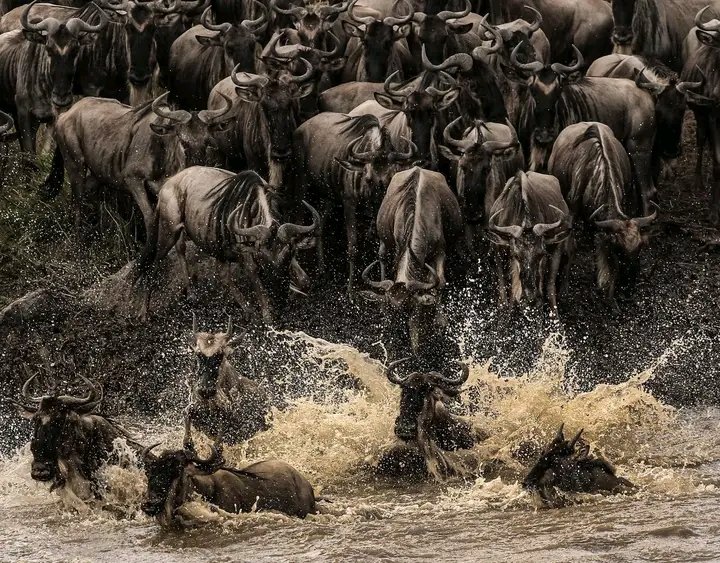
Its enormous grasslands support large populations of wildlife and are particularly associated with the Great Migration.


7
A Serengeti safari can provide opportunities to see lions, cheetahs, leopards, elephants, giraffes, zebras, wildebeest, buffalo, and many other species.
One important consideration is timing. The Great Migration is a year-round ecological process, and where the herds are located changes throughout the year.
Therefore, instead of simply asking, “When is the migration?” travelers should ask where the herds are expected to be during their specific travel dates.
2. Ngorongoro Crater, Tanzania:The Complete Guide to African Safari Tours for Small Groups: Advantages, Top Locations, and How to Pick the Best One
The Ngorongoro Crater offers an extraordinary wildlife environment.
The crater’s enclosed landscape provides a remarkable concentration of wildlife, making it a popular destination for travelers who have limited time but want a strong safari experience.
Visitors may see lions, elephants, buffalo, hippos, zebras, wildebeest, flamingos, and other wildlife.
The wider Ngorongoro Conservation Area also has important cultural and natural significance.
A small-group itinerary combining Ngorongoro with Serengeti or Tarangire can provide a diverse safari experience.
3. Tarangire National Park, Tanzania:The Complete Guide to African Safari Tours for Small Groups: Advantages, Top Locations, and How to Pick the Best One
Tarangire is especially known for its elephants, ancient-looking baobab trees, and varied landscapes.


The Complete Guide to African Safari Tours for Small Groups: Advantages, Top Locations, and How to Pick the Best One
It is an excellent destination to consider when building a northern Tanzania safari itinerary.
The park can also be combined conveniently with other destinations in northern Tanzania, making it suitable for short and longer safari programs.
For travelers who love elephants and dramatic landscapes, Tarangire can be a memorable part of a small-group safari.
4. Lake Manyara National Park, Tanzania
Lake Manyara offers a different atmosphere from the wide-open Serengeti plains.
The park contains forest, woodland, grassland, and lake environments, supporting a variety of wildlife and birdlife.


6 The Complete Guide to African Safari Tours for Small Groups: Advantages, Top Locations, and How to Pick the Best One
Its location also makes it convenient to combine with Tarangire and Ngorongoro on a northern Tanzania itinerary.
5. Maasai Cultural Experiences
A safari does not have to focus exclusively on wildlife.
Cultural experiences can add another dimension to the journey.
Travelers may have opportunities to learn about traditional livelihoods, local history, crafts, food, music, and daily life.
When arranging cultural visits, responsible tourism is important. Experiences should respect local communities and avoid treating people or traditions simply as entertainment.
A good cultural experience should encourage genuine interaction and mutual respect.
6. Kenya’s Maasai Mara
Across the border in Kenya, the Maasai Mara is another famous safari destination.
The Mara ecosystem is well known for large wildlife populations and its connection to the broader Serengeti-Mara ecosystem.
Travelers considering Tanzania and Kenya together can create a broader East African safari itinerary, although cross-border travel requires additional planning.
How to Choose the Best Small-Group Safari
There is no single safari that is perfect for everyone. The right choice depends on your personal priorities.
1: Decide What You Want to See
Start with wildlife.
Ask yourself:
- Do I want to see the Big Five?
- Am I interested in elephants?
- Do I want to experience the Great Migration?
- Am I interested in birds?
- Do I want to see predators?
- Do I want to combine wildlife with culture?
- Do I want to visit several national parks?
Your answers will help determine which destinations belong in your itinerary.
2: Choose the Right Travel Season
Africa’s wildlife experiences change throughout the year.
The dry and wet seasons can influence vegetation, road conditions, animal movements, birdlife, and overall safari conditions.
However, there is no universally perfect month for every traveler.
For example, some travelers prioritize wildlife concentration, while others prefer greener landscapes, fewer visitors, or particular migration events.
Your travel dates should therefore be considered alongside your priorities.
3: Decide How Long You Want to Travel
A short safari can be rewarding, but adding days allows you to explore more destinations without rushing.
2–3 Days
Suitable for travelers with limited time.
A short itinerary might focus on Tarangire and Ngorongoro or another compact combination.
4–6 Days
This provides more flexibility.
You can potentially combine several major destinations and spend more time on game drives.
7 Days or More
A longer safari allows you to slow down.
You can spend additional nights in major wildlife areas rather than constantly changing accommodation.
For travelers interested in a more meaningful safari, extra time can be particularly valuable.
4: Consider Your Accommodation Style
Small-group safaris can use different accommodation categories.
Budget Camping
Suitable for travelers who prioritize adventure and affordability.
Mid-Range Lodges and Tented Camps
A popular balance between comfort and cost.
Luxury Lodges and Camps
Designed for travelers seeking premium accommodation, additional comfort, and more exclusive surroundings.
Your accommodation choice should match the overall safari experience you want rather than simply choosing the most expensive option.
5: Check What the Safari Price Includes
This is one of the most important steps.
Before paying a deposit, ask for a detailed list of inclusions.
A package may include:
- Safari vehicle
- Professional driver-guide
- Accommodation
- Meals
- Park entry fees
- Conservation fees
- Game drives
- Airport transfers
- Drinking water
- Camping equipment, where applicable
Also ask about exclusions.
Potential additional expenses may include international flights, visas, travel insurance, tips, personal purchases, alcoholic beverages, laundry, and optional activities.
A transparent quotation makes it easier to compare safari packages fairly.
6: Ask About the Group Size
Small group can mean different things to different companies.
Ask exactly how many people will share the vehicle.
Also ask whether the group size can change during the trip.
Vehicle configuration matters too. You want enough space for passengers and luggage, especially on longer journeys.
Comfort becomes particularly important when you spend several hours driving between destinations
7: Look at the Guide Experience
The guide is one of the most important parts of a safari.
A knowledgeable guide can explain:
- Animal behavior
- Tracks and signs
- Bird species
- Local ecosystems
- Conservation
- Geography
- Local communities
- Cultural traditions
The best guide for you is not necessarily the person with the longest list of qualifications. Look for someone who communicates clearly, respects wildlife, prioritizes safety, and understands that every traveler has different interests.
Responsible Wildlife Tourism
A meaningful safari should respect wildlife.
Travelers should avoid encouraging guides to chase animals, disturb wildlife, or create unsafe situations simply to obtain photographs.
Responsible guiding means maintaining appropriate distances, following park regulations, minimizing disturbance, and allowing animals to behave naturally.
Small groups can support this approach because they create a more controlled and personal environment.
Responsible tourism also extends beyond wildlife.
It includes respecting local communities, reducing unnecessary waste, supporting local employment, and choosing tourism businesses that take conservation seriously.
What to Pack for a Small-Group Safari
Packing does not need to be complicated.
Useful items include:
- Lightweight, comfortable clothing
- Neutral-colored shirts and trousers
- A warm layer for early-morning drives
- Comfortable walking shoes
- Hat or cap
- Sunglasses
- Sunscreen
- Insect repellent
- Binoculars
- Camera and spare batteries
- Power bank
- Personal toiletries
- Reusable water bottle
- Small daypack
- Necessary travel documents
Avoid overpacking.
Safari vehicles have limited luggage space, so soft bags are often more practical than large hard-shell suitcases.
What Is a Typical Day Like?
A typical safari day starts early.
You may wake before sunrise, have breakfast, and head out for a morning game drive.
Early morning is often a wonderful time to be in the wilderness. The air can be cool, the light is excellent for photography, and animals may be active.
After several hours in the park, you may return to your accommodation for lunch and relaxation.
Depending on the itinerary, an afternoon game drive may begin later in the day and continue toward sunset.
Evenings are often spent sharing dinner and discussing the day’s sightings.
That rhythm—early mornings, wildlife encounters, quiet afternoons, and evening conversations—is part of what makes safari travel so memorable.
Example Small-Group Tanzania Safari Package
6-Day Tanzania Small-Group Wildlife Safari
Day 1: Arrival in Arusha
Arrive in Arusha and meet your safari representative.
Depending on your arrival time, you can relax at your accommodation and prepare for the safari.
Day 2: Arusha – Tarangire National Park
Travel to Tarangire for your first major wildlife experience.
Enjoy a game drive among elephants, giraffes, zebras, buffalo, antelopes, and other wildlife before spending the night near the park or in the surrounding area.
Day 3: Tarangire – Serengeti
Travel toward the Serengeti.
The journey itself becomes part of the adventure as the landscape changes dramatically.
Arrive in the Serengeti and enjoy a game drive depending on time.
Day 4: Full-Day Serengeti Safari
Spend a full day exploring the Serengeti.
This gives you more time to search for predators, herbivores, birds, and other wildlife while appreciating the enormous scale of the ecosystem.
Day 5: Serengeti – Ngorongoro
Enjoy another game drive before continuing toward the Ngorongoro area.
The route provides opportunities to see changing landscapes and wildlife along the way.
Day 6: Ngorongoro Crater – Arusha
Descend into the Ngorongoro Crater for a game drive.
After exploring the crater, begin the journey back to Arusha for the end of your safari.
This itinerary is an example and can be adjusted according to travel dates, wildlife interests, accommodation preferences, budget, and available time.
Why Book With Eko Tanzania Adventures?
At Eko Tanzania Adventures, our approach to small-group safaris is centered on creating experiences that feel personal, informative, and connected to Tanzania.
We understand that travelers are not simply buying transportation between national parks. They are investing in memories.
Our safari planning can focus on the details that matter to you, including destination selection, accommodation preferences, travel season, group size, game-drive interests, and overall budget.
We also believe that responsible guiding is an important part of a quality safari. Wildlife should be respected, local communities should be treated with dignity, and travelers should have the opportunity to understand the landscapes they are visiting.
Final Thoughts: Making Your Small-Group Safari Meaningful
A small-group African safari can be much more than a checklist of animals.
It can be waking before sunrise and watching the first light spread across the savanna.
It can be seeing elephants moving quietly through the woodland.
It can be listening to a guide explain tracks in the dust.
It can be sharing stories with fellow travelers after an exciting game drive.
And it can be realizing that Africa’s greatest attraction is not just one animal or one national park, but the relationship between wildlife, landscapes, people, and conservation.
When choosing your safari, take time to consider your priorities. Look beyond the headline price. Check the itinerary, group size, accommodation, inclusions, guide arrangements, transportation, travel season, and responsible-tourism practices.
For travelers looking for a memorable East African experience, Tanzania provides an exceptional combination of wildlife destinations, dramatic landscapes, cultural experiences, and flexible safari itineraries.
With thoughtful planning and the right small-group setup, your safari can become an experience you remember long after you have returned home.
Eko Tanzania Adventures can help you build a small-group Tanzania safari around the destinations, travel dates, accommodation style, and experiences that matter most to you.