The Finest Marangu Route Group Tours on Kilimanjaro 2026/2027: Mount Kilimanjaro is one of the most extraordinary natural attractions in Africa and a dream destination for travellers seeking an unforgettable adventure. Located in northern Tanzania, this magnificent mountain rises to 5,895 metres above sea level, making it the highest mountain in Africa and the tallest free-standing mountain in the world. Its snow-covered summit, beautiful landscapes and remarkable natural diversity make it one of the most recognisable mountains on the planet.
Climbing Mount Kilimanjaro is an experience that brings together adventure, nature, physical achievement and cultural discovery. Throughout the journey, climbers pass through different ecological zones, each offering a unique atmosphere and landscape. The lower slopes are covered by tropical rainforest, where tall trees, thick vegetation and birds create a peaceful natural environment. Higher up, the forest gives way to open moorland, giant mountain plants, rocky landscapes and the fascinating alpine desert. At the highest elevations, the scenery becomes increasingly dramatic, with glaciers, snow and the breathtaking summit of Uhuru Peak.
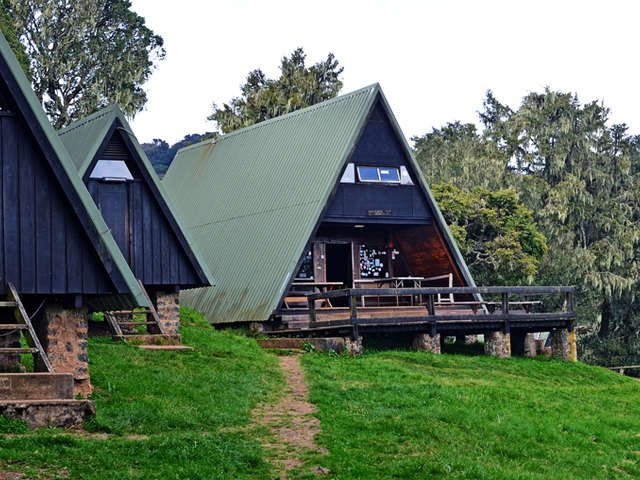
For travellers planning to climb Kilimanjaro in 2026 or 2027, the Marangu Route offers a distinctive way to experience this famous mountain. Often known as the Coca-Cola Route, Marangu is one of the oldest and most established climbing routes on Kilimanjaro. It is particularly recognised for its mountain hut accommodation, established trail and gradual approach through the mountain’s different landscapes.
The Marangu Route is also an attractive choice for people who prefer to climb as part of a group. Group tours bring travellers together to share the experience, encourage one another and enjoy the journey with the support of a mountain crew. Whether you are travelling alone, with friends or as part of a larger adventure holiday, joining a group climb can make your Kilimanjaro experience more social and memorable.
The Finest Marangu Route Group Tours on Kilimanjaro 2026/2027 are designed for travellers who want to discover the beauty of Tanzania’s highest mountain while sharing the adventure with other climbers. With suitable preparation, a responsible itinerary and appropriate mountain support, the journey towards Uhuru Peak can become one of the most rewarding experiences of your life.

Why Choose The Finest Marangu Route Group Tours on Kilimanjaro 2026/2027?
The Marangu Route is popular because it offers a different experience from routes that use mountain tents. Instead of camping throughout the climb, trekkers stay in designated mountain huts along the route. These huts provide shared sleeping accommodation and basic facilities, making Marangu an appealing option for climbers who prefer not to sleep in tents.
Another advantage is the established trail. The route follows a well-known path from the Marangu Gate through Mandara Hut, Horombo Hut and Kibo Hut before continuing to Uhuru Peak. The gradual progression between these camps allows climbers to experience the mountain at different elevations.
Marangu is also the only standard Kilimanjaro route that uses the same general trail for both ascent and descent. This means you climb through the Marangu side of the mountain and return along the same route. Although you encounter some familiar sections on the way down, the changing light and different direction of travel can provide a new perspective on the landscape.
For group travellers, the route offers an opportunity to share daily walking stages, meals and mountain experiences with other participants. The group environment can provide encouragement during challenging sections, particularly as the altitude increases.
However, choosing the Marangu Route should not be based on accommodation alone. The five-day itinerary is relatively short and offers limited time for acclimatisation. A six-day itinerary, which includes an additional acclimatisation day at Horombo Hut, is generally a better option for many climbers.
What Makes Marangu Route Group Tours Special?
A group climb is more than simply walking up a mountain with other people. It is an opportunity to share a major adventure with travellers who have a similar goal.
One of the most enjoyable aspects of a group tour is the sense of companionship. During the climb, participants walk together, share experiences at the mountain huts and encourage each other along the trail. These shared moments can make the journey more enjoyable, especially during the longer and more demanding stages.
Group tours can also be a practical choice for solo travellers. Instead of arranging a private expedition, you may be able to join a scheduled departure with other climbers, depending on availability and the operator’s group arrangements.
Another benefit is having an organised mountain team. Professional guiding, porter support, meal arrangements and daily briefings help coordinate the practical aspects of the climb. Your guide will explain the trail, set an appropriate walking pace and monitor the group’s general condition.
Group departures are subject to availability, and the number of participants may vary. Before booking, confirm the departure date, group size, minimum number of participants and arrangements if the group does not reach its expected size.
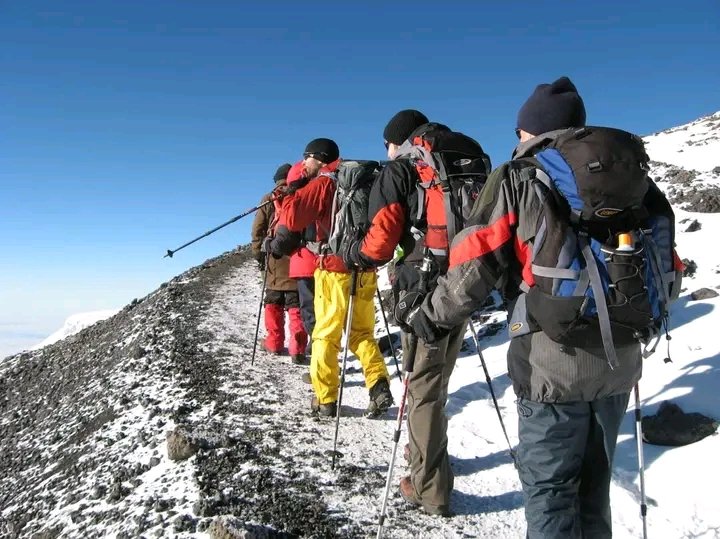
Marangu Route Overview: 6-Day Kilimanjaro Group Climb
For travellers considering the Marangu Route in 2026 or 2027, the six-day itinerary is a popular option because it includes an additional day for acclimatisation at Horombo Hut.
The route starts at Marangu Gate and continues through the rainforest towards Mandara Hut. From there, climbers move towards Horombo Hut, where they spend an additional day adjusting to the altitude before continuing towards Kibo Hut.
The final ascent begins during the night, taking climbers towards Gilman’s Point and then Uhuru Peak. After reaching the summit, the group descends towards Horombo Hut and continues to Marangu Gate the following day.
Main route highlights include:
- Starting the adventure at Marangu Gate.
- Walking through Kilimanjaro’s beautiful rainforest.
- Staying overnight at Mandara Hut.
- Exploring the open moorland around Horombo Hut.
- Spending an additional acclimatisation day on the mountain.
- Enjoying views of Mawenzi and Kibo peaks.
- Climbing towards Kibo Hut.
- Reaching Gilman’s Point and Uhuru Peak.
- Descending through the Marangu Route.
- Sharing the experience with fellow group climbers.
Detailed Six-Day Marangu Route Itinerary
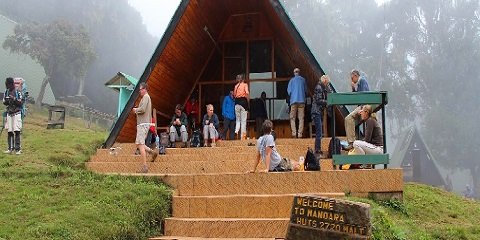
Day 1: Marangu Gate to Mandara Hut
Your Kilimanjaro adventure begins with a transfer from your hotel in Moshi or Arusha to Marangu Gate, located on the southeastern side of Mount Kilimanjaro.
After arriving at the park entrance, you complete the registration procedures while your guide and mountain crew organise the necessary arrangements. Once everything is ready, you begin walking along the established trail into the rainforest.
The first day offers a wonderful introduction to Kilimanjaro’s natural environment. The trail passes through lush vegetation, tall trees and areas of thick forest. You may hear different bird calls and, depending on the conditions, encounter some of the wildlife that lives on the mountain’s lower slopes.
The walking path gradually climbs towards Mandara Hut. Although the first day is generally considered manageable, it is important to walk slowly and avoid using too much energy at the beginning of the expedition.
After reaching Mandara Hut, you settle into the shared mountain accommodation and enjoy a meal prepared by the mountain team. You can spend the evening relaxing, getting to know your fellow climbers and preparing for the next day.
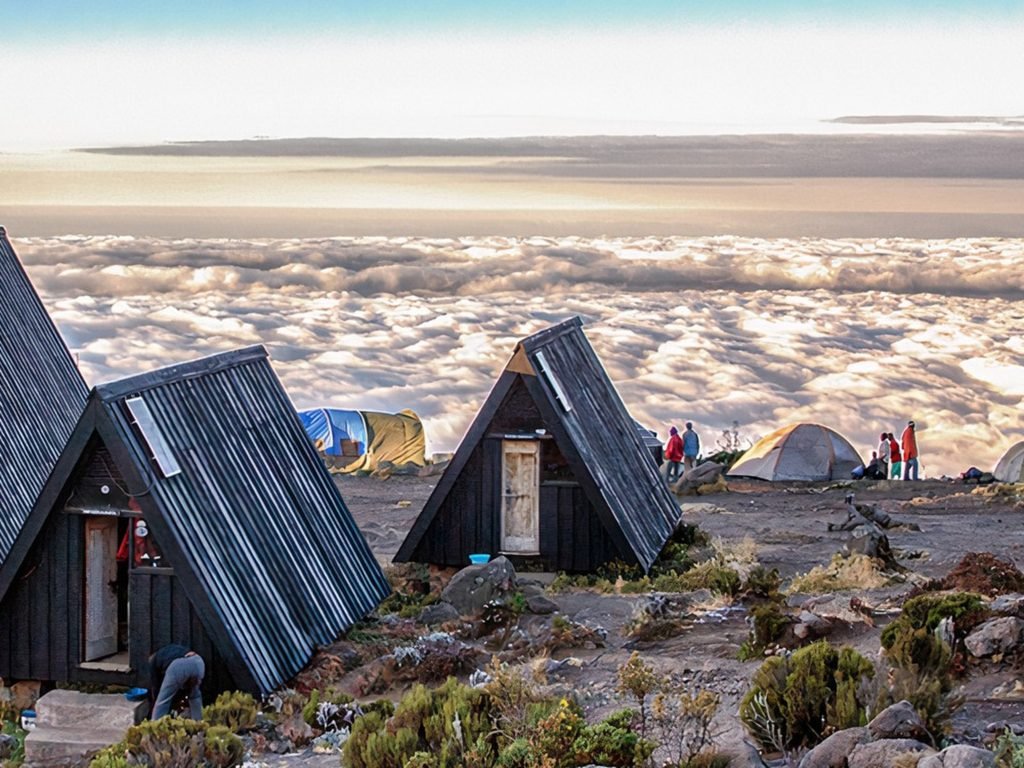
Day 2: Mandara Hut to Horombo Hut
After breakfast, you leave the rainforest and continue towards Horombo Hut. As you gain altitude, the vegetation becomes more open, and the scenery changes into beautiful moorland.
This section offers impressive views of the mountain environment. You may see giant heathers, unique high-altitude plants and open landscapes that contrast with the dense forest from the previous day.
As you continue walking, the views towards Mawenzi and Kibo peaks become increasingly impressive when the weather is clear. These two volcanic peaks are among the most recognisable features of Kilimanjaro.
The trail gradually climbs towards Horombo Hut, which is located at approximately 3,720 metres. This is an important resting point on the Marangu Route and serves as the base for the additional acclimatisation day.
After arriving, you can relax, enjoy your meal and spend time with the other climbers. Your guide will provide information about the following day’s activities and explain how to manage the increasing altitude.
Elevation: Approximately 2,720 metres to 3,720 metres.
Walking time: Approximately 5–7 hours.
Accommodation: Horombo Hut.
Day 3: Acclimatisation Day at Horombo Hut
The third day is an important part of the six-day Marangu itinerary. Instead of moving directly to a higher camp, you spend an additional day at Horombo Hut to give your body more time to adjust to the altitude.
Depending on your guide’s assessment, weather and the itinerary, you may take a short acclimatisation walk towards the Zebra Rocks area or another suitable nearby location before returning to Horombo Hut.
Zebra Rocks is a distinctive natural feature known for its contrasting black-and-white rock patterns. The walk provides an opportunity to explore the mountain surroundings while experiencing a higher elevation before returning to sleep at Horombo.
This additional day is valuable because altitude affects every climber differently. Even people who are physically fit can experience symptoms when climbing to higher elevations. Spending more time on the mountain may help your body adjust, although it does not remove the risk of altitude sickness.
Use the day to rest, drink enough water, eat properly and listen to your guide’s advice. If you experience a headache, nausea, dizziness or unusual tiredness, inform your guide immediately.
Day 4: Horombo Hut to Kibo Hut
After breakfast, you leave Horombo Hut and continue towards Kibo Hut, the final overnight stop before the summit attempt.
The landscape becomes increasingly dry and open as you move into the alpine desert zone. The trail passes between Mawenzi and Kibo, providing impressive views of the mountain’s volcanic landscape.
This is a relatively long walking day, and the increasing altitude makes it important to maintain a slow and steady pace. You should avoid rushing, even if you feel strong during the early part of the walk.
As you approach Kibo Hut, vegetation becomes limited, and the environment looks increasingly rocky and exposed. The surroundings are very different from the rainforest where your adventure began.
After reaching Kibo Hut, you have time to rest and prepare for the summit attempt. Your guide will explain the departure time, expected walking conditions and equipment required for the night ascent.
Dinner is usually served early, and climbers are encouraged to rest as much as possible. The summit attempt normally begins around midnight or in the early hours of the following morning.
Elevation: Approximately 3,720 metres to 4,703 metres.
Walking time: Approximately 5–7 hours.
Accommodation: Kibo Hut.
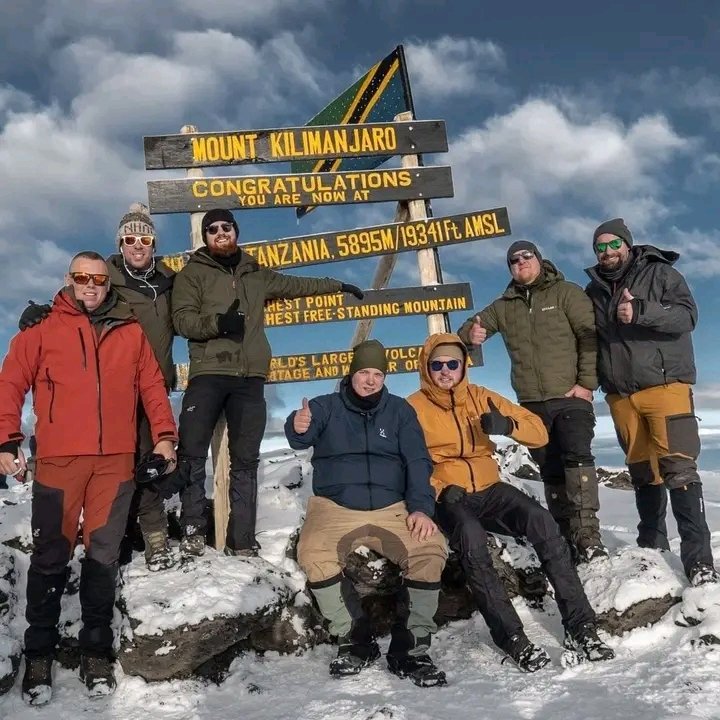
Day 5: Kibo Hut to Uhuru Peak and Descent to Horombo Hut
This is the most challenging and rewarding day of your Marangu Route adventure. The summit attempt normally starts around midnight, when the group leaves Kibo Hut and begins climbing towards Gilman’s Point.
The trail is steep and demanding, with loose volcanic gravel and rocky sections. The cold temperatures, darkness and high altitude make this stage physically challenging. Your guide will maintain a careful pace and monitor how the climbers are responding to the conditions.
As you continue climbing, you eventually approach Gilman’s Point, located at approximately 5,681 metres on the crater rim. Reaching this point is a major achievement, but the journey is not finished yet.
From Gilman’s Point, you continue along the crater rim towards Uhuru Peak, the highest point on Mount Kilimanjaro at 5,895 metres above sea level.
Standing at Uhuru Peak is an unforgettable moment. After several days of walking, preparation and determination, you have reached the roof of Africa. If weather and conditions allow, you can take photographs and enjoy the remarkable views across the mountain.
After celebrating your achievement, you begin descending towards Kibo Hut for a short rest before continuing down to Horombo Hut.
The descent is long and can be tiring after the summit attempt. Take care on loose gravel and follow your guide’s instructions throughout the journey.
Elevation: Approximately 4,703 metres to 5,895 metres, then down to approximately 3,720 metres.
Walking time: Often around 10–15 hours or longer, depending on conditions and individual pace.
Accommodation: Horombo Hut.
Day 6: Horombo Hut to Marangu Gate
After breakfast, you begin the final descent from Horombo Hut towards Marangu Gate.
The trail takes you through the open moorland before gradually returning to the rainforest zone. The scenery becomes greener as you lose altitude, and the warmer temperatures can make the lower sections feel more comfortable.
Although the final day does not involve another summit attempt, walking downhill for several hours can be tiring, especially after the previous day’s long ascent and descent.
Your guide and mountain crew will accompany the group as you continue towards the park exit. At Marangu Gate, you complete the necessary park procedures and receive your summit certificate if you have reached the required summit point.
Your driver will then transfer you to your hotel in Moshi or Arusha, depending on your arrangements.
After six days on the mountain, you can enjoy a warm shower, a comfortable bed and time to reflect on your achievement.
Elevation: Approximately 3,720 metres to 1,870 metres.
Walking time: Approximately 5–7 hours.
Accommodation: Hotel accommodation in Moshi or Arusha, if included in your package.
Accommodation on the Marangu Route
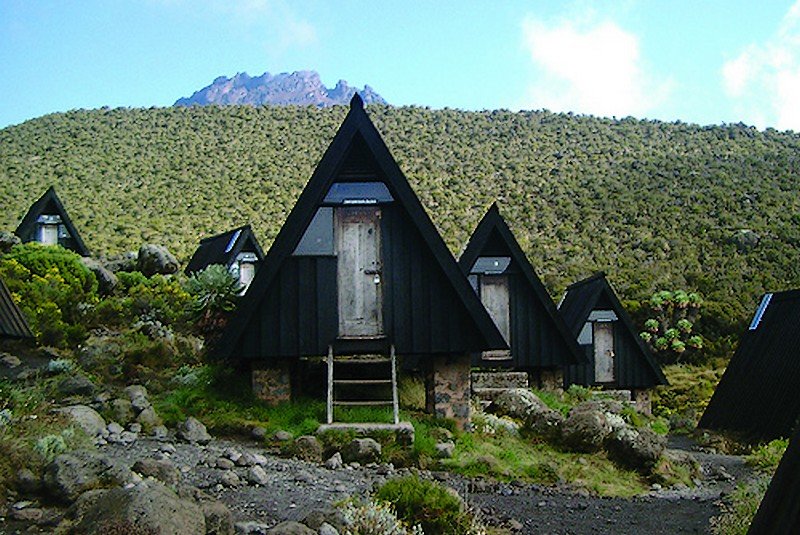
One of the main features that makes the Marangu Route different from other Kilimanjaro routes is its mountain hut accommodation.
Rather than sleeping in tents, climbers stay in designated huts at Mandara, Horombo and Kibo. These facilities provide shared sleeping areas, usually with bunk beds. Climbers should expect simple mountain accommodation rather than hotel-style comfort.
The huts offer shelter from the weather and create opportunities to interact with other trekkers. Sharing accommodation with fellow climbers can also make the group experience more enjoyable.
Facilities vary between camps, and availability may depend on park arrangements. It is important to understand that the mountain huts are basic, so bringing suitable sleeping equipment and personal essentials remains important.
Before booking, confirm which sleeping equipment is supplied and whether you need to bring or rent a sleeping bag.
How Difficult Is the Marangu Route?
The Marangu Route is often described as one of the more straightforward routes on Kilimanjaro because it follows a well-established trail and uses mountain huts. However, this does not mean that climbing it is easy.
The trek involves several days of walking at increasing elevations, and the final summit attempt is physically demanding. Climbers must be prepared for steep sections, long walking hours, cold temperatures and the effects of reduced oxygen.
The five-day Marangu itinerary is relatively short and offers limited acclimatisation time. For many travellers, the six-day option is preferable because it includes an additional day at Horombo Hut.
Even with six days, altitude sickness remains a possibility. Fitness, age and previous hiking experience do not guarantee that someone will acclimatise successfully.
A responsible guide should monitor the group and recommend descent if a climber develops symptoms that make continuing unsafe.
Best Time to Climb Kilimanjaro via the Marangu Route in 2026/2027
Mount Kilimanjaro can be climbed throughout the year, but some periods generally offer more favourable trekking conditions.
January to March: These months are generally warmer and can offer good climbing conditions. February is particularly popular with travellers who prefer relatively dry weather, although occasional rain and snow are possible.
June to October: This is another popular climbing period, often associated with drier conditions. The mountain can be busier during the main holiday months, so early planning is recommended.
November to December: The short rainy season can bring showers, although conditions vary from year to year. Some climbers still choose to trek during this period.
April to May: These months are associated with the longer rainy season. Trails can become wet and muddy, and cloud cover may affect visibility.
For a 2026 or 2027 climb, the best departure date depends on your preferred weather conditions, travel schedule and available group departures. No season can guarantee clear skies or perfect summit conditions.
Preparing for Your Marangu Route Group Climb
Good preparation is important if you want to enjoy your Kilimanjaro adventure and manage the physical demands of the trek.
Start training several months before your departure. Regular walking, hiking, stair climbing and moderate cardiovascular exercise can help build endurance.
If possible, practise walking on hills and uneven trails. This helps prepare your legs for the changing terrain on Kilimanjaro.
You should also train while carrying a daypack similar to the one you expect to use during the climb. Make sure your hiking boots are comfortable and have been worn during training before travelling to Tanzania.
Mental preparation is equally important. The summit attempt can be difficult because of the cold, darkness and altitude. Being patient, following your guide’s pace and focusing on one stage at a time can help you manage the challenge.
Remember that good physical fitness does not guarantee successful acclimatisation. Always communicate honestly with your guide about how you feel.
Essential Packing List for the Marangu Route
The weather on Kilimanjaro changes significantly with altitude. You may experience warm conditions in the rainforest and freezing temperatures near the summit, so packing appropriate clothing is essential.
Important items include:
- Waterproof hiking boots.
- Comfortable hiking socks.
- Thermal base layers.
- Fleece or insulating mid-layers.
- A warm insulated jacket.
- Waterproof jacket and trousers.
- Warm gloves and a winter hat.
- Sun hat and sunglasses.
- Comfortable hiking trousers.
- Headlamp with spare batteries.
- A daypack and rain cover.
- Water bottles or a hydration system.
- A sleeping bag suitable for cold mountain temperatures.
- Trekking poles.
- Sunscreen and personal toiletries.
- Personal medication and a small first-aid kit.
- High-energy snacks for the trek.
Before departure, confirm which equipment is supplied by your tour operator and which items you need to bring or rent.
Safety and Mountain Support During Your Climb
The Finest Marangu Route Group Tours on Kilimanjaro 2026/2027 A successful Kilimanjaro experience depends on more than reaching the summit. Safety, preparation and responsible decision-making should remain priorities throughout the journey.
Your mountain guide should explain the daily route, maintain a suitable walking pace and monitor the group’s general condition. The mountain team also helps coordinate accommodation, meals and other practical arrangements.
Altitude awareness is particularly important. Common symptoms of altitude sickness include headaches, nausea, dizziness, loss of appetite and unusual tiredness. More serious warning signs can include confusion, difficulty walking straight and breathlessness at rest.
Tell your guide immediately if you experience symptoms. Do not hide discomfort because you want to reach the summit. Serious altitude illness may require immediate descent and medical attention.
You should also arrange travel insurance that specifically covers high-altitude trekking up to 5,895 metres and emergency evacuation where applicable. Read the policy carefully before travelling.
No tour operator can guarantee that every climber will reach Uhuru Peak. A responsible mountain team must always put the health and safety of participants first.
Why Choose EKO Tanzania Adventures for Your Marangu Route Group Tour?
Choosing a suitable local tour operator is an important part of planning your Kilimanjaro climb. A well-organised expedition requires clear communication, suitable mountain arrangements and a team that understands the challenges of high-altitude trekking.
EKO Tanzania Adventures is a Tanzania-based tour company offering Kilimanjaro climbing experiences, wildlife safaris and holiday arrangements. For travellers planning a Marangu Route group tour in 2026 or 2027, EKO can assist with discussing available departure dates, group arrangements, itinerary details and travel plans.
Before confirming your booking, request a written itinerary showing the daily walking schedule, camp elevations, accommodation arrangements and summit plan. You should also confirm the number of participants, guiding arrangements, meals, park fees, transfers and services provided by the mountain crew.
Because Marangu uses mountain huts, it is important to confirm the accommodation arrangements and sleeping equipment requirements before departure.
Clear information before booking helps you prepare properly and understand exactly what your climbing package includes.
What Is Included and Excluded in a Marangu Group Climb?
Package inclusions vary depending on the operator, group departure and selected services. The following checklist can help you understand what to confirm before booking.
Items to confirm as included:
- Kilimanjaro National Park fees and applicable permits.
- Professional mountain guide services.
- Porter and cook services.
- Meals during the mountain trek.
- Drinking-water arrangements.
- Mountain hut accommodation.
- Transfers to and from the mountain.
- Applicable mountain safety and rescue arrangements.
- Hotel accommodation before or after the climb, if stated in the package.
Possible exclusions to confirm:
- International and domestic flights.
- Tanzania visa fees.
- Personal travel and high-altitude evacuation insurance.
- Personal trekking clothing and equipment.
- Sleeping bag, if not supplied.
- Tips for guides, porters and other mountain crew.
- Personal snacks and drinks not included in the package.
- Additional hotel nights.
- Personal expenses and optional activities.
Always review your final quotation and booking conditions so that you know which services are included and which require additional payment.
Frequently Asked Questions About Marangu Route Group Tours
1. How high is Mount Kilimanjaro?
Mount Kilimanjaro reaches 5,895 metres above sea level at Uhuru Peak, the highest point in Africa.
2. What is the Marangu Route famous for?
The Marangu Route is known for its established trail, mountain hut accommodation and the fact that climbers use the same general route for ascent and descent.
3. How many days does the Marangu Route take?
The route is commonly climbed in five or six days. The six-day itinerary includes an additional acclimatisation day at Horombo Hut and is generally a better option for many climbers.
4. Can I join a Marangu Route group tour alone?
Yes, solo travellers may be able to join a scheduled group departure, depending on availability and the operator’s arrangements. Confirm the departure date and group conditions before booking.
5. Is the Marangu Route suitable for beginners?
It can be suitable for beginners who are physically prepared and understand the challenges of high-altitude trekking. The six-day itinerary is generally preferable to the shorter five-day option for acclimatisation.
6. Do climbers sleep in tents on the Marangu Route?
No. The standard Marangu Route uses designated mountain huts with shared sleeping accommodation rather than camping tents.
7. What is the most challenging part of the climb?
The summit attempt from Kibo Hut to Uhuru Peak is usually the most physically demanding stage because of the steep trail, cold temperatures and high altitude.
8. Is reaching Uhuru Peak guaranteed?
No. Reaching the summit depends on individual acclimatisation, health, weather and mountain conditions. Safety should always come before reaching the summit.
Combine Your Kilimanjaro Climb with a Tanzania Safari or Zanzibar Holiday
After completing your Kilimanjaro adventure, you may wish to explore more of Tanzania. The country offers some of Africa’s most remarkable wildlife destinations, cultural experiences and beautiful beaches.
A wildlife safari is a wonderful way to continue your holiday. Tarangire National Park is famous for its large elephant herds and impressive baobab trees. Serengeti National Park offers vast open plains and extraordinary wildlife experiences, including the Great Migration. Ngorongoro Crater is another exceptional destination, with dramatic scenery and a remarkable concentration of wildlife.
For travellers who prefer a relaxing beach experience after climbing the mountain, Zanzibar offers beautiful white-sand beaches, warm Indian Ocean waters and a rich cultural history. You can explore Stone Town, enjoy local food, discover the island’s coastal communities or take part in selected marine activities.
Combining a Marangu Route climb with a Tanzania safari or Zanzibar holiday allows you to experience the country’s mountains, wildlife and coastline during one memorable trip.
Book Your Finest Marangu Route Group Tour for 2026/2027
Are you ready to experience the beauty of Mount Kilimanjaro and share an unforgettable adventure with other travellers? The Marangu Route offers a distinctive mountain experience, combining established trails, mountain hut accommodation and the opportunity to reach Uhuru Peak at 5,895 metres.
From the first steps through the rainforest to the final summit attempt, every stage brings a new challenge and a different view of the mountain. Joining a group tour gives you the opportunity to share the experience, encourage fellow climbers and create lasting memories along the way.
Planning early gives you enough time to prepare physically, organise your equipment and choose a departure date that matches your travel schedule.
Contact EKO Tanzania Adventures to discuss your preferred climbing dates in 2026 or 2027, number of travellers, group departure options, starting location, accommodation preferences and budget. You can also share your fitness level and whether you would like to combine your mountain adventure with a Tanzania safari or Zanzibar beach holiday.
Your journey to the roof of Africa starts with the right preparation. Join a Marangu Route group tour and discover the beauty, challenge and unforgettable achievement of climbing Mount Kilimanjaro with EKO Tanzania Adventures.