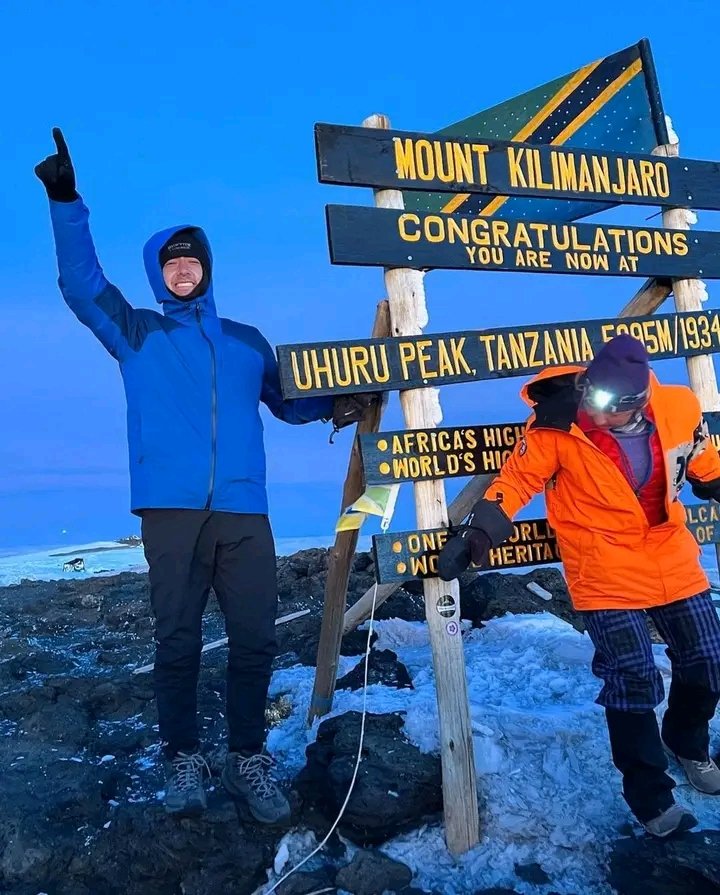
How Can One Get Ready Mentally to Climb Kilimanjaro in 2026 and 2028;Climbing Mount Kilimanjaro is more than a physical adventure. It is a personal journey that challenges your patience, confidence, determination, and ability to keep moving when things become uncomfortable. You do not need to be a professional mountaineer to reach Uhuru Peak, but you do need the right mindset.
At 5,895 meters (19,341 feet), Mount Kilimanjaro is Africa’s highest mountain. The climb is non-technical, meaning most climbers do not need ropes or advanced mountaineering skills, but the altitude, cold, long walking days, changing weather, and summit night can make the experience demanding.
For travelers planning their Kilimanjaro adventure in 2026 or 2027, mental preparation should begin long before arriving in Tanzania. At Eko Tanzania Adventures, we believe that preparing your mind is just as important as preparing your boots, backpack, and fitness.
This complete guide explains how to develop the mental strength, confidence, patience, and realistic expectations needed to give yourself the best possible experience on Kilimanjaro.
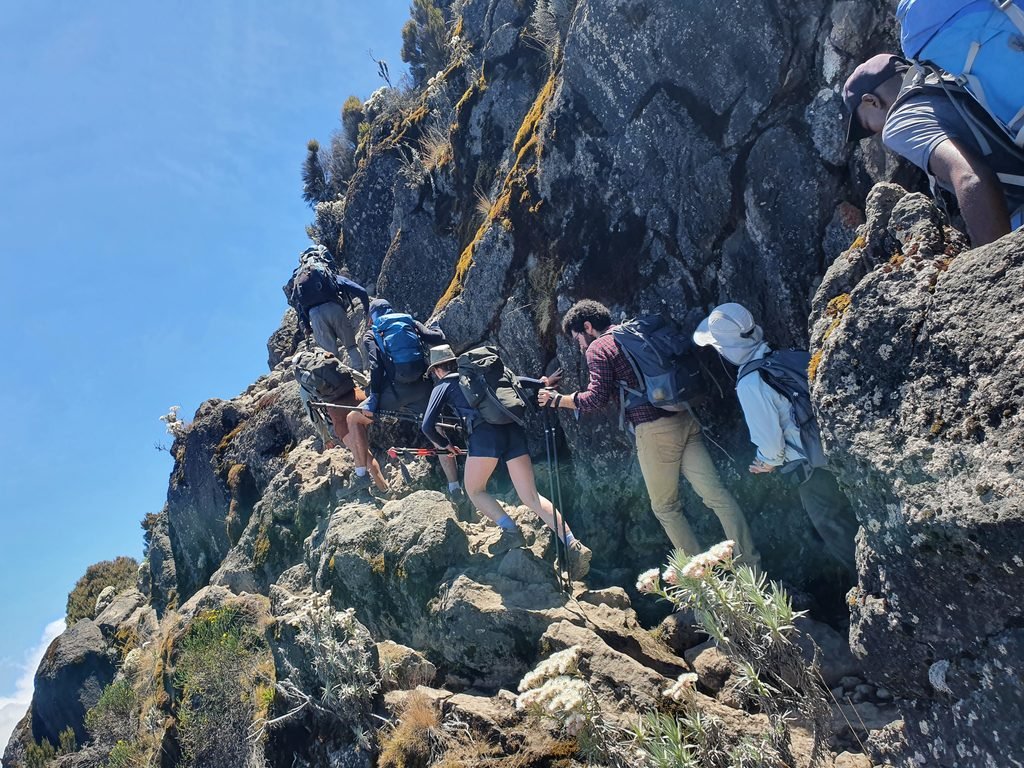
Why Mental Preparation Matters on Kilimanjaro
Many people assume that the strongest or fittest person automatically has the greatest chance of reaching the summit. In reality, physical fitness is only one part of the equation.
Altitude can affect people differently, including people who are extremely fit. Kilimanjaro National Park advises climbers to ascend gradually, choose itineraries that allow acclimatization, stay hydrated, and report symptoms to their guides promptly.
This is where your mental preparation becomes important.
You may have moments when:
- Your legs feel tired.
- You feel cold.
- You wake up during the night.
- The trail appears longer than expected.
- You become frustrated with the slow pace.
- You miss the comforts of home.
- You question whether you can continue.
- You experience a headache or other symptoms from altitude.
- Summit night feels overwhelming.
Mental preparation does not mean convincing yourself that everything will be easy. It means accepting that some parts will be difficult and deciding beforehand how you will respond.
That is the mindset we encourage at Eko Tanzania Adventures.
Understand That Kilimanjaro Is a Journey, Not a Race
One of the first mental adjustments you should make is to stop thinking about Kilimanjaro as a competition.
You are not racing other climbers.
You do not need to prove that you can walk faster than someone else.
You do not need to finish each day’s hike quickly.
The mountain rewards patience.
The famous Tanzanian expression pole pole, meaning slowly, slowly, is central to a successful Kilimanjaro mindset. Going slowly allows your body to conserve energy and gives it more opportunity to adapt to increasing altitude.
Kilimanjaro National Park specifically recommends slow ascent and acclimatization as part of responsible climbing.
Before your 2026 or 2027 climb, practice telling yourself:
I don’t have to be fast. I only have to keep moving safely.
That simple thought can become extremely valuable during the trek.
Set a Personal Reason for Climbing
Before you arrive in Tanzania, ask yourself:
Why do I want to climb Kilimanjaro?
Your answer does not have to impress anyone.
Perhaps you have dreamed about standing on the Roof of Africa since childhood.
Perhaps you want to challenge yourself.
Perhaps you are celebrating a birthday, anniversary, graduation, retirement, or another important milestone.
Maybe you want to prove something to yourself.
Maybe you simply want to experience one of Africa’s greatest adventures.
Whatever your reason, write it down.
When you are tired on summit night, remembering your personal reason can give you an emotional source of motivation.
At Eko Tanzania Adventures, we encourage climbers to focus on their own journey rather than comparing themselves with other people.
Replace Fear With Knowledge
Fear often grows when we do not know what to expect.
The more you understand about Kilimanjaro before your climb, the less mysterious it becomes.
Learn about:
- The route you will use
- Daily hiking distances
- Sleeping arrangements
- Climate zones
- Altitude
- Summit night
- Weather changes
- Food and hydration
- Equipment
- Acclimatization
- Emergency procedures
Kilimanjaro passes through dramatically different environments, from forest to moorland, alpine desert, and the cold summit environment.
Understanding this before you arrive helps you mentally prepare for changing conditions.
Instead of thinking:
Why is it so cold?
you can think:
I expected this. This is part of the summit experience.
Knowledge turns uncertainty into preparation.
Accept That Discomfort Is Part of the Adventure
Mental preparation does not mean eliminating discomfort.
Instead, you should learn to distinguish between normal physical discomfort and dangerous symptoms.
Your feet may become tired.
Your muscles may ache.
You may feel sleepy.
You may experience cold temperatures.
You may have moments when you want to rest.
These experiences can be normal parts of a demanding trek.
However, altitude illness can become serious. Headache, nausea, dizziness, confusion, severe fatigue, breathing difficulties, or other concerning symptoms should never simply be ignored. Tell your guide immediately if you feel unwell.
The safest response to serious altitude illness is appropriate medical assessment and, when necessary, descent.
Your mental strength should therefore include the ability to say:
“I am strong enough to tell my guide when something is wrong.”
That is not weakness. It is responsible mountaineering.
Learn to Take the Mountain One Day at a Time
Looking at the entire mountain can be intimidating.
Instead of thinking:
“I still have thousands of meters to climb.”
focus on today’s goal.
If today is a forest hike, focus on the forest.
If today is an acclimatization day, focus on acclimatization.
If today is the summit attempt, focus on the next section of trail.
Break the climb into small victories.
For example:
Reach the next rest point.
Then:
Reach the next ridge.
Then:
Finish this section.
Then:
Reach camp.
This approach is particularly useful during summit night.
You don’t need to mentally climb from base camp to Uhuru Peak all at once.
You simply keep moving forward step by step.
Prepare Yourself for Summit Night
Summit night is often the moment when mental preparation becomes most important.
You may begin your summit attempt during the night, walking in darkness toward the upper slopes of Kibo. The temperature can be extremely cold, and the altitude makes ordinary walking feel more demanding.
Instead of imagining summit night as one enormous challenge, divide it mentally into stages.
Think:
Start , maintain rhythm ,rest when instructed , reach higher point , continue , approach the crater rim and reach the summit area.
You may also experience moments when your mind says:
I cannot do this.
That thought does not necessarily mean you should quit.
Sometimes it simply means:
I am tired.
Give yourself a moment.
Breathe.
Drink when appropriate.
Listen to your guide.
Then decide what the next safe step is.
But remember: mental determination should never override medical safety
Practice Positive Self-Talk
The way you speak to yourself matters.
Before your climb, create several short phrases that you can repeat when things become difficult.
For example:
- One step at a time.
- Pole pole.
- I prepared for this.
- I don’t need to rush.
- I can handle this moment.
- Keep calm and breathe.
- The next step is enough.
- I am here for the experience.
- I will listen to my body.
Avoid unrealistic statements such as:
“Nothing can stop me.”
A better mindset is:
“I will give myself the best chance of reaching the summit while respecting the mountain.”
That is a much healthier form of confidence.
Don’t Depend Entirely on Motivation
Motivation changes.
Some mornings you will feel excited.
Other mornings you may feel tired.
That is normal.
Instead of depending on motivation, develop discipline and routine.
During your preparation, establish habits such as:
- Regular walking
- Hiking
- Stair climbing
- Strength training
- Stretching
- Proper sleep
- Hydration
- Weekend hikes
- Practicing with your backpack
Training sources recommend combining aerobic fitness, leg and core strength, hiking practice, and appropriate recovery rather than relying on a single type of exercise.
The goal is to arrive in Tanzania knowing:
I have already practiced doing difficult things consistently.
That confidence is powerful.
Simulate Difficult Days During Training
If every training session is easy, the mountain may feel psychologically unfamiliar.
Occasionally, train when conditions are less comfortable.
For example:
- Take a longer weekend hike.
- Walk on hills.
- Carry your daypack.
- Practice walking when you are slightly tired.
- Wear the boots you intend to use.
- Practice layering clothing.
- Spend several hours on your feet.
- Complete two hiking days close together.
This teaches your brain that tiredness does not automatically mean failure.
However, don’t intentionally injure or exhaust yourself. Training should build resilience, not destroy your recovery.
Learn to Be Comfortable With a Slow Pace
Many modern travelers are accustomed to doing everything quickly.
Kilimanjaro is different.
Your guide may repeatedly encourage you to slow down.
At first, you may think:
Why are we walking so slowly?
Eventually, you may understand why.
The objective isn’t to arrive at camp first.
The objective is to reach camp safely with enough energy for the following day.
The mountain teaches patience.
Use your time on the trail to enjoy:
- The landscape
- The changing vegetation
- Clouds below you
- Views of Mawenzi
- Sunrise and sunset
- Conversations with your guides
- The quiet of the mountain
Mental preparation includes learning to appreciate the journey rather than obsessing about the destination.
Be Prepared for Plans to Change
Mountain conditions are unpredictable.
Weather may change.
Your guide may adjust your pace.
A planned schedule may be modified.
You may need additional rest.
Your body may respond differently to altitude than you expected.
A mentally prepared climber understands that flexibility is part of mountain safety.
Don’t become emotionally attached to every detail of your itinerary.
Your guide’s responsibility is to help you climb safely, and Tanzania National Parks regulations require climbers to stay on designated routes and follow guide and ranger instructions.
Trust the process.
Don’t Compare Yourself With Other Climbers
You might meet someone who seems much stronger than you.
They may walk faster.
They may carry a larger backpack.
They may have climbed other mountains.
Don’t allow that to damage your confidence.
Everyone responds to altitude differently.
Your Kilimanjaro climb is personal.
Your goal is not to beat another climber.
Your goal is to experience the mountain safely and give yourself the best opportunity to reach Uhuru Peak.
If another climber moves ahead, let them go.
Your pace is your pace.
Choose an Itinerary That Gives You Time to Acclimatize
Mental preparation also means making good decisions before the climb begins.
A rushed itinerary can create unnecessary psychological pressure.
TANAPA notes that Kilimanjaro climbs generally take around 5–8 days depending on the route, and emphasizes that more days increase the possibility of reaching the summit.
The EKO travel guidance also recommends adding extra time to the planned ascent because additional acclimatization time can be beneficial, especially on shorter itineraries.
At Eko Tanzania Adventures, we recommend considering an itinerary that balances your budget, physical preparation, route preference, and acclimatization needs.
For many first-time climbers, a longer itinerary can also provide a psychological advantage because you don’t feel like every day has to be rushed.
Build Confidence Before You Arrive in Tanzania
Confidence should be built gradually.
Don’t wait until the day before your flight.
Every training hike is an opportunity to tell yourself:
“I am becoming more prepared.”
Keep a simple record of your progress.
For example:
Week 1: 5 km walk
Week 3: 8 km hike
Week 5: 10 km hike
Week 7: Longer hill walk
Week 9: Back-to-back hiking days
When you look back, you will see evidence that you have improved.
That evidence becomes psychological fuel.
Learn Breathing and Relaxation Techniques
When people become nervous, they often breathe faster.
Learning to control your breathing can help you remain calm.
Practice slow, comfortable breathing during your training hikes.
When you feel anxious, try:
- Relax your shoulders.
- Slow your walking pace.
- Take controlled breaths.
- Focus your eyes on the trail.
- Concentrate on your next few steps.
Do not obsessively monitor every breath or turn breathing into a competition. Simply learn to remain calm and comfortable.
Prepare Emotionally for Missing Home
A Kilimanjaro trek may take you away from your normal routine for several days.
You may miss:
- Your bed
- Your family
- Your phone
- Hot showers
- Comfortable restaurants
- Reliable internet
- Your normal schedule
This is normal.
Instead of fighting the feeling, accept it.
Tell yourself:
I am away from home because I chose this adventure.
You can also prepare by telling family and friends beforehand that communication may be limited.
Trust Your Guides and Trekking Team
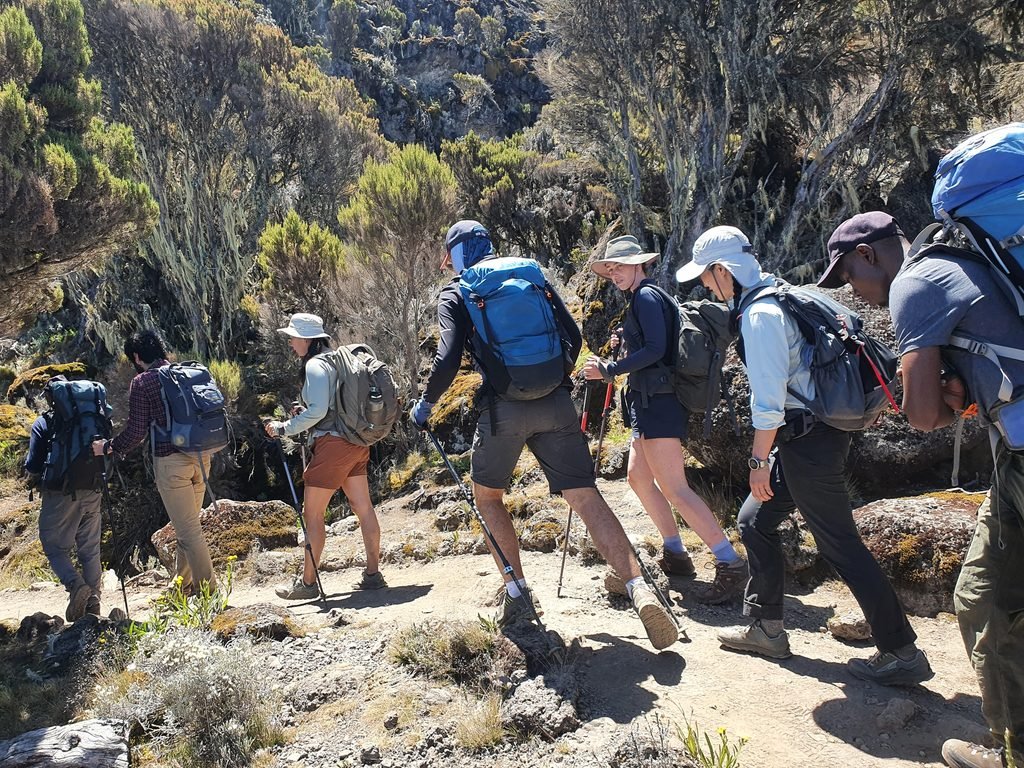
One of the biggest psychological advantages of climbing with an experienced professional team is that you don’t have to make every decision alone.
A responsible trekking team helps manage:
- Route logistics
- Camp arrangements
- Meals
- Pacing
- Weather considerations
- Acclimatization
- Safety procedures
Kilimanjaro National Park states that all climbs must be guided by a licensed operator and that solo trekking is not permitted.
At Eko Tanzania Adventures, our goal is to create a supportive environment where climbers can focus on the experience while the mountain team handles the operational details.
Develop a No Panic Mentality
When something unexpected happens, pause before reacting.
For example, if you wake up and see clouds covering the mountain, don’t immediately think:
The climb is ruined.
Instead:
Let’s see what the guide says.
If you feel tired:
Let’s rest and assess how I feel.
If the trail becomes difficult:
I’ll focus on the next section.
This habit of pausing before reacting is one of the most valuable mental skills you can develop.
Understand That Turning Back Can Also Be a Successful Decision
This may sound surprising, but it is essential.
Your achievement is not defined solely by standing on Uhuru Peak.
If a qualified guide determines that continuing would be unsafe because of serious altitude illness, severe weather, injury, or another significant risk, descending is the correct decision.
The mountain will still be there.
Your health comes first.
True mental strength is not blindly refusing to stop.
True mental strength is knowing when to continue and when to make the safe decision.
A Simple Mental Preparation Plan for 2026 and 2027
3–6 Months Before the Climb
Begin building your physical and psychological foundation.
Focus on:
- Regular hiking
- Cardio exercise
- Leg strength
- Core strength
- Longer walks
- Learning about your chosen route
- Developing realistic expectations
2 Months Before
Increase hiking consistency.
Practice with:
- Your hiking boots
- Your backpack
- Hiking poles
- Layered clothing
Start visualizing the experience.
1 Month Before
Focus on confidence and consistency rather than panic-training.
Review:
- Route information
- Equipment
- Travel arrangements
- Daily expectations
- Summit-night conditions
1 Week Before
Don’t try to become fit in seven days.
Rest.
Sleep well.
Prepare your equipment.
Stay calm.
The final days should be about arriving mentally and physically ready, not exhausting yourself.
During the Climb
Remember five simple principles:
Pole pole.
Eat and drink regularly.
Listen to your guide.
Listen to your body.
Take one step at a time.
Sample Kilimanjaro Mental Mantra
Before leaving for Tanzania, you can create your own personal mantra.
Here is one we recommend at Eko Tanzania Adventures:
“I will climb Kilimanjaro one step at a time. I will be patient with myself, respect the mountain, trust my preparation, listen to my guides, and enjoy the journey. I do not need to be the fastest. I only need to remain calm, focused, and safe.”
Write it somewhere you can see it during your preparation.
What Eko Tanzania Adventures Can Offer for Your 2026–2028 Kilimanjaro Journey
At Eko Tanzania Adventures, we understand that a Kilimanjaro climb begins before you arrive at the mountain.
Our approach is to help travelers prepare for the complete experience—not simply the summit.
Depending on your chosen itinerary, your Kilimanjaro adventure can include professional guiding, mountain logistics, accommodation arrangements, meals on the trek, park-related arrangements, and support from a dedicated mountain crew.
The exact inclusions and price depend on the route, number of days, group size, accommodation arrangements, travel dates, and other personal requirements. Current park fees should also be confirmed when booking because fees can vary by visitor category, route, and number of days.
For 2026 and 2027, we encourage travelers to plan early, especially if they have specific travel dates or want a private group.
Final Thoughts: Prepare Your Mind Before You Climb the Mountain
Preparing mentally for Kilimanjaro is not about convincing yourself that you will never feel tired, scared, cold, or uncertain.
It is about preparing yourself to respond intelligently when those feelings appear.
You should arrive in Tanzania understanding that Kilimanjaro is a serious high-altitude trek. You should respect the altitude, accept the slow pace, trust your preparation, communicate honestly with your guides, and remain flexible when mountain conditions change.
Most importantly, don’t spend the entire journey thinking only about the summit.
Look around.
Listen to the forest.
Watch the landscape change.
Enjoy the friendships.
Appreciate your guides and mountain crew.
Take photographs.
Celebrate every camp you reach.
And when the summit morning finally arrives, remember that you have already accomplished something significant: you chose to step outside your comfort zone and challenge yourself on Africa’s highest mountain.
At Eko Tanzania Adventures, we believe the greatest Kilimanjaro experience is not simply about reaching Uhuru Peak. It is about discovering what you are capable of while respecting the mountain, the environment, and your own body.
So, if you are preparing for Kilimanjaro in 2026 or 2027, start preparing your mind today.
Train patiently.
Think positively.
Expect challenges.
Stay humble.
Go pole pole.
And take the mountain one step at a time.
Your Kilimanjaro adventure starts long before the first step on the trail—it starts in your mind