The Best 7-Day Rongai Route Kilimanjaro Climb 2026–2027;Climbing Mount Kilimanjaro is a dream for many travellers, but reaching the summit is about much more than standing at the highest point in Africa. It is about taking on a personal challenge, walking through remarkable natural landscapes, meeting people who share your sense of adventure, and discovering what you can achieve one step at a time. The Best 7-Day Rongai Route Kilimanjaro Climb 2026–2027 offers an exciting opportunity to experience this incredible mountain while approaching it from the northern side of Tanzania, close to the Kenyan border.
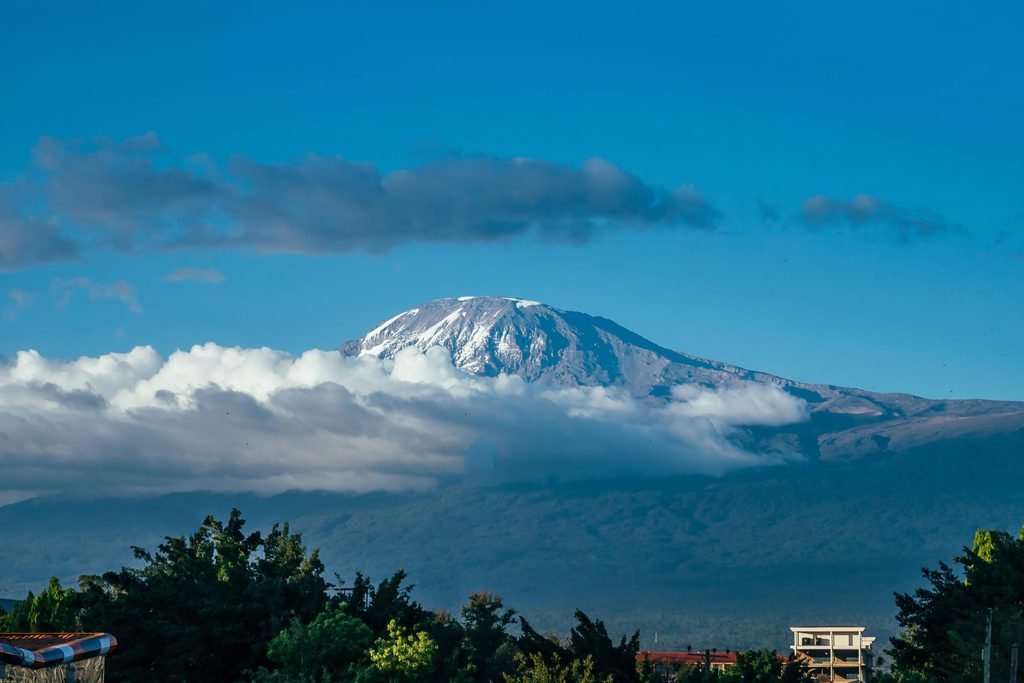
Rising to 5,895 metres above sea level, Mount Kilimanjaro is Africa’s highest mountain. Its landscapes change dramatically as you climb, from forested slopes and open moorlands to alpine desert and the cold, rocky terrain near the summit. Every stage brings a different experience, making the journey as memorable as the destination itself.
The Rongai Route is known for its relatively gradual approach, beautiful wilderness scenery, and quieter atmosphere during parts of the climb. Unlike routes that begin on Kilimanjaro’s southern side, Rongai approaches the mountain from the north. This gives climbers a different perspective of the mountain and an opportunity to experience landscapes that feel remote and peaceful.
Over seven days, you will gradually make your way towards Uhuru Peak, accompanied by an experienced mountain crew who help with navigation, meals, camp arrangements, and daily safety checks. The climb requires preparation, patience, and determination, but with a suitable itinerary and a responsible approach to altitude, it can become one of the most rewarding experiences of your time in Tanzania.
Why Choose the 7-Day Rongai Route?:The Best 7-Day Rongai Route Kilimanjaro Climb 2026–2027
One of the main reasons climbers choose the Rongai Route is its northern approach. The trail passes through beautiful natural surroundings, with forest vegetation in the lower sections, open mountain landscapes at higher elevations, and expansive views across the northern slopes.
The route is also known for having a quieter feel than some of Kilimanjaro’s busier trails, although the number of climbers varies with the season. If you enjoy walking in peaceful surroundings and observing the changing environment, Rongai may be an appealing choice.
Another advantage is the gradual character of much of the ascent. Rather than climbing continuously through steep terrain from the beginning, the route generally allows you to gain elevation progressively. However, altitude sickness remains a possibility on any Kilimanjaro route, regardless of your fitness or previous hiking experience.
The seven-day itinerary provides time to experience the mountain at a steady pace and includes an overnight stop at Mawenzi Tarn, beneath the impressive rocky peaks of Mawenzi. Your journey then continues towards Kibo before the summit attempt.
Rongai is suitable for many travellers who are looking for a different way to climb Kilimanjaro, but it is still a demanding high-altitude trek. Good physical preparation, appropriate clothing, reliable guides, and careful attention to your health are essential throughout the journey.

Your Day-by-Day 7-Day Rongai Route Itinerary:The Best 7-Day Rongai Route Kilimanjaro Climb 2026–2027
Day 1: Arrival in Tanzania and Preparation for the Climb
Your Kilimanjaro adventure begins when you arrive in Tanzania. Depending on your flight arrangements, you will be met and transferred to your hotel in Moshi or Arusha. After checking in, you can relax and recover from your journey before the climb begins.
Later, you will meet your guide for a briefing about the Rongai Route, the daily walking schedule, mountain conditions, and the equipment you will need. This is an important opportunity to ask questions, check your hiking gear, and make sure you understand what to expect during the coming days.
Your guide will also discuss the importance of walking slowly, drinking water regularly, eating enough, and reporting any symptoms that may develop at altitude. The team may check your equipment to ensure you have suitable layers for cold temperatures, rain, and the summit night.
Try to get a good night’s rest before setting off for the mountain. A well-organised start will help you approach the first day with confidence and allow you to concentrate on the experience ahead.
Overnight: Hotel in Moshi or Arusha.
Day 2: Rongai Gate to Simba Camp
After breakfast, you will travel towards the northern entrance of Kilimanjaro National Park. The drive takes you through rural communities and agricultural landscapes before reaching the Rongai Gate area, where registration and other park procedures are completed.
Once everything is ready, you begin your walk along the Rongai trail. The early section passes through cultivated land and forested surroundings, gradually leading you into the mountain’s natural environment. You may notice birds, changing vegetation, and occasional openings in the trees that reveal views of the surrounding countryside.
The trail gradually gains elevation, giving you time to settle into the rhythm of walking with your daypack. Your guide will encourage a slow pace, often described locally as pole pole, meaning slowly. This simple approach is important because conserving energy and allowing your body time to adjust to altitude can make a real difference during a multi-day climb.
As you move higher, the surroundings become more open, and you may begin to notice the cooler mountain air. The day’s walk is an introduction to the mountain rather than a race to reach camp.
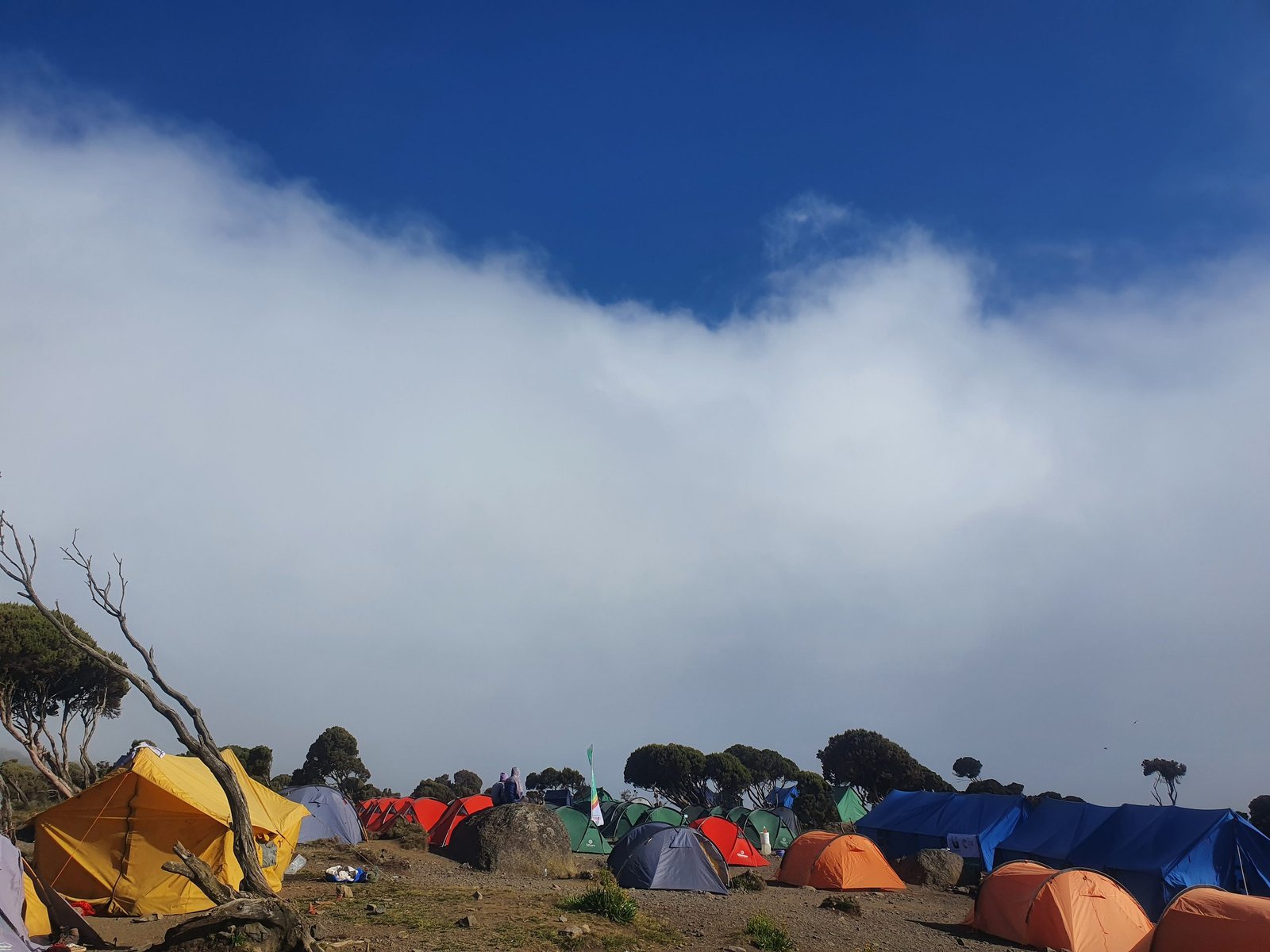
You will arrive at Simba Camp, where the mountain crew will have prepared the campsite. Enjoy a warm meal, organise your belongings, and rest before the next stage.
Approximate hiking time: 3–4 hours.
Overnight: Simba Camp.

Day 3: Simba Camp to Second Cave Camp:The Best 7-Day Rongai Route Kilimanjaro Climb 2026–2027
After breakfast, you leave Simba Camp and continue climbing through open moorland. The landscape gradually changes as the trail moves beyond the denser vegetation of the lower mountain. On clear days, the northern slopes offer wide views across the surrounding plains.
This stage gives you more time to appreciate the peaceful character of the Rongai Route. The trail generally climbs at a manageable pace, but the increasing altitude can make even familiar walking feel more tiring. Take short breaks when needed, keep your pace comfortable, and follow your guide’s advice.
Along the way, you may see giant heather and other plants adapted to the mountain’s changing conditions. The open landscape also makes it easier to appreciate the scale of Kilimanjaro and the distance you are gradually travelling from the foothills.
After several hours, you reach Second Cave Camp. Once you arrive, you can enjoy lunch or a hot drink, depending on the camp schedule, and spend time resting.
Your guide may check how you are feeling and explain the next day’s plan. Remember that feeling well at a lower camp does not guarantee that you will remain free from altitude symptoms as you climb higher.
Approximate hiking time: 3–4 hours.
Overnight: Second Cave Camp.
Day 4: Second Cave Camp to Kikelewa Camp
The day begins with breakfast before you continue across the northern slopes of Kilimanjaro. As you leave Second Cave Camp, the trail passes through open mountain terrain with wide views of the surrounding landscape.
The walking can feel more challenging as the altitude increases, so maintaining a steady pace remains important. Rather than trying to keep up with other climbers, focus on your own breathing, energy levels, and comfort. Your guide will help you manage the pace and choose appropriate places to rest.
As the trail continues, the landscape becomes increasingly rugged, with low vegetation and rocky ground replacing much of the greenery found lower down. You will begin to appreciate how dramatically the mountain’s environment changes over relatively short distances.
Eventually, you reach Kikelewa Camp, situated in a sheltered area beneath the slopes of Mawenzi. The impressive mountain scenery makes this a memorable place to spend the evening.
After settling into camp, enjoy your meal and take time to rest. The coming days will take you to higher elevations, so conserving energy and reporting any unusual symptoms are especially important.
Approximate hiking time: 4–6 hours.
Overnight: Kikelewa Camp.
Day 5: Kikelewa Camp to Mawenzi Tarn Camp
After breakfast, you begin the ascent towards Mawenzi Tarn Camp. The trail becomes steeper in sections as you leave Kikelewa behind and climb towards the dramatic landscape beneath Mawenzi’s rugged peaks.
Mawenzi is one of Kilimanjaro’s most distinctive volcanic features. Its jagged rock formations create a striking contrast with the smoother slopes of Kibo, the volcanic peak that lies ahead on your route to Uhuru Peak.
As you climb, take time to appreciate the views and the unusual vegetation that survives in this high-altitude environment. The terrain may be rocky and exposed in places, and you may notice that walking requires more effort than it did during the first few days.
Mawenzi Tarn Camp lies beside a small mountain tarn beneath the peaks of Mawenzi. The setting is one of the highlights of the Rongai Route, offering an impressive sense of being surrounded by the high mountain landscape.
Depending on the itinerary and your guide’s assessment, the afternoon may include time to rest or a short acclimatisation walk. Any additional activity should be undertaken only if your guide considers it appropriate for your condition and the day’s plan.
Enjoy dinner at camp and prepare for the following stage. Staying warm, eating well, and getting sufficient rest will help you conserve energy for the approach to Kibo.
Approximate hiking time: 4–5 hours.
Overnight: Mawenzi Tarn Camp.
Day 6: Mawenzi Tarn Camp to Kibo Camp
After breakfast, you leave the Mawenzi area and cross the high-altitude saddle between Mawenzi and Kibo. This broad, open stretch of terrain offers a different experience from the earlier forest and moorland sections. Vegetation becomes sparse, and the landscape is dominated by volcanic ground, rocks, and distant mountain slopes.
Although the trail is not continuously steep, the altitude makes this stage physically demanding. You may find yourself walking more slowly and needing additional breaks. Follow your guide’s pace rather than pushing to arrive early.
As you cross the saddle, you can look back towards Mawenzi and appreciate how far you have travelled since the beginning of the climb. Ahead, Kibo grows larger as you approach the base for the summit attempt.
You eventually arrive at Kibo Camp, at approximately 4,700 metres above sea level. This is the final overnight stop before the climb towards Uhuru Peak.
After arriving, you will have an early meal and receive a briefing about the summit attempt. Your guide will explain the expected timing, clothing requirements, equipment, and safety procedures. Prepare your headlamp, warm layers, gloves, hat, water, and snacks before trying to rest.
The summit attempt usually begins around midnight or shortly afterwards. It is normal to feel excited or nervous, but try to stay calm and conserve your energy. Your guide will assess your condition and determine whether it is appropriate to proceed.
Approximate hiking time: 4–6 hours.
Overnight: Kibo Camp.
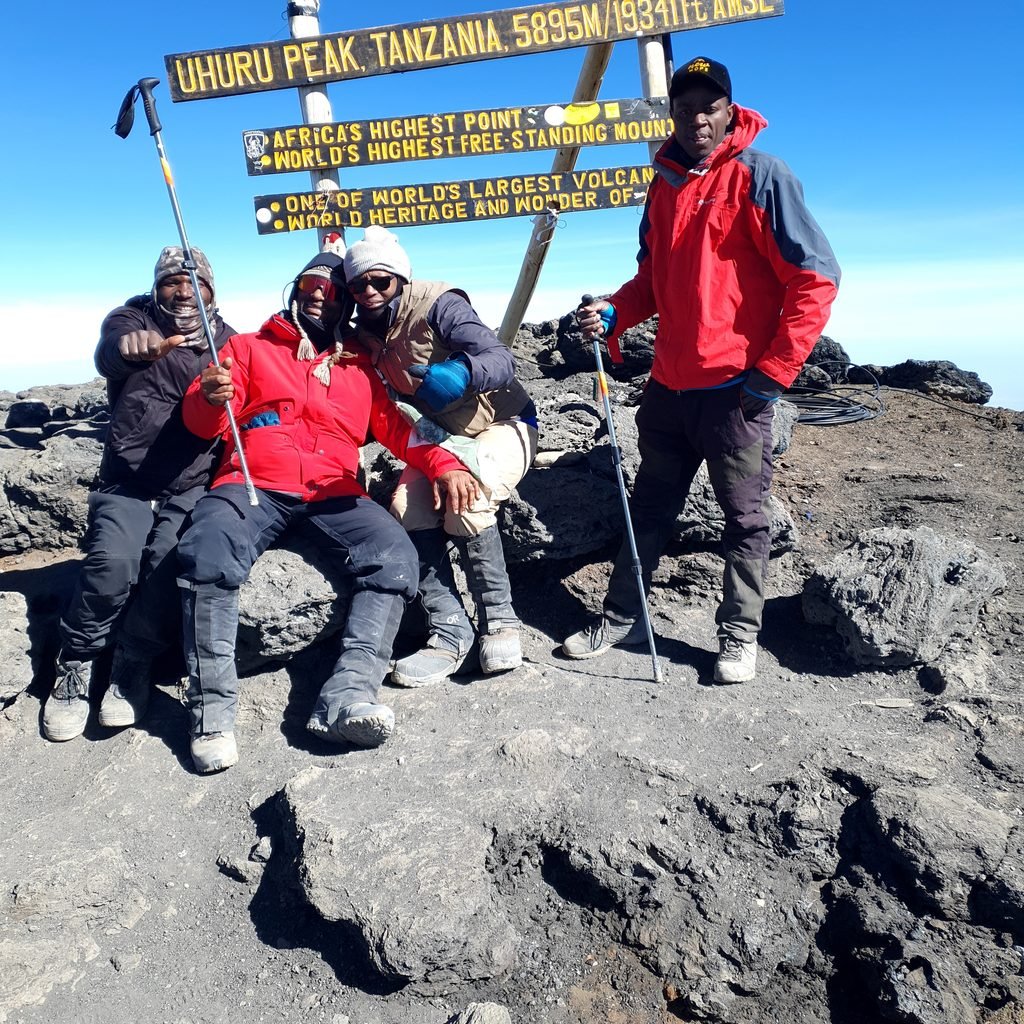
Day 7: Kibo Camp to Uhuru Peak, Descent to Horombo Hut
The summit day begins in the early hours of the morning, when temperatures are often below freezing. With your guide, you start the demanding climb towards Gilman’s Point on the crater rim. The trail rises across steep volcanic slopes, and the combination of cold, darkness, and thin air requires patience and determination.
Your guide will set a careful pace and arrange breaks when necessary. This is not a stage to rush. If you experience a persistent headache, nausea, dizziness, confusion, unusual weakness, or worsening breathlessness, tell your guide immediately. Continuing may be unsafe, and descending can be the right decision.
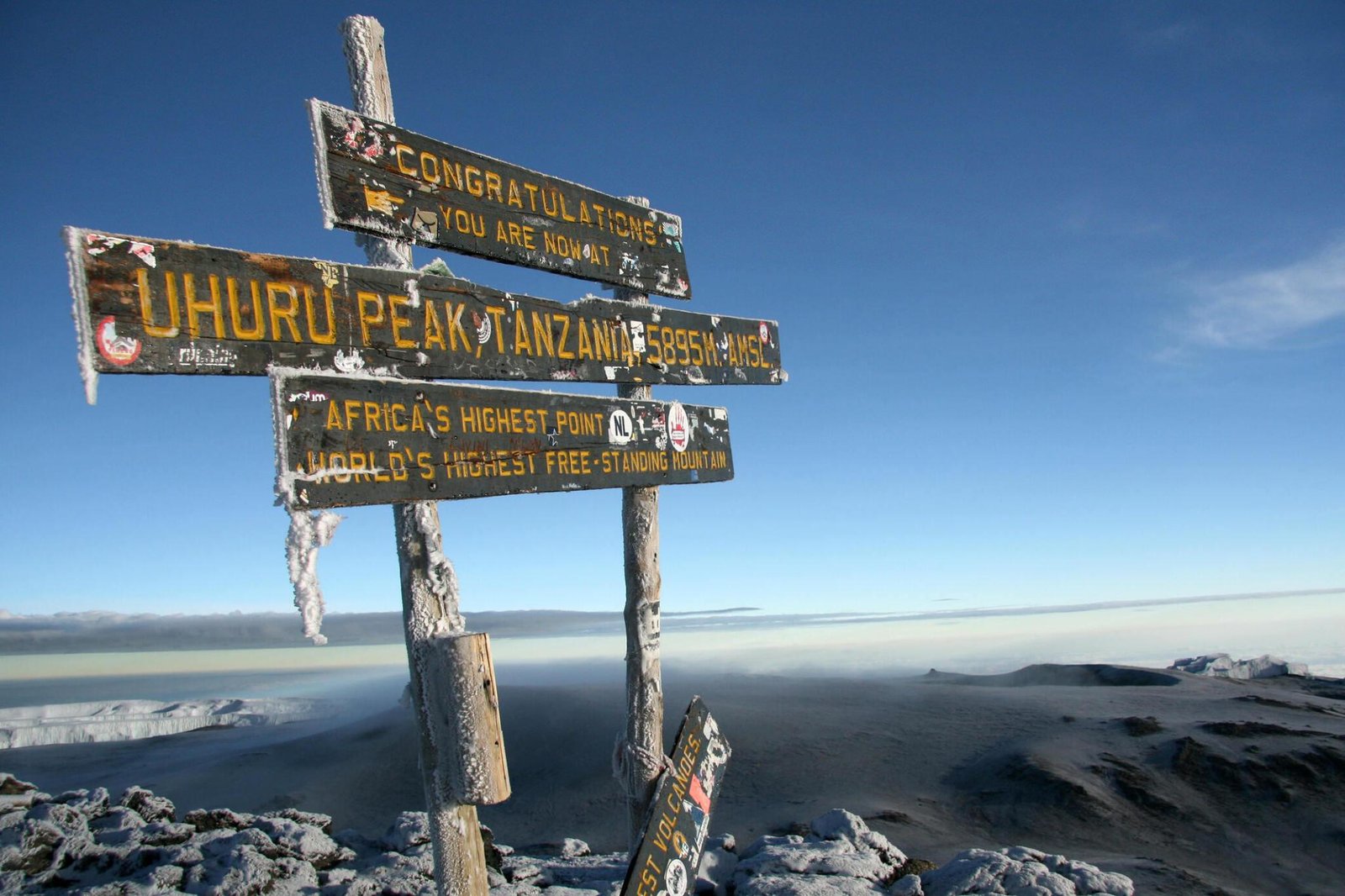
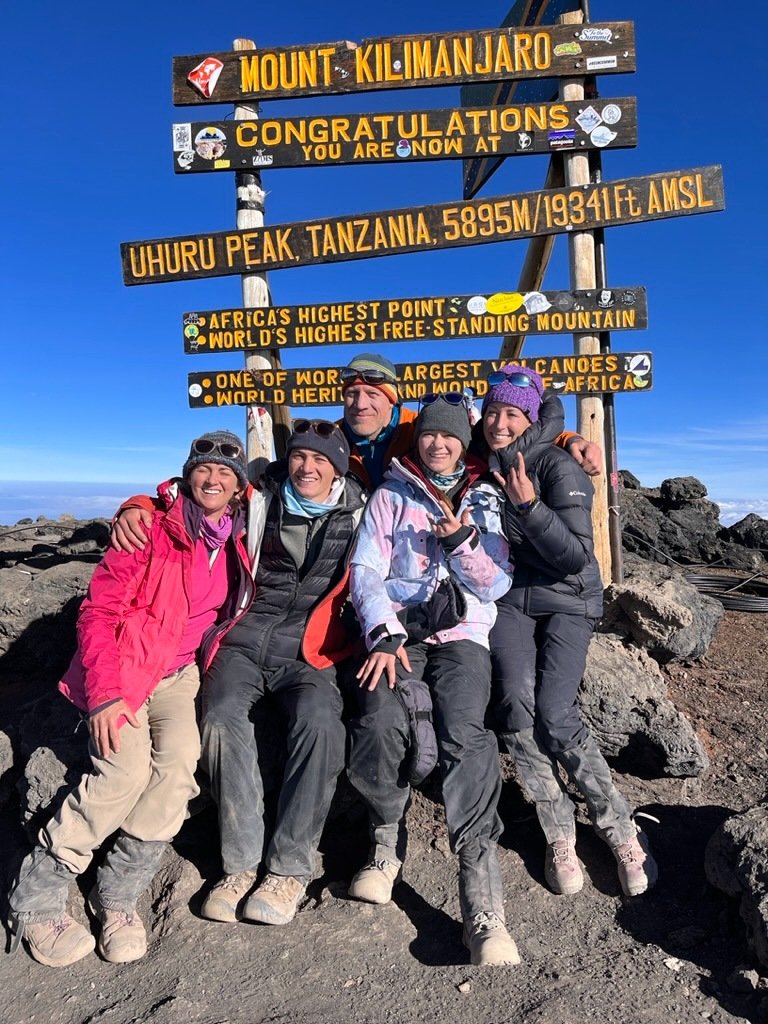
Reaching Gilman’s Point is a major achievement, but the journey to Uhuru Peak continues along the crater rim. If weather, your condition, and your guide’s assessment allow, you will continue towards Uhuru Peak, at 5,895 metres above sea level.
Standing at the highest point in Africa is an extraordinary moment. You may see glaciers, the vast crater landscape, and the mountain stretching away beneath you. Take photographs, celebrate your achievement, and follow your guide’s advice about how long it is safe to remain at the summit.
After the summit visit, you descend towards Kibo Camp for a short rest before continuing down to Horombo Hut. The descent is long and can be tiring, particularly after the overnight climb, so use care on loose volcanic ground.
At Horombo Hut, you can enjoy a meal and rest after one of the most demanding days of the expedition. Reaching Uhuru Peak cannot be guaranteed; your safety and wellbeing must always come first.
Approximate hiking time: 12–16 hours, depending on conditions and individual pace.
Overnight: Horombo Hut, if included in the confirmed itinerary.
Important itinerary note: A standard seven-day Rongai climb normally includes a descent day after the summit. The exact camp sequence and overnight arrangements must be confirmed when booking, because some seven-day packages count arrival or departure days differently.
What Is Included in the Rongai Route Climb?
The exact services depend on the package confirmed with EKO Tanzania Adventures. A typical guided Kilimanjaro climb may include:
- Kilimanjaro National Park fees and applicable camping or hut fees.
- Professional mountain guides, cooks, and porters.
- Meals during the mountain trek.
- Treated drinking water during the climb.
- Camping or hut accommodation as specified in the itinerary.
- Transfers to and from the designated trailheads.
- A pre-climb briefing and equipment guidance.
- Support from the mountain crew throughout the expedition.
Before booking, request a written quotation so you can confirm the accommodation, transport arrangements, meals, park fees, and other services included in your package.
What Is Not Included?
Unless your quotation specifically states otherwise, the following costs may be excluded:
- International flights and Tanzanian visa fees.
- Travel insurance covering high-altitude trekking and emergency evacuation.
- Personal trekking equipment, including sleeping bags and hiking clothing.
- Hotel accommodation before or after the climb.
- Tips for guides, cooks, and porters.
- Personal snacks, additional drinks, and other individual expenses.
- Optional services or transfers not listed in the confirmed package.
Preparing a realistic budget before travelling will help you avoid unexpected expenses and focus on enjoying your adventure.

How to Prepare for the Rongai Route
Although the Rongai Route has a relatively gradual approach in many sections, climbing Kilimanjaro is physically demanding. Preparing several weeks or months in advance can help you feel more comfortable on the trail.
Regular walking, hill hiking, stair climbing, cycling, and other cardiovascular activities can improve your endurance. If possible, practise walking for several hours on consecutive days so you become familiar with spending extended periods on your feet.
Your equipment should include comfortable, broken-in hiking boots, waterproof trousers and jacket, warm thermal layers, a fleece or insulated jacket, gloves, a warm hat, sunglasses, sunscreen, a headlamp, and a daypack. Summit night is particularly cold, so appropriate gloves and layered clothing are essential.
Altitude preparation is just as important as physical fitness. Even strong and experienced hikers can develop altitude sickness. Walk slowly, eat regularly, drink water according to your guide’s advice, and communicate honestly about how you feel. Never hide symptoms because you are worried about missing the summit.
The seven-day Rongai itinerary includes several nights at increasing elevations, but it does not eliminate the risk of altitude illness. Discuss your experience, health considerations, and preferred pace with your tour operator before choosing your itinerary. A longer climb may offer additional time for acclimatisation and can be a sensible option if your schedule allows.
The Best Time to Climb Mount Kilimanjaro
Kilimanjaro can be climbed throughout much of the year, but weather conditions affect the experience. January to early March and June to October are generally popular periods because conditions are often drier.
January and February can offer clear views and relatively favourable trekking conditions. June through October is also popular, although nights at higher elevations can be extremely cold. Rain, wind, clouds, and sudden changes in temperature can occur at any time, so preparation remains essential.
When planning your 2026–2027 climb, consider your available travel dates, the conditions you prefer, and the time you need to prepare. Booking early during popular periods can also help you organise flights, accommodation, and other travel arrangements.
Book Your 7-Day Rongai Route Kilimanjaro Climb with EKO Tanzania Adventures
Are you ready to take on Mount Kilimanjaro and experience the beauty of its northern slopes? EKO Tanzania Adventures can help you plan your Rongai Route climb, from choosing suitable travel dates to preparing your equipment and arranging the practical details of your trip.
Whether you are travelling alone, with friends, or as part of a private group, our team can discuss your budget, accommodation preferences, trekking experience, and travel plans. We can also explain the demands of the route and help you decide whether the seven-day itinerary is suitable for your needs.
Every successful mountain adventure begins with good preparation and realistic expectations. Our aim is to help you understand the journey ahead, make informed decisions, and approach the climb with confidence while keeping safety at the centre of the experience.
Contact EKO Tanzania Adventures to discuss your plans and request a quotation for the 2026–2027 climbing season.
EKO Tanzania Adventures
Website: https://ekotanzaniaadventures.com
WhatsApp / Call: +255 761 353 184
Email: info@ekotanzaniaadventures.com
Alternative Email: ekotanzaniaadventure@gmail.com