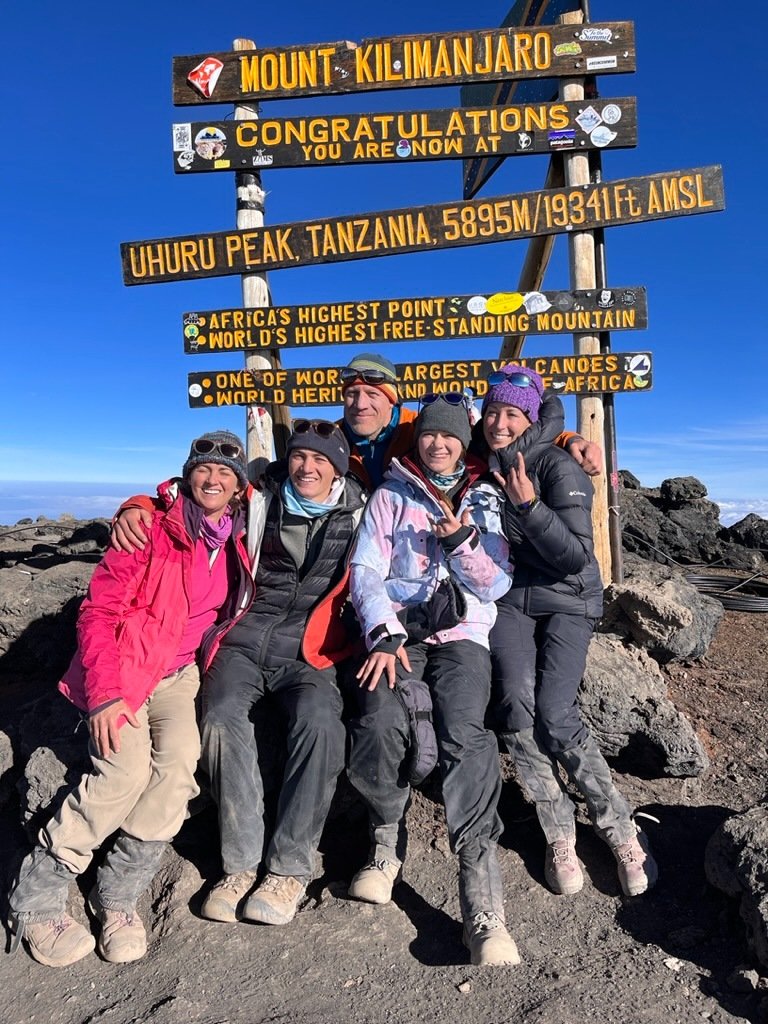
The Ultimate 6-Day Rongai Route 2026–2028;Climbing Mount Kilimanjaro is one of Tanzania’s most extraordinary adventure experiences. Rising to approximately 5,895 meters (19,341 feet) above sea level, Kilimanjaro is Africa’s highest mountain and a destination that attracts trekkers from all over the world.
The 6-Day Rongai Route 2026–2028 offers a distinctive approach to the mountain. Located on the northeastern side of Kilimanjaro near the Tanzania–Kenya border, the Rongai Route is known for its relatively quiet atmosphere, attractive scenery, and different perspective of the mountain.
For travelers who want to climb as part of a group Kilimanjaro climbing adventure, this six-day itinerary combines the excitement of shared trekking with the challenge of reaching Uhuru Peak.
The journey moves from the northern slopes toward the higher mountain terrain before the summit attempt and descent. Along the way, climbers experience forest, moorland, alpine landscapes, and the dramatic volcanic environment surrounding the summit.
Although six days is a relatively compact Kilimanjaro itinerary, proper pacing and preparation remain essential. The mountain is a high-altitude environment, and physical fitness alone does not eliminate the possibility of altitude-related illness.
6-Day Rongai Route at a Glance
| Day | Route | Overnight |
|---|---|---|
| Day 1 | Rongai Gate – Simba Camp | Simba Camp |
| Day 2 | Simba Camp – Kikelewa Camp | Kikelewa Camp |
| Day 3 | Kikelewa Camp – Mawenzi Tarn Camp | Mawenzi Tarn Camp |
| Day 4 | Mawenzi Tarn – Kibo Hut | Kibo Hut |
| Day 5 | Kibo Hut – Uhuru Peak – Horombo Hut | Horombo Hut |
| Day 6 | Horombo Hut – Marangu Gate | Departure/Transfer |
Exact distances, hiking times, camp arrangements, and group logistics may vary depending on the trekking program, weather, park regulations, and mountain conditions.
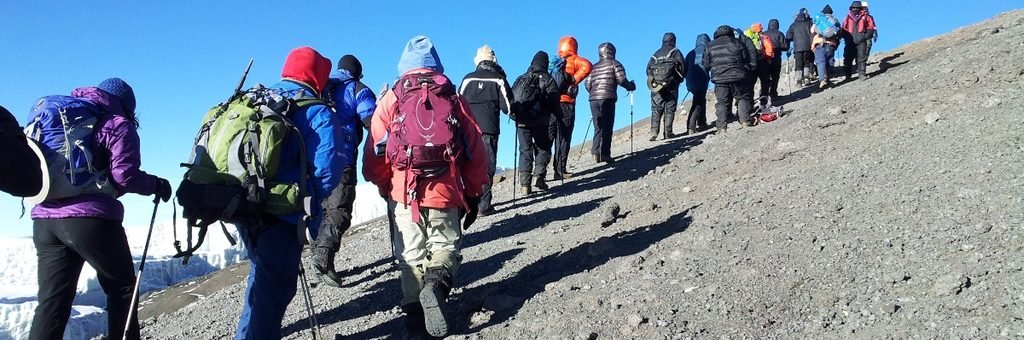
What Makes the Rongai Route Different?Of The Ultimate 6-Day Rongai Route 2026–2028
The Rongai Route approaches Mount Kilimanjaro from the northeastern side.
This makes it different from routes such as Machame and Lemosho, which approach the mountain from the south and west.
One of the appealing characteristics of Rongai is the feeling of trekking through a less-developed wilderness landscape during the early part of the climb.
The route also offers a gradual transition between different ecological zones.
During the expedition, you can experience:
Rainforest –Moorland – Alpine Desert -High-Altitude Summit Zone
The scenery changes dramatically as you gain elevation.
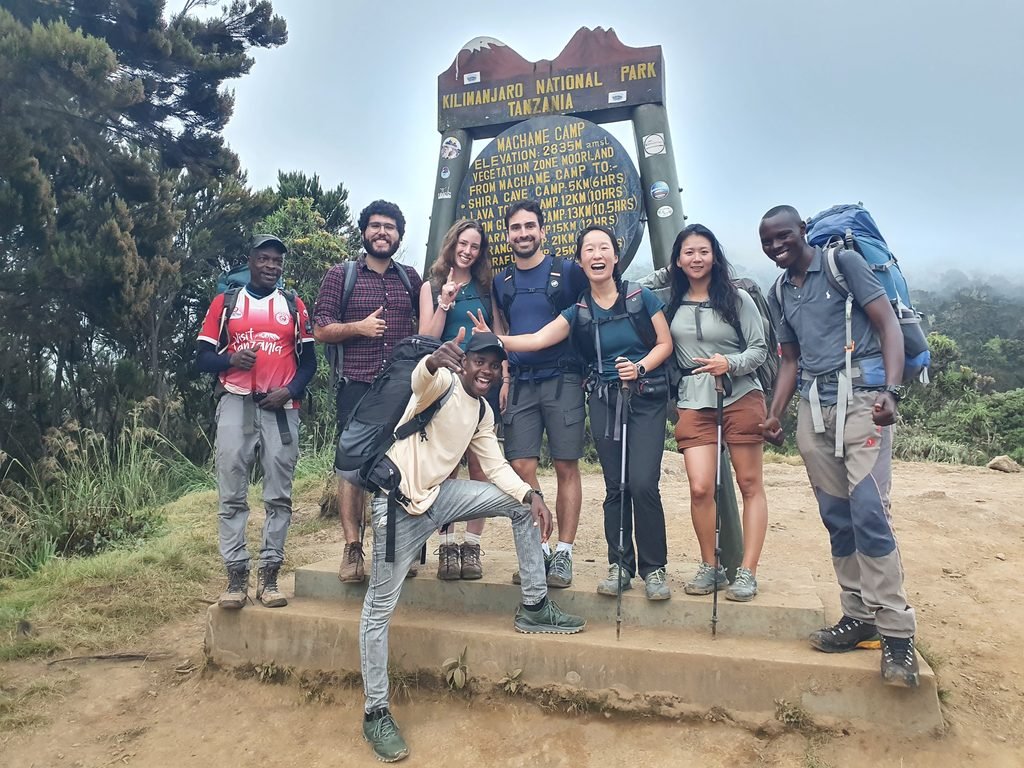
Why Choose a 6-Day Rongai Group Climb?of The Ultimate 6-Day Rongai Route 2026–2028
There are several reasons travelers may choose a six-day Rongai itinerary.
1. Northern-Side Kilimanjaro Experience
The route provides a different perspective of the mountain compared with the more commonly used southern approaches.
2. Group Adventure
A group climb allows you to share the experience with fellow travelers.
You can walk together, share meals, encourage one another, and experience the excitement of summit day as a team.
3. Compact Itinerary
Six days on the mountain can suit travelers with limited vacation time who still want to experience the Rongai Route.
4. Distinctive Scenery
The northern slopes provide a different landscape and atmosphere as you progress toward the summit.
5. Descent Through Another Side
The itinerary typically approaches from Rongai and descends toward the Marangu side, allowing you to experience more than one section of Kilimanjaro.
Day 1: Rongai Gate to Simba Camp:The Ultimate 6-Day Rongai Route 2026–2028
Your Kilimanjaro adventure begins with a transfer toward Rongai Gate.
After completing registration and park entry procedures, you meet your mountain crew and begin the trek.
The first part of the trail passes through forested terrain.
The atmosphere is generally peaceful, and the gradual beginning gives you time to adjust to the rhythm of mountain trekking.
Your guide will normally encourage a slow and comfortable pace.
There is no reason to rush on the first day.
After several hours of trekking, you arrive at Simba Camp, where the mountain crew prepares your campsite and evening meal.
You spend the night resting and preparing for the higher elevations ahead.
Day 2: Simba Camp to Kikelewa Camp
Day two continues upward toward the moorland zone.
The dense forest gradually gives way to more open vegetation.
As you climb higher, views across the surrounding landscape become more expansive.
The pace remains controlled because acclimatization is already an important part of the expedition.
Eventually, you reach the Kikelewa area.
Kikelewa Camp provides a peaceful setting for an overnight stay before the route continues toward Mawenzi.
After dinner, you can rest and prepare your clothing and equipment for the following day.
Day 3: Kikelewa Camp to Mawenzi Tarn
The third day is one of the most scenic sections of the Rongai Route.
The trail continues toward Mawenzi Tarn, located beneath the dramatic peaks of Mawenzi.
Mawenzi is one of the three major volcanic cones associated with Mount Kilimanjaro, along with Kibo and the eroded Shira cone.
The terrain becomes increasingly rocky and alpine as you gain elevation.
Mawenzi’s distinctive rock formations create an impressive backdrop.
Arriving at Mawenzi Tarn is a significant milestone because you are now well above the lower forest environments of the first days.
You spend the night at Mawenzi Tarn Camp.
Day 4: Mawenzi Tarn to Kibo Hut
Day four takes you across the high-altitude saddle between Mawenzi and Kibo.
This section is characterized by open, relatively barren terrain.
The vegetation becomes increasingly scarce as you approach Kibo.
The landscape can appear almost otherworldly.
Ahead of you is Kibo, the volcanic summit cone containing Uhuru Peak.
You eventually reach Kibo Hut, the high camp used before the summit attempt.
This is one of the most important nights of the expedition.
The summit attempt will begin very early, often around midnight or in the early morning depending on the planned schedule.
You should eat, hydrate, organize your summit equipment, and rest as much as possible.
Day 5: Kibo Hut to Uhuru Peak and Horombo Hut of The Ultimate 6-Day Rongai Route 2026–2028
Day five is the most challenging and memorable day of the climb.
The summit attempt begins during the night.
You leave Kibo Hut wearing your warmest clothing and carrying the equipment you need for the ascent.
The trail climbs steadily toward the crater rim.
The pace is deliberately slow because the altitude is now extremely high.
Depending on the route conditions and your pace, you may reach Gilman’s Point on the crater rim before continuing toward the summit.
From there, the trail continues around the crater rim toward Uhuru Peak.
Reaching Uhuru Peak
At approximately 5,895 meters (19,341 feet), Uhuru Peak is the highest point on Mount Kilimanjaro.
Standing at the summit after days of trekking can be an emotional and unforgettable experience.
However, the summit should never be considered guaranteed.
Altitude affects individuals differently, and weather or health conditions may require a climber to stop or descend.
The most important objective is to complete the expedition safely.
After the summit, you begin the descent.
The trail eventually leads toward Horombo Hut, where you spend the night.
The descent is usually much faster than the ascent, but it can still be physically demanding after the summit effort.
Day 6: Horombo Hut to Marangu Gate
The final day begins with a descent through the mountain’s lower ecological zones.
As you lose altitude, vegetation becomes greener and the air feels denser.
After several days in high-altitude terrain, returning to the forest can feel refreshing.
The trail continues toward Marangu Gate.
Once you arrive at the gate, the official trekking procedures are completed.
You can then transfer to your hotel in Moshi or Arusha, depending on your travel arrangements.
This marks the end of the six-day Rongai group climbing adventure.
Acclimatization on the 6-Day Rongai Route
Altitude is one of the most important considerations on Kilimanjaro.
As you climb higher, atmospheric pressure decreases and the body has less oxygen available with each breath.
Your body needs time to adapt.
The six-day Rongai itinerary provides a progressive ascent, but its shorter duration means climbers must take acclimatization seriously.
Important practices include:
Walk Slowly
The famous Kilimanjaro principle of “pole pole” is important.
Walking slowly helps conserve energy and reduces unnecessary exertion.
Drink Regularly
Maintain appropriate hydration throughout the trek according to guidance from your mountain team.
Eat Enough
Your body requires energy for long trekking days.
Sleep Whenever Possible
Rest is particularly important during the higher sections.
Communicate With Your Guide
Tell your guide if you experience unusual symptoms.
Possible altitude-related symptoms can include headache, nausea, dizziness, unusual fatigue, or difficulty sleeping.
More serious symptoms such as confusion, difficulty walking, severe breathing problems, or worsening illness require immediate attention.
How Difficult Is the 6-Day Rongai Route?
The six-day Rongai Route is a demanding high-altitude trek.
You do not normally need technical mountaineering skills for the standard route, but you should be prepared for:
- Long trekking days
- High altitude
- Steep sections
- Rocky terrain
- Cold summit temperatures
- Night hiking
- Physical fatigue
- Changing weather
- A demanding summit day
The summit day is particularly challenging because it combines a major ascent with a long descent.
Who Can Join a Group Rongai Climb?
The group format can be suitable for travelers who enjoy meeting other people and sharing an adventure.
It can appeal to:
- Solo travelers
- Couples
- Friends
- Small groups
- First-time Kilimanjaro trekkers
- Experienced hikers
- International adventure travelers
Previous high-altitude climbing experience is not necessarily required.
However, all participants should understand that Kilimanjaro is physically demanding.
Training for the 6-Day Rongai Route
Preparation can significantly improve your ability to handle the trekking schedule.
Walking Training
Start with regular walks and gradually increase your distance.
Long walks are especially useful because Kilimanjaro involves several hours of movement each day.
Hill Training
If possible, practice walking uphill and downhill.
This helps strengthen the muscles needed for mountain trekking.
Cardiovascular Fitness
Walking, cycling, swimming, jogging, and similar activities can improve endurance.
Leg Strength
Include exercises such as:
- Squats
- Lunges
- Step-ups
- Calf raises
- Core exercises
Practice With Your Boots
Never rely on brand-new hiking boots for the actual climb.
Break them in before traveling to Tanzania.
What to Pack for the Rongai Route
Because Kilimanjaro passes through different climates, you need clothing for both warm and extremely cold conditions.
Your equipment can include:
- Waterproof hiking boots
- Hiking trousers
- Thermal base layers
- Fleece jacket
- Warm insulated jacket
- Waterproof jacket
- Waterproof trousers
- Warm gloves
- Warm hat
- Sun hat
- Sunglasses
- Headlamp
- Spare batteries
- Trekking poles
- Water bottles or hydration system
- Sleeping bag suitable for mountain temperatures
- Daypack
- Duffel bag
- Sunscreen
- Personal toiletries
- Personal medication
- High-energy snacks
Check your package carefully to determine which equipment is supplied and which items you must bring yourself.
Food and Water During the Climb
Good nutrition helps support the physical demands of the trek.
Mountain meals commonly include foods such as:
- Rice
- Pasta
- Potatoes
- Vegetables
- Meat
- Eggs
- Soup
- Bread
- Fruit
- Tea
- Coffee
The exact menu depends on the trekking package.
If you have dietary requirements, communicate them before departure.
Water is equally important.
Your trekking team should explain how water is provided, treated, and distributed throughout the climb.
Accommodation on the Rongai Route
The Rongai Route combines mountain camping and designated hut accommodation depending on the itinerary.
On the standard six-day itinerary, camps such as Simba, Kikelewa, and Mawenzi Tarn are camping environments, while Kibo and Horombo are associated with the mountain hut system.
Accommodation is basic compared with hotels.
The purpose is to provide shelter and rest while you focus on the expedition.
Estimated Cost of a 6-Day Rongai Group Climb
The price of a six-day Rongai group climbing package varies according to several factors.
Important cost factors include:
- Number of people in the group
- Travel season
- Kilimanjaro park fees
- Camping and hut fees
- Guide services
- Porter services
- Cook services
- Food
- Drinking water
- Transfers
- Hotel accommodation
- Equipment
- Airport transfers
A group climb can reduce some costs because logistical expenses may be shared among participants.
However, the lowest advertised price should not be your only consideration.
What Should Be Included?
Before booking, confirm whether your quotation includes:
- Kilimanjaro National Park fees
- Camping or hut fees
- Professional mountain guide
- Porters
- Cook
- Meals
- Drinking water
- Transfers
- Pre- or post-climb accommodation
- Applicable taxes and service charges
Possible exclusions include:
- International flights
- Visa
- Travel insurance
- Personal trekking equipment
- Tips
- Personal expenses
- Extra hotel nights
- Safari
- Zanzibar extensions
A transparent quotation makes it easier to understand the true cost of your adventure.
Group Climb vs Private Rongai Trek
| Feature | Group Rongai Climb | Private Rongai Climb |
|---|---|---|
| Social experience | High | More private |
| Cost per person | May be lower | Often higher |
| Schedule | More structured | More flexible |
| Companions | Other travelers | Your chosen group |
| Atmosphere | Social | Personal |
| Pace | Depends on group | More customizable |
The choice depends on your preferred travel style, budget, privacy, and flexibility.
Best Time to Climb Rongai in 2026–2028
Kilimanjaro can be climbed throughout the year, but some periods are generally preferred because of more favorable trekking conditions.
Commonly popular periods include:
- January to early March
- June to October
- December
The wetter seasons can bring more rain, muddy trails, cloud, and changing trail conditions.
When selecting your travel date, consider:
- Weather
- Budget
- Crowd levels
- Personal schedule
- Group departure availability
Travelers planning for 2026, 2027, or 2028 should consider arranging preferred dates well in advance.
Responsible Trekking on Kilimanjaro
A successful climb should also protect the mountain environment.
Responsible travelers should:
- Never leave rubbish on the trail
- Follow designated paths
- Respect park regulations
- Avoid damaging vegetation
- Reduce unnecessary plastic waste
- Respect fellow climbers
- Respect local communities
- Treat mountain crew members fairly and respectfully
The mountain is a natural heritage that deserves careful protection.
Combining Rongai With a Tanzania Safari
A Kilimanjaro adventure can easily become part of a longer Tanzania holiday.
After completing the six-day Rongai Route, travelers can continue to a northern Tanzania safari.
Possible destinations include:
Tarangire National Park
A strong option for travelers interested in elephants, baobab landscapes, and diverse wildlife.
Ngorongoro Conservation Area
The Ngorongoro Crater provides a dramatic setting for wildlife viewing.
Serengeti National Park
The Serengeti offers extensive wildlife landscapes and is famous for its large-scale wildebeest migration.
You can also continue to Zanzibar for a relaxing beach holiday.
A complete Tanzania adventure could therefore be:
6-Day Rongai Route → Tanzania Safari → Zanzibar
This combination brings together mountain adventure, wildlife, culture, and coastal relaxation.
Practical Tips for a Successful Group Climb
1. Do Not Compete With Other Climbers
Everyone has a different pace.
Your objective is to complete the climb safely rather than reach camp first.
2. Follow the “Pole Pole” Principle
Slow walking is one of the most important habits on Kilimanjaro.
3. Tell Your Guide About Symptoms
Never hide altitude-related symptoms.
4. Keep Your Summit Equipment Ready
Before sleeping at Kibo, prepare your warm clothing, headlamp, water, snacks, and other summit essentials.
5. Protect Your Feet
Keep your feet comfortable and dry whenever possible.
6. Stay Warm
The summit section can be extremely cold.
7. Stay Hydrated and Nourished
Drink and eat regularly even when you are not feeling particularly hungry.
8. Prepare Mentally
The summit day can be physically and mentally demanding.
A positive but realistic mindset is valuable.
Frequently Asked Questions
Is the 6-Day Rongai Route Suitable for Beginners?
It can be suitable for well-prepared beginners, but it should not be underestimated. The route involves high altitude and a demanding summit day.
Is Rongai a Camping Route?
The Rongai itinerary can involve camping and hut accommodation depending on the exact itinerary and section of the mountain being used.
Can Solo Travelers Join a Group?
Yes, depending on the scheduled group departure and availability.
How High Is Uhuru Peak?
Uhuru Peak is approximately 5,895 meters (19,341 feet) above sea level.
Is Technical Climbing Required?
The standard trekking route does not normally require technical climbing skills. Physical preparation and altitude awareness are much more important.
Can I Combine Rongai With Safari?
Yes. A safari can be arranged after the Kilimanjaro climb.
Can I Add Zanzibar?
Yes. Zanzibar can be added as a beach extension after the mountain or safari portion of your Tanzania trip.
Final Thoughts
The final goal is Uhuru Peak at approximately 5,895 meters, but reaching the summit should never be treated as guaranteed. Weather, altitude, health, and individual response can all influence the outcome.
The Ultimate 6-Day Rongai Route 2026–2028:The six-day schedule is relatively compact, making proper preparation especially important. Walking slowly, allowing your body to adapt, maintaining good nutrition and hydration, and communicating openly with your mountain guide are essential parts of the expedition.
offers an unforgettable way to experience Mount Kilimanjaro from its northern side.
The journey combines the atmosphere of a group adventure with the challenge of high-altitude trekking. From the forest around Rongai Gate to Simba Camp, Kikelewa, Mawenzi Tarn, the high-altitude terrain around Kibo, and finally Uhuru Peak, each stage provides a different experience.
The six-day schedule is relatively compact, making proper preparation especially important. Walking slowly, allowing your body to adapt, maintaining good nutrition and hydration, and communicating openly with your mountain guide are essential parts of the expedition.
The final goal is Uhuru Peak at approximately 5,895 meters, but reaching the summit should never be treated as guaranteed. Weather, altitude, health, and individual response can all influence the outcome.
For travelers planning a group Kilimanjaro climbing adventure in 2026, 2027, or 2028, the Rongai Route provides an opportunity to experience Tanzania’s highest mountain through a distinctive northern approach while sharing the journey with fellow adventurers.
The summit may be the destination, but the friendships, landscapes, challenges, and personal achievement along the way are what make the Rongai experience truly unforgettable.