The Ultimate Wildlife Guide: What Animals Can You Expect to See on Safari in Tanzania in 2026–2028?;Tanzania is one of the world’s greatest safari destinations, and for good reason. Few places offer such a remarkable combination of vast savannahs, volcanic landscapes, ancient forests, wetlands, rivers, mountains, and extraordinary wildlife within one country.
For travelers planning a safari in 2026, 2027, or 2028, Tanzania offers the opportunity to encounter some of Africa’s most famous animals in their natural habitats. From the legendary lions and leopards of the Serengeti to the enormous elephant herds of Tarangire, the rare black rhino of Ngorongoro, and the hippos and crocodiles of Tanzania’s rivers, every game drive can bring a new surprise.
The official Tanzania Tourism Board describes the country as a destination for extraordinary landscapes, legendary wildlife, cultural experiences, mountains, coastlines, and unforgettable journeys.
At Eko Tanzania Adventures, we believe a safari should be about much more than simply ticking animals off a list. It should be about understanding the wilderness, learning animal behavior from an experienced guide, enjoying beautiful landscapes, and having the freedom to slow down when something extraordinary happens.
This complete guide explains what animals you can expect to see on safari in Tanzania in 2026–2028, where to find them, the best parks for particular species, the best seasons to travel, and how Eko Tanzania Adventures can create your ideal wildlife holiday.
Why Tanzania Is One of Africa’s Greatest Wildlife Destinations
Tanzania offers an extraordinary variety of wildlife habitats.
The northern safari circuit includes the Serengeti, Ngorongoro, Tarangire, and Lake Manyara, while the southern circuit provides destinations such as Nyerere and Ruaha.
Each ecosystem has its own personality.
The Serengeti is famous for vast plains and the Great Migration. Ngorongoro offers an extraordinary concentration of wildlife inside a volcanic caldera. Tarangire is particularly famous for elephants and baobab landscapes. Nyerere combines big-game country with the Rufiji River and boat safaris.
Tanzania’s official tourism website specifically identifies wildlife safari as one of the country’s essential experiences and highlights the Big Five among the animals visitors can encounter.
This means that your choice of parks can dramatically influence the animals you are likely to see.
The Big Five of Tanzania
When people talk about an African safari, they often begin with the Big Five:
- Lion
- Leopard
- African elephant
- African buffalo
- Black rhinoceros
Tanzania provides opportunities to see all five, although sightings are never guaranteed because these are wild animals moving freely through enormous natural environments.
Ngorongoro Conservation Area Authority confirms that the Ngorongoro Conservation Area is home to the Big Five, including elephants, lions, leopards, buffaloes, and black rhinoceros.
Let’s look at each one in more detail.
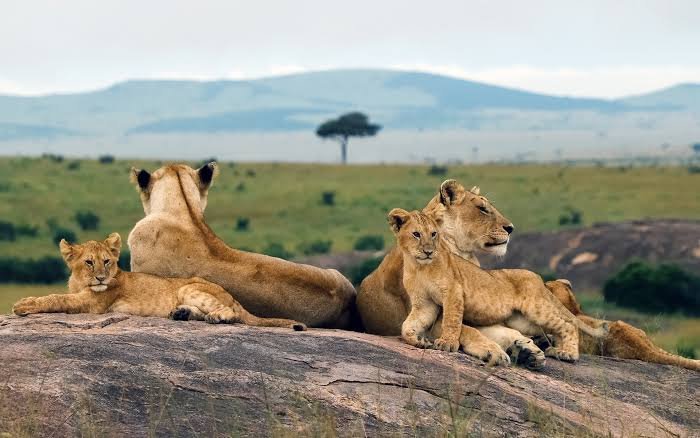
1. Lions – The Kings and Queens of the Savannah:The Ultimate Wildlife Guide: What Animals Can You Expect to See on Safari in Tanzania in 2026–2028?
If there is one animal most people hope to see on their first Tanzanian safari, it is probably the lion.
Tanzania has excellent lion-viewing opportunities, particularly in the Serengeti and Ngorongoro ecosystem.
Lions are social cats and usually live in prides. During a game drive, you might see them:
- Resting beneath trees
- Walking across open grassland
- Watching herds of prey
- Playing with cubs
- Feeding after a hunt
- Roaring in the early morning or evening
One of the most exciting experiences is finding a pride shortly after sunrise.
The landscape is quiet, the light is soft, and the lions may be beginning to move after spending the night resting.
Ngorongoro is particularly notable for its lion population, and the conservation area’s official wildlife information notes that lions can be encountered throughout the year.
2. Leopards – Tanzania’s Elusive Spotted Cats
Seeing a leopard is one of the most exciting moments on safari.
Leopards are solitary, secretive, and incredibly well camouflaged.
They often rest in trees, particularly where branches provide shade and a good view of the surrounding landscape.
In the Serengeti, your guide may spend considerable time searching for the telltale signs of a leopard:
- A tail hanging from a tree
- Fresh tracks
- A cluster of safari vehicles watching one location
- Antelope alarm calls
- A distinctive shape hidden among branches
A leopard sighting can last only a few minutes—or provide an unforgettable extended observation.
This is why an experienced safari guide makes such a difference.
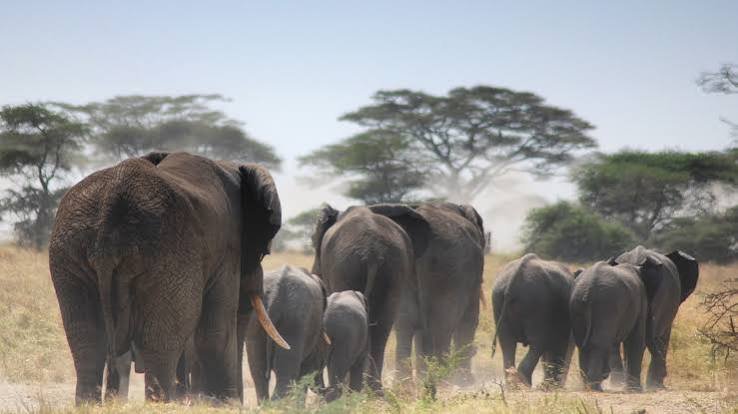
3. African Elephants – The Giants of Tanzania:The Ultimate Wildlife Guide: What Animals Can You Expect to See on Safari in Tanzania in 2026–2028?
Elephants are among the most impressive animals you can encounter.
Watching a family of elephants walk across the savannah is an experience that is difficult to describe until you have witnessed it yourself.
Tanzania has several excellent elephant destinations, but Tarangire National Park is particularly famous.
TANAPA describes Tarangire as a year-round wildlife destination famous for its large elephant population and baobab landscapes.
You may see elephants:
- Walking in family groups
- Feeding beneath baobabs
- Drinking from rivers
- Playing with younger elephants
- Crossing safari tracks
- Moving toward water
Tarangire’s official information also identifies large elephant families as one of the park’s signature attractions.
4. African Buffalo
The African buffalo may not receive as much attention as lions or elephants, but they are incredibly impressive animals.
Large herds can contain dozens or even hundreds of buffalo.
They can often be found in:
- Grasslands
- Woodlands
- Wetlands
- Areas near water
Buffalo are powerful animals and should always be treated with respect.
They are also an important part of the predator-prey ecosystem, particularly for lions.
Ngorongoro is one of the places where buffalo can be seen alongside other members of the Big Five.
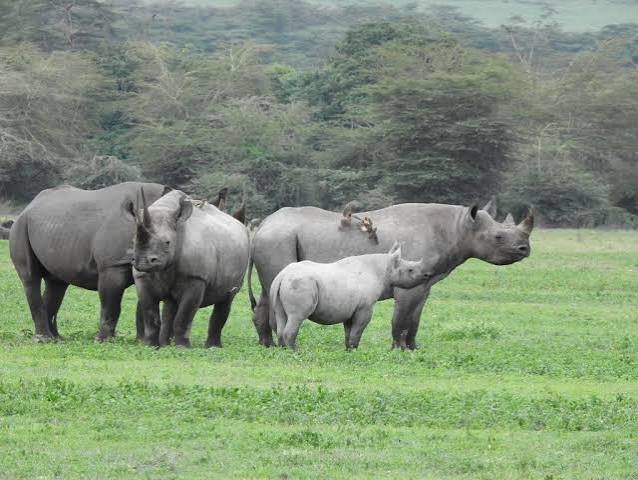
5. Black Rhinoceros – One of Tanzania’s Most Special Sightings:The Ultimate Wildlife Guide: What Animals Can You Expect to See on Safari in Tanzania in 2026–2028?
The black rhinoceros is one of the most sought-after animals on a Tanzania safari.
It is also one of the more difficult animals to encounter because populations are limited and carefully protected.
Ngorongoro is particularly important for rhino viewing.
The Ngorongoro Conservation Area Authority lists black rhinoceros among the area’s wildlife and notes that the crater supports this rare species.
If your dream is to see a rhino, tell your Eko Tanzania Adventures safari planner before your trip so your itinerary can be designed with appropriate destinations and sufficient time.
Remember that wildlife is unpredictable. No ethical safari operator should promise a rhino sighting.
6. Cheetahs – Masters of the Open Plains
Cheetahs are among Tanzania’s most beautiful predators.
Unlike leopards, which often rely on stealth and ambush, cheetahs are famous for speed.
They prefer open environments where they can use their incredible acceleration to chase prey.
The Serengeti’s open grasslands provide excellent habitat for cheetahs.
You may find a cheetah:
- Sitting on a termite mound
- Scanning the plains
- Resting beneath a bush
- Moving across open grassland
- Hunting smaller antelope
- Caring for cubs
Seeing a mother cheetah with cubs is an especially memorable safari experience.
7. Wildebeest – The Stars of the Great Migration
Wildebeest are among Tanzania’s most iconic animals.
Every year, enormous numbers move through the Serengeti-Mara ecosystem in search of fresh pasture and water.
The official Tanzania Tourism Board identifies the Serengeti’s annual wildebeest and zebra migration as one of its defining wildlife experiences.
The migration is not a single event occurring on one particular date.
It is a continuous ecological movement.
Depending on the time of year, you may see:
- Huge grazing herds
- Calving wildebeest
- Predator activity
- River crossings
- Young calves
- Zebras traveling alongside wildebeest
Because the herds move according to rainfall and pasture conditions, travelers should plan according to their intended dates rather than expecting the same experience every year.
8. Zebras
Zebras are another common and beautiful sight across Tanzania.
They frequently travel alongside wildebeest.
A herd of zebras against a golden Serengeti sunset is one of those classic African safari scenes that stays in your memory long after the journey ends.
Zebras can be found in many Tanzanian ecosystems, including Serengeti and Ngorongoro.
9. Giraffes – Tanzania’s Gentle Giants
Giraffes are almost impossible to miss once you know where to look.
Their long necks allow them to feed on leaves high above many other herbivores.
You may see them:
- Feeding from acacia trees
- Walking across open plains
- Crossing safari roads
- Standing against the horizon
- Moving in small groups
They are particularly photogenic because their height creates wonderful compositions against the Tanzanian landscape.
10. Hippos
If you want to see hippos, water is the key.
These enormous animals spend much of their time in rivers, lakes, pools, and wetlands.
They may look peaceful, but hippos are powerful wild animals and should never be approached on foot without professional guidance.
Nyerere National Park is particularly interesting for hippo encounters because of the Rufiji River and associated waterways.
TANAPA highlights boat safaris along the Rufiji, where travelers can observe hippos, crocodiles, birds, elephants, and other wildlife from the water.
11. Crocodiles
Crocodiles are another fascinating part of Tanzania’s wildlife.
You may see them lying motionless along riverbanks or partially submerged in water.
Nyerere’s waterways can provide particularly interesting crocodile viewing during boat safaris.
The advantage of a boat safari is that you can observe aquatic wildlife from a different perspective than you would from a traditional game-drive vehicle.
12. Hyenas
Hyenas are intelligent, social, and highly successful predators.
They are often misunderstood because of their unusual appearance and reputation.
On safari, you may see spotted hyenas:
- Resting around their den
- Moving through grasslands
- Following predators
- Feeding after a hunt
- Calling at night
- Traveling in groups
They are an important part of Tanzania’s ecosystem.
13. Wildebeest Calves and Other Young Animals
One of the most beautiful experiences on safari is seeing young animals.
Depending on your travel dates and location, you may encounter:
- Wildebeest calves
- Zebra foals
- Elephant calves
- Giraffe calves
- Impala fawns
- Lion cubs
Young animals bring another dimension to safari because you get to observe parental behavior, play, feeding, protection, and social interaction
14. Antelopes – More Variety Than Many Travelers Expect
Tanzania has a remarkable variety of antelope species.
Depending on the park, you may encounter:
- Impala
- Thomson’s gazelle
- Grant’s gazelle
- Eland
- Hartebeest
- Waterbuck
- Dik-dik
- Oryx
- Gerenuk
- Bushbuck
- Kudu
Tarangire is particularly interesting for travelers who want to look beyond the most famous animals.
TANAPA identifies species such as lions, leopards, hyenas, pythons, elephants and diverse wildlife within Tarangire, while its official material also highlights the park’s distinctive antelope species.
15. Monkeys and Baboons
Safari is not only about large mammals.
You will also encounter fascinating primates.
Common sightings can include:
- Baboons
- Vervet monkeys
- Blue monkeys
- Colobus monkeys in appropriate habitats
Ngorongoro Conservation Area Authority specifically lists velvet monkeys and baboons among its wildlife.
Watching a troop of baboons interact can be just as entertaining as watching large predators.
16. African Wild Dogs
African wild dogs are among the most exciting and more difficult animals to encounter in Tanzania.
They are social, highly mobile predators that live in packs.
Nyerere National Park is particularly important for travelers interested in wild dogs.
TANAPA describes Nyerere as one of the best places in Africa to look for African wild dogs and identifies them as an important conservation focus in the park.
If wild dogs are high on your bucket list, Eko Tanzania Adventures can consider the southern circuit when designing your itinerary.
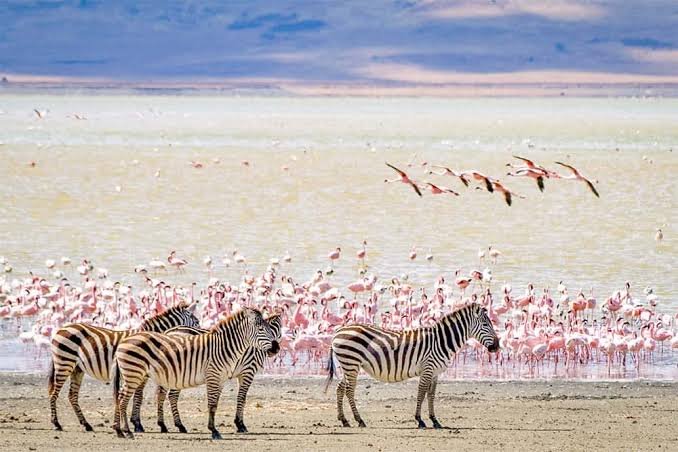
17. Birds – Tanzania’s Hidden Wildlife Treasure:The Ultimate Wildlife Guide: What Animals Can You Expect to See on Safari in Tanzania in 2026–2028?
Tanzania is not just a destination for mammal lovers.
It is also extraordinary for birdwatching.
Depending on the ecosystem and season, you can encounter:
- Eagles
- Vultures
- Flamingos
- Ostriches
- Kori bustards
- Hornbills
- Kingfishers
- Bee-eaters
- Sunbirds
- Secretary birds
- Fish eagles
- Rollers
Tarangire is particularly well known for bird diversity, with TANAPA highlighting more than 550 bird species recorded in the park.
For serious birdwatchers, a customized safari can be arranged around habitats and seasonal bird activity.
18. Flamingos
Flamingos provide some of Tanzania’s most recognizable wildlife photography.
Their pink coloration contrasts beautifully with lakes and wetlands.
Ngorongoro Conservation Area Authority lists flamingos among the bird species found within the conservation area.
Depending on water conditions and season, flamingos may be found in suitable lakes and wetlands across northern Tanzania.
19. Ostriches and Kori Bustards
The ostrich is the world’s largest living bird, while the kori bustard is one of the heaviest flying birds.
Both can be encountered in open grassland habitats.
Tarangire’s official information specifically highlights ostriches and kori bustards among its birdlife.
For photographers, these large birds can make excellent subjects because they are visually distinctive and often found in open landscapes.
Where Should You Go to See Specific Animals?
Choosing the right park can make a major difference.
| Animal | Recommended Tanzania destinations |
|---|---|
| Lions | Serengeti, Ngorongoro, Tarangire |
| Leopards | Serengeti, Ngorongoro, Nyerere |
| Cheetahs | Serengeti |
| Elephants | Tarangire, Serengeti, Ngorongoro, Nyerere |
| Buffalo | Serengeti, Ngorongoro, Tarangire, Nyerere |
| Black rhino | Ngorongoro |
| Wildebeest | Serengeti, Ngorongoro ecosystem |
| Zebra | Serengeti, Ngorongoro, Tarangire |
| Giraffe | Tarangire, Serengeti, Nyerere |
| Hippos | Ngorongoro, Nyerere |
| Crocodiles | Nyerere and suitable river/lake habitats |
| Wild dogs | Nyerere |
| Flamingos | Ngorongoro and suitable lakes |
| Birds | Tarangire, Serengeti, Ngorongoro, Nyerere |
| Monkeys | Lake Manyara, Ngorongoro and forest habitats |
This is a guide rather than a guarantee. Wildlife moves freely, and conditions change.
The Best Tanzania Safari Circuits for 2026–2028
Northern Circuit
The northern circuit is the classic choice for first-time visitors.
A typical itinerary can include:
Tarangire Ngorongoro Serengeti
The official Tanzania Tourism Board currently promotes this combination as a signature northern Tanzania safari circuit.
It offers an exceptional combination of wildlife and scenery.
Southern Circuit
For travelers who want a quieter and more remote experience, consider:
Nyerere Ruaha
Nyerere is particularly attractive because it combines game drives, boat safaris, walking experiences, and the Rufiji River ecosystem.
The 5-Day Eko Tanzania Wildlife Safari
For travelers with limited time, Eko Tanzania Adventures can design a five-day safari such as:
Day 1 – Tarangire National Park
Begin your adventure with elephants, baobabs, giraffes, zebras, buffalo, and birds.
Day 2 – Tarangire to Ngorongoro
Continue toward the Ngorongoro highlands with wildlife viewing along the way.
Day 3 – Ngorongoro Crater
Descend into the crater for an extended game drive.
Day 4 – Serengeti
Travel into the Serengeti and enjoy an afternoon game drive.
Day 5 – Serengeti
Enjoy a final morning game drive before departure or onward travel.
The Ultimate 7-Day Wildlife Experience
For travelers who want more time in the wilderness:
Day 1
Arrival in Arusha
Day 2
Tarangire National Park
Day 3
Lake Manyara or cultural experience
Day 4
Ngorongoro Crater
Day 5
Serengeti
Day 6
Full-day Serengeti safari
Day 7
Morning Serengeti safari and departure
The additional time allows your guide more flexibility to explore different areas rather than rushing from one park to another.
Safari and Zanzibar: The Complete Tanzania Holiday
Why stop at wildlife?
After several days of game drives, you can fly or travel to Zanzibar for a completely different experience.
A 10-day Tanzania safari and Zanzibar package could include:
Days 1–2
Tarangire and Ngorongoro
Days 3–5
Serengeti
Day 6
Travel to Zanzibar
Days 7–9
Beach, snorkeling, Stone Town, or cultural activities
Day 10
Departure
This combination gives you wildlife, landscapes, culture, and tropical relaxation in one holiday.
When Is the Best Time to See Tanzania’s Wildlife?
Tanzania can be visited throughout much of the year, but different seasons provide different experiences.
January–March
This period can be particularly interesting for the wildebeest calving season in the southern Serengeti, depending on rainfall and pasture conditions.
April–May
The landscape becomes lush and green during the long rains. This can be excellent for photography, birdwatching, and travelers who prefer fewer visitors, although rainfall can affect some roads.
June–October
This is the classic dry season and generally provides excellent wildlife viewing conditions. A current Tanzania travel reference identifies late June through October as the strongest general wildlife-viewing period.
November–December
Short rains can transform the landscape into a fresh green environment, and some travelers enjoy the combination of wildlife and lower visitor numbers.
For the Great Migration, the exact timing varies with rainfall and pasture conditions, so the best approach is to plan around the likely location of the herds for your specific dates rather than relying on a fixed calendar.
What Makes a Great Safari Guide?
Animals are important, but the person sitting beside you in the safari vehicle can completely change your experience.
A knowledgeable guide can help you understand:
- Animal behavior
- Tracks
- Calls
- Bird identification
- Ecosystems
- Conservation
- Local culture
- Seasonal wildlife movements
A good guide also understands when to stop.
Sometimes the best safari moment is not a dramatic hunt.
It may be an elephant family quietly crossing the road.
It may be a giraffe feeding in the evening light.
It may be a tiny bird perched on a branch.
It may be a lion cub playing beside its mother.
A great guide helps you notice those moments.
What Is Included in an Eko Tanzania Adventures Safari?
A customized Eko Tanzania Adventures safari may include:
- Professional safari guide
- 4×4 safari vehicle
- Park entrance fees
- Game drives
- Accommodation
- Meals according to itinerary
- Drinking water during safari
- Airport transfers where included
- Government taxes and applicable fees
- Selected cultural activities
International flights, visas, travel insurance, tips, alcoholic drinks, personal purchases, and optional activities are generally separate unless specifically included in your quotation.
Park fees and other official charges can change, so the final price should always be confirmed for your specific 2026, 2027, or 2028 travel dates.
How Much Does a Tanzania Wildlife Safari Cost?
There is no single correct price for a Tanzania safari.
Your final cost depends on:
- Number of travelers
- Number of safari days
- Private or group safari
- Budget, mid-range, or luxury accommodation
- Number of parks
- Season
- Domestic flights
- Type of vehicle
- Additional activities
- Zanzibar extension
For this reason, Eko Tanzania Adventures can prepare a personalized quotation based on your exact itinerary rather than presenting one generic price that may not match your requirements.
How to Prepare for Your Wildlife Safari
Bring practical clothing and equipment.
Recommended packing list:
- Lightweight shirts
- Trousers
- Comfortable shoes
- Warm layer for early mornings
- Hat
- Sunglasses
- Sunscreen
- Insect repellent
- Binoculars
- Camera
- Extra batteries
- Power bank
- Small backpack
- Reusable water bottle
- Personal medication
- Waterproof protection for electronics
Neutral-colored clothing is generally practical, particularly for walking activities.
And remember your binoculars.
You may be surprised by how many incredible things are happening far beyond the road.
Responsible Wildlife Viewing
A safari is a privilege.
The animals you see are wild animals not performers.
During your safari:
- Never feed wildlife.
- Do not shout at animals.
- Do not attempt to touch wildlife.
- Stay inside the vehicle unless your guide says it is safe and you are at an authorized location.
- Maintain appropriate distances.
- Never block an animal’s path.
- Avoid littering.
- Follow park regulations.
- Listen carefully to your guide.
TANAPA’s visitor guidance emphasizes staying on designated tracks, respecting wildlife, avoiding harassment, and following guide and ranger instructions.
Responsible behavior helps protect Tanzania’s wildlife for future generations.
Why Choose Eko Tanzania Adventures?
At Eko Tanzania Adventures, we understand that every traveler has a different idea of the perfect safari.
Perhaps your priority is the Big Five.
Perhaps you are a photographer searching for predators and dramatic landscapes.
Perhaps you are traveling with children.
Perhaps you are planning a honeymoon.
Perhaps you want a luxury safari.
Perhaps you want a budget-conscious adventure.
Perhaps you want to combine wildlife with Kilimanjaro and Zanzibar.
Your itinerary can be built around those priorities.
We can organize:
- Private safaris
- Group safaris
- Family safaris
- Honeymoon safaris
- Luxury safaris
- Mid-range safaris
- Budget safari experiences
- Great Migration trips
- Photography safaris
- Kilimanjaro and safari combinations
- Safari and Zanzibar holidays
- Cultural experiences
Final Thoughts: Tanzania Is About More Than the Big Five
The Ultimate Wildlife Guide: What Animals Can You Expect to See on Safari in Tanzania in 2026–2028?;When people hear the word “safari,” they often think about lions, elephants, leopards, buffalo, and rhinos.And yes, these animals are extraordinary.But Tanzania’s wildlife story is much bigger.
It is the elephant family walking beneath an ancient baobab.
It is a leopard disappearing into a tree.
It is a cheetah scanning the horizon.
It is thousands of wildebeest moving across the Serengeti.
It is a giraffe silhouetted against a sunset.
It is a hippo emerging from the water.
It is a colorful kingfisher diving into a river.
It is a hyena calling in the distance.
It is a tiny dik-dik standing beside the road.
It is an elephant calf following its mother.
It is a sky full of vultures after a predator has made a kill.
It is the sound of the African wilderness before sunrise.
That is what makes a Tanzania safari unforgettable.
For 2026, 2027, and 2028, Tanzania offers an extraordinary opportunity to experience these animals in landscapes that remain among the world’s most important wildlife ecosystems. The country’s official tourism resources continue to emphasize the Serengeti, Ngorongoro, Tarangire, wildlife safaris, and the wider diversity of Tanzania’s natural attractions.
Begin Your Tanzania Wildlife Adventure with Eko Tanzania Adventures
Whether you have 3 days, 5 days, 7 days, 10 days, or several weeks, Eko Tanzania Adventures can help you create a safari around the animals and experiences you care about most.
You can begin with the elephants of Tarangire, continue to the wildlife-rich landscape of Ngorongoro, follow the predators and migrating herds of the Serengeti, and then finish your adventure on the beaches of Zanzibar.
Or, if you want a more remote experience, explore the rivers and wildlife of Nyerere National Park, where boat safaris provide a completely different perspective on Tanzania’s wilderness.
Your Tanzania safari is not simply a trip to see animals. It is an opportunity to experience nature at its most powerful, beautiful, unpredictable, and unforgettable.
Plan your 2026, 2027, or 2028 safari with Eko Tanzania Adventures and discover the extraordinary wildlife of Tanzania—one unforgettable encounter at a time.