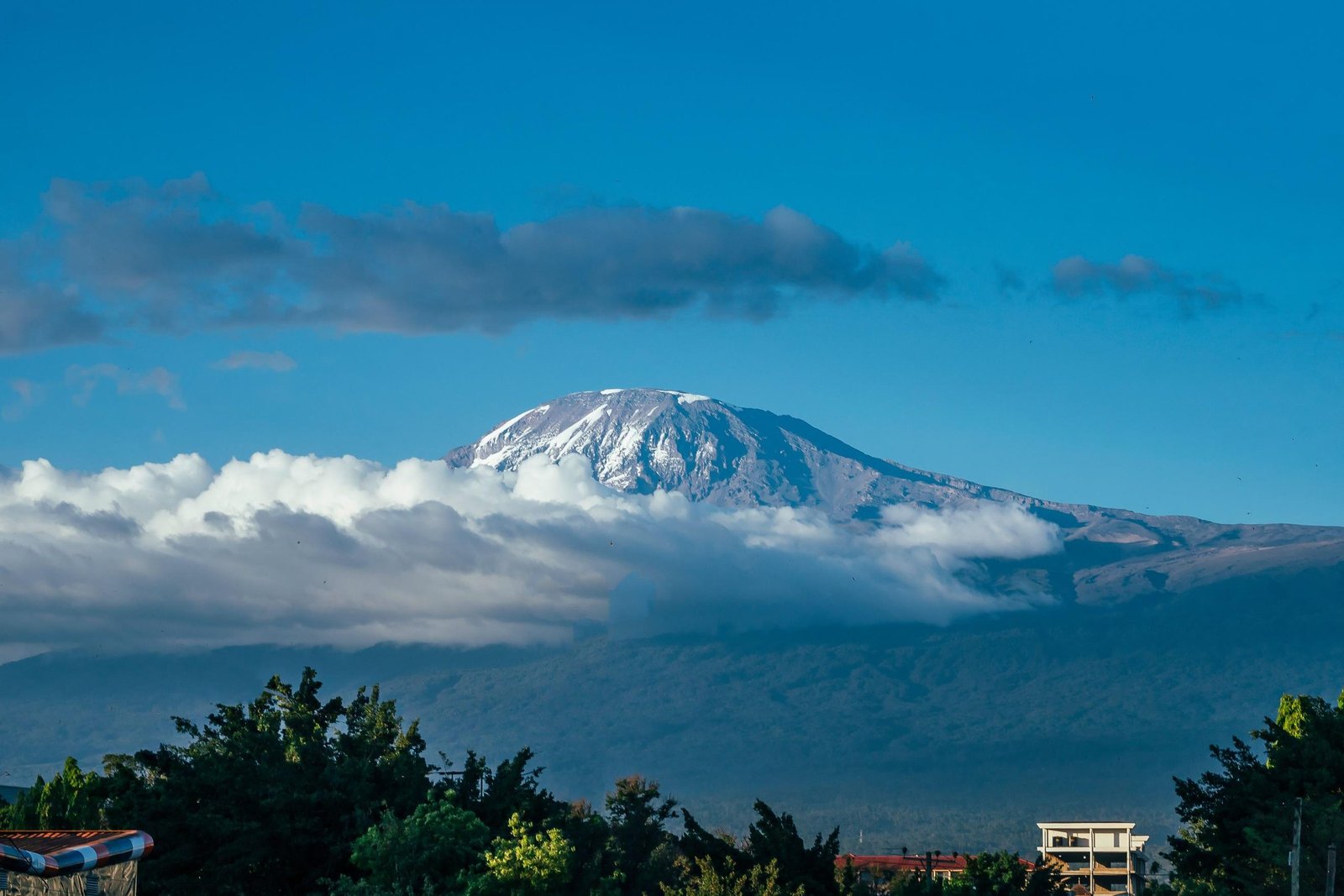
Where Is Mount Kilimanjaro? Location & Travel Guide for 2027/2028Mount Kilimanjaro; is located in northern Tanzania, close to the border with Kenya and not far from the towns of Moshi and Arusha. Rising to 5,895 meters (19,341 feet) above sea level, it is the highest mountain in Africa and the world’s highest free-standing mountain.
For travelers planning a Kilimanjaro adventure in 2027 or 2028, understanding where the mountain is located is an important first step. Your choice of airport, arrival city, accommodation, climbing route, transportation, and even the number of days you need can all depend on how you plan your trip.
The good news is that reaching Kilimanjaro is relatively straightforward compared with many other high-altitude mountains around the world.
This guide explains where Mount Kilimanjaro is, how to get there, which towns to stay in, the main climbing routes, the best time to climb, estimated costs, and what to know before your 2027/2028 adventure.
Where Exactly Is Mount Kilimanjaro?:Where Is Mount Kilimanjaro? Location & Travel Guide for 2027/2028
Mount Kilimanjaro is in Tanzania, East Africa, within Kilimanjaro Region.
The mountain is part of Kilimanjaro National Park, which protects the mountain and its surrounding ecosystems. The park headquarters are located at Marangu in Moshi District.
Kilimanjaro sits relatively close to Tanzania’s northern border with Kenya. Because of its location, many international visitors combine a Kilimanjaro climb with a Tanzania safari.
A typical adventure might look like:
International arrival → Moshi → Mount Kilimanjaro → Serengeti → Ngorongoro → Zanzibar
This is one of the reasons Kilimanjaro is such a popular destination. You can climb one of Africa’s highest peaks and then experience wildlife and beaches within the same holiday.
Is Mount Kilimanjaro in Kenya or Tanzania?
This is one of the most common questions people ask.
Mount Kilimanjaro is in Tanzania.
Because the mountain is relatively close to the Kenya–Tanzania border and can be seen from parts of Kenya, some travelers mistakenly think it is located in Kenya.
The mountain itself, including Kilimanjaro National Park, is in Tanzania.
If you are planning to climb Kilimanjaro, your trekking arrangements will therefore be made through Tanzania.
How High Is Mount Kilimanjaro?:Where Is Mount Kilimanjaro? Location & Travel Guide for 2027/2028
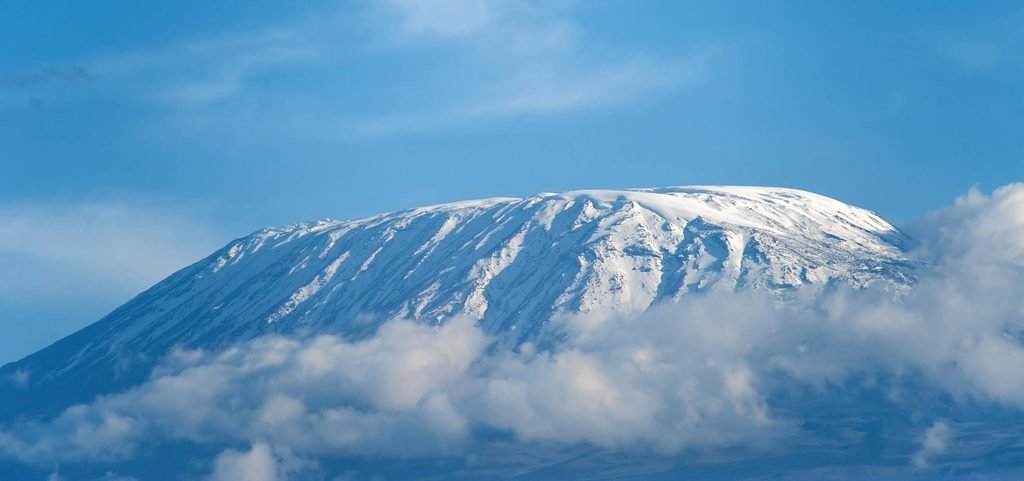
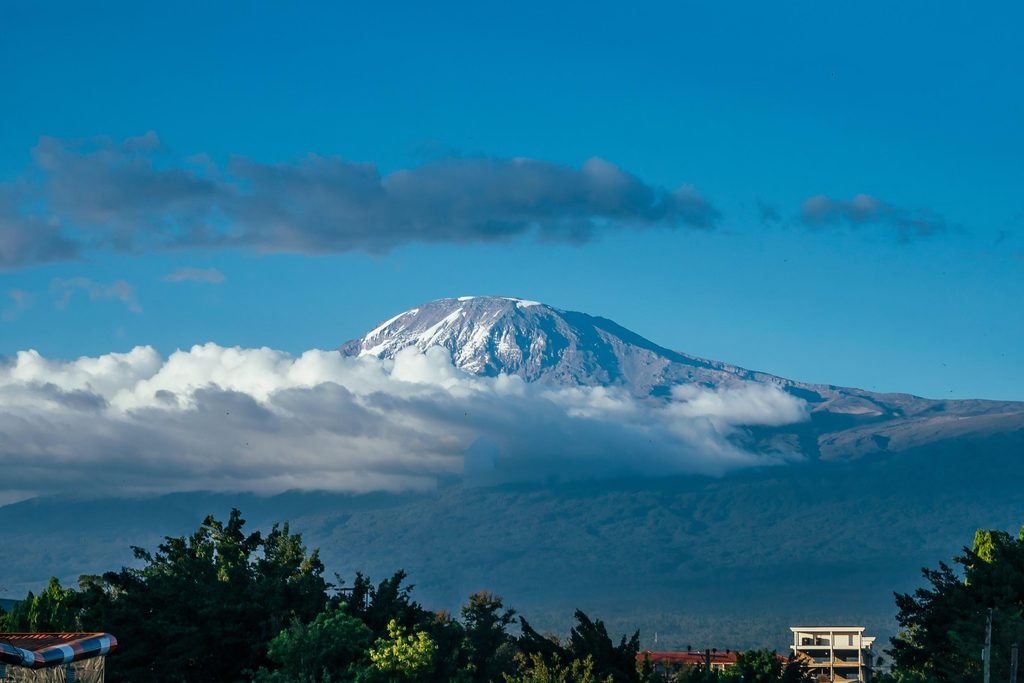
Mount Kilimanjaro stands at 5,895 meters (19,341 feet).Its highest point is Uhuru Peak, located on Kibo, the highest of the mountain’s three volcanic cones.
Kilimanjaro consists of three major volcanic features:
- Kibo – 5,895 m
- Mawenzi – 5,149 m
- Shira – approximately 3,962 m
Kibo is the highest and contains Uhuru Peak.
The mountain’s enormous elevation creates several distinct ecological zones as you climb, from cultivated areas and rainforest to heathland, alpine desert, and the cold summit environment.
This changing landscape is one of the most fascinating parts of the Kilimanjaro experience.
You can begin your journey surrounded by warm tropical vegetation and eventually find yourself walking through an environment that feels almost polar.
How Far Is Kilimanjaro From Moshi?
Moshi is the main town associated with Mount Kilimanjaro and is the most common base for climbers.
The town provides accommodation, restaurants, equipment shops, transport services, guides, and tour operators that organize mountain climbs.
Many travelers arrive in Moshi one or two days before the climb.
This gives you time to:
- Rest after your flight
- Meet your guide
- Complete a gear check
- Purchase or rent missing equipment
- Adjust to the local environment
- Prepare mentally for the trek
For most climbers, staying in Moshi before the climb is much more convenient than trying to travel directly from the airport to the mountain gate on arrival.
What Is the Nearest Airport to Mount Kilimanjaro?
The main international gateway is Kilimanjaro International Airport (JRO).
TANAPA states that the park is approximately 40 km from Kilimanjaro International Airport, making JRO the most convenient airport for many international Kilimanjaro climbers.
Another option is Arusha Airport (ARK), particularly for travelers already connecting through Arusha or combining their climb with a northern Tanzania safari.
Kilimanjaro International Airport
Airport code: JRO
This is generally the most convenient choice if your primary goal is climbing Mount Kilimanjaro.
After landing, you can arrange a private transfer to Moshi or your chosen pre-climb accommodation.
Arusha Airport
Airport code: ARK
Arusha is another important tourism hub in northern Tanzania.
It is particularly useful if your itinerary combines:
- Kilimanjaro
- Arusha
- Serengeti
- Ngorongoro
- Tarangire
TANAPA confirms that Kilimanjaro National Park can be accessed from both Moshi and Arusha, with climbers commonly arriving through JRO or ARK.
Moshi vs Arusha: Where Should You Stay?
If you are climbing Kilimanjaro, Moshi is usually the most convenient base.
Moshi is closer to the main mountain access points and has a strong tourism infrastructure focused on Kilimanjaro climbers.
Arusha, however, is an excellent option if you are combining your climb with a safari.
Stay in Moshi if:
- Kilimanjaro is your main goal
- You want shorter transfers to the mountain
- You want easy access to climbing services
- You need gear rental
- You want a quieter pre-climb experience
Stay in Arusha if:
- You are combining Kilimanjaro with safari
- You are starting a safari after your climb
- You prefer Arusha’s larger tourism infrastructure
- Your travel itinerary already includes northern Tanzania
The right choice depends on your overall itinerary.
How Do You Get to Mount Kilimanjaro?
Getting to Kilimanjaro generally involves three stages.
Step 1: Fly to Tanzania
International travelers usually fly into Kilimanjaro International Airport or another Tanzanian gateway and connect with northern Tanzania.
Step 2: Transfer to Moshi or Arusha
Your tour operator can arrange transportation from the airport to your hotel.
Step 3: Drive to Your Mountain Gate
The exact gate depends on the route you have chosen.
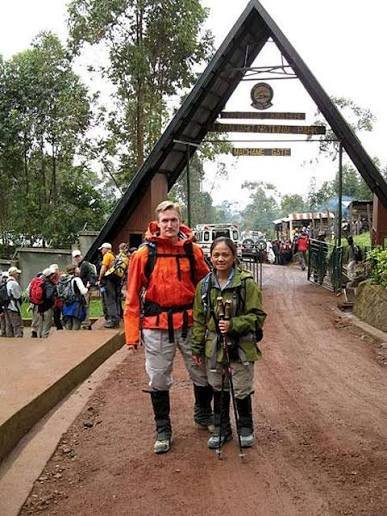
TANAPA lists major access points including:
- Marangu Gate
- Machame Gate
- Londorossi/Lemosho area
- Rongai Gate
The descent for many routes is through Mweka Gate.
This means your route choice determines where your mountain journey begins and how your transportation is organized.
Where Does the Kilimanjaro Climb Start?:Where Is Mount Kilimanjaro? Location & Travel Guide for 2027/2028
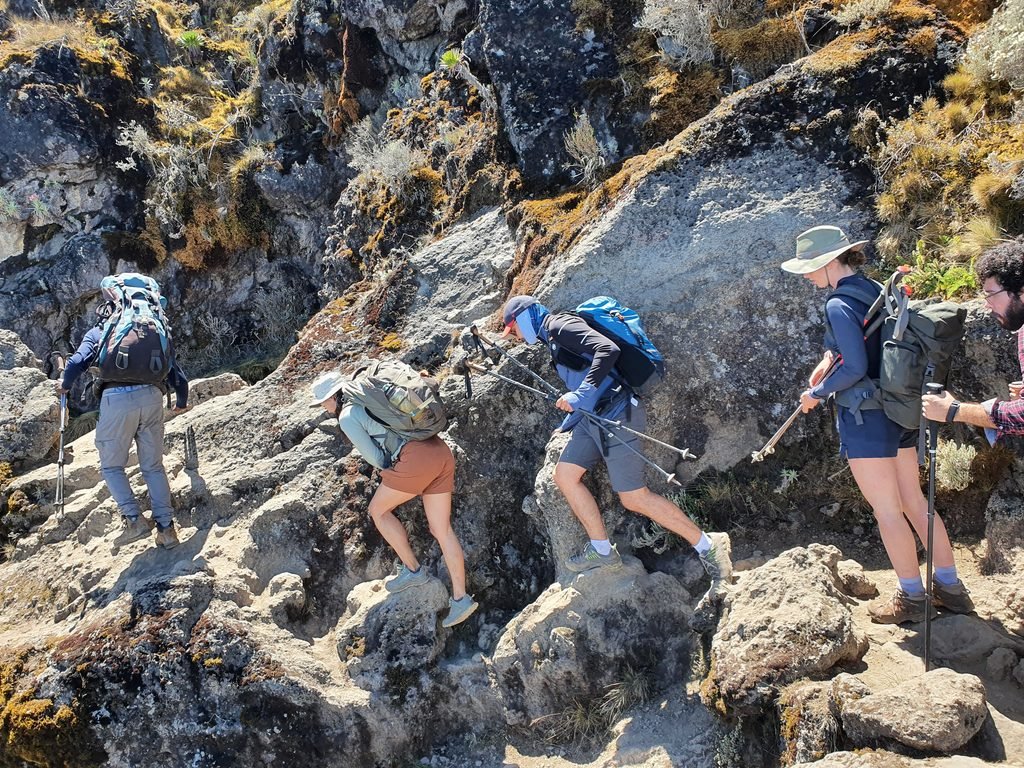
Mount Kilimanjaro has several climbing routes.
The starting point depends on the route.
Marangu Route
The Marangu Route begins from the eastern side of the mountain.
It is famous for using mountain huts rather than tents during the trek.
Machame Route
The Machame Route begins on the southern side of Kilimanjaro and is known for beautiful scenery and a more challenging trekking experience than Marangu.
Lemosho Route
Lemosho approaches the mountain from the western side.
It is popular among travelers who want a longer route with more time for acclimatization.
Rongai Route
Rongai approaches Kilimanjaro from the northern side near the Kenya border.
It offers a different perspective of the mountain and can be attractive during certain weather conditions.
Northern Circuit
The Northern Circuit takes a longer route around the mountain and is designed to provide extensive acclimatization and varied scenery.
TANAPA notes that several mountain trails lead to Kibo and that climbing durations commonly range from approximately five to eight days depending on the route.
Which Kilimanjaro Route Is Best for 2027/2028?:Where Is Mount Kilimanjaro? Location & Travel Guide for 2027/2028
There is no single route that is best for everyone.
Your choice should depend on:
- Your fitness level
- Available time
- Budget
- Desired scenery
- Previous hiking experience
- Acclimatization needs
- Preference for camping or huts
For beginners
Longer routes such as Lemosho or Northern Circuit can be attractive because they provide more time for gradual ascent.
For travelers with limited time
Marangu may be considered because it can be completed in fewer days, although choosing the shortest possible itinerary is not necessarily the best approach for summit success.
For scenic trekking
Machame and Lemosho are popular choices.
For a quieter experience
Rongai or longer routes may appeal to travelers who prefer a different mountain environment.
The most important consideration should be safe and sensible acclimatization, rather than simply choosing the cheapest or shortest itinerary.
How Many Days Do You Need to Climb Kilimanjaro?
A Kilimanjaro climb can take several days depending on your route and itinerary.
TANAPA indicates that reaching Kibo can take approximately 5 to 8 days depending on the route, with longer itineraries generally offering better opportunities for acclimatization.
For a 2027/2028 trip, it is wise to avoid planning your entire holiday too tightly.
Instead of booking a flight immediately after your expected summit date, allow some flexibility.
Mountain weather can change, and your physical condition may require adjustments.
A comfortable itinerary might include:
Arrival day → hotel/rest → mountain trek → recovery day → safari or Zanzibar
This gives you a much more relaxed travel experience.
Is Mount Kilimanjaro Difficult to Climb?
Kilimanjaro does not require technical mountaineering skills on the standard trekking routes, but that does not mean it is easy.
The biggest challenge for many climbers is altitude.
You are climbing from relatively low elevations to almost 5,900 meters.
At high altitude, the body receives less oxygen, and symptoms such as headaches, nausea, fatigue, dizziness, and shortness of breath can occur.
That is why choosing an itinerary with adequate acclimatization is extremely important.
TANAPA advises climbers to ascend slowly, choose appropriate acclimatization days, stay hydrated, report symptoms to guides, and carry suitable cold-weather and rain gear.
Fitness helps, but it does not completely protect someone from altitude-related problems.
What Are the Main Attractions on Mount Kilimanjaro?
Kilimanjaro is much more than a summit.
The mountain offers a remarkable variety of landscapes.
Montane Forest
Lower sections of the mountain contain lush forest and diverse wildlife.
You may encounter animals such as blue monkeys, black-and-white colobus monkeys, bushbuck, and occasionally buffalo.
Heath and Moorland
As you climb higher, dense forest gives way to heath and moorland.
This zone features distinctive plants such as giant lobelias and senecios.
Alpine Desert
Higher still, the landscape becomes increasingly dry and rocky.
The vegetation becomes sparse, and the environment starts to feel dramatically different from the lower slopes.
Summit Zone
Near Uhuru Peak, temperatures can fall below freezing.
The summit environment is dominated by volcanic rock, ice, snow, and spectacular views when conditions are clear.
The ecological changes between the bottom and the top are one of Kilimanjaro’s defining features.
When Is the Best Time to Visit Mount Kilimanjaro?
Kilimanjaro can be climbed throughout the year, but weather conditions vary.
For travelers planning 2027 or 2028, many prefer periods with relatively drier weather.
The best timing depends on your priorities, including:
- Weather
- Crowds
- Route
- Budget
- Personal schedule
Rather than choosing dates only because someone says they are “the best,” discuss your travel plans with an experienced local operator.
They can help you choose a route and itinerary that match your preferred dates.
How Much Does It Cost to Climb Kilimanjaro?
The total cost of a Kilimanjaro climb varies considerably.
There is no single fixed price because different operators offer different accommodation, transport, staffing, and service levels.
Your total cost may include:
- Park and conservation fees
- Camping or hut fees
- Rescue fees
- Professional mountain guides
- Porters
- Meals
- Airport transfers
- Hotel accommodation
- Equipment rental
- Transport to and from the mountain
- Guide and porter tips
TANAPA confirms that park charges vary according to visitor category, route, and number of days, and that conservation, camping/hut, and rescue fees may apply.
For that reason, do not choose a Kilimanjaro package based only on the advertised starting price.
Ask for a complete quotation showing exactly what is included and excluded.
What Should You Pack for Kilimanjaro?
Packing correctly is extremely important because the temperature changes dramatically as you climb.
Your packing list should normally include:
- Waterproof hiking boots
- Hiking socks
- Thermal base layers
- Warm fleece
- Insulated jacket
- Waterproof jacket and trousers
- Warm hat
- Gloves
- Sunglasses
- Sunscreen
- Headlamp
- Trekking poles
- Water bottles or hydration system
- Sleeping bag where required
- Backpack or duffel bag
- Personal medication
- Toiletries
- Camera or phone
- Power bank
Do not forget that the summit can be extremely cold even when the weather in Moshi is warm.
Can You Combine Kilimanjaro With a Tanzania Safari?
Absolutely.
In fact, this is one of the best ways to experience northern Tanzania.
After climbing Kilimanjaro, you can continue to destinations such as:
Tarangire National Park
Known for elephants, baobab trees, and beautiful landscapes.
Serengeti National Park
Famous for exceptional wildlife and the Great Wildebeest Migration.
Ngorongoro Crater
A spectacular wildlife destination with an extraordinary volcanic landscape.
A typical itinerary might be:
Kilimanjaro → Tarangire → Serengeti → Ngorongoro → Arusha
If you have additional time, you can continue to Zanzibar for a beach holiday.
Kilimanjaro and Zanzibar: The Ultimate Tanzania Combination
For travelers with two or three weeks available, combining Kilimanjaro with Zanzibar can create an incredible holiday.
You could begin with several days on the mountain, continue with a safari, and finish with several relaxing days on the Indian Ocean.
For example:
Day 1: Arrival in Tanzania
Days 2–8: Kilimanjaro climb
Days 9–11: Safari
Days 12–16: Zanzibar beach holiday
Day 17: Departure
The exact number of days can be adjusted depending on your route and interests.
This combination gives you three very different experiences:
Mountain adventure + African wildlife + tropical beaches.
Important Travel Tips for 2027/2028
If Kilimanjaro is on your travel list for 2027 or 2028, consider these tips.
Book early
Popular dates and preferred routes can become busy.
Choose enough days
Do not automatically select the shortest itinerary just to save money.
Use a licensed operator
TANAPA states that climbs must be guided by a licensed operator and that solo trekking is not permitted.
Prepare physically
Start training before your trip through walking, hiking, cardio, and strength exercises.
Take altitude seriously
Good fitness does not eliminate altitude risk.
Leave room between the climb and your flight
A little flexibility can make your trip much less stressful.
Respect the mountain
Follow your guide’s instructions, stay on designated routes, and practice responsible trekking.
Frequently Asked Questions About Mount Kilimanjaro
Where is Mount Kilimanjaro located?
Mount Kilimanjaro is located in northern Tanzania, within Kilimanjaro National Park, near Moshi and relatively close to the Kenya border.
Is Mount Kilimanjaro in Tanzania or Kenya?
Mount Kilimanjaro is in Tanzania.
What is the highest point of Kilimanjaro?
Uhuru Peak on Kibo is the highest point at 5,895 meters.
What is the nearest international airport?
Kilimanjaro International Airport (JRO) is the main airport used by many international visitors and is approximately 40 km from the national park according to TANAPA.
What city is closest to Kilimanjaro?
Moshi is the main town used as a base for many Kilimanjaro climbs.
Can beginners climb Kilimanjaro?
Yes. Many first-time trekkers climb Kilimanjaro, but good preparation, a suitable route, and proper acclimatization are essential.
How many days does Kilimanjaro take?
The duration depends on the route and itinerary. TANAPA indicates approximately 5–8 days depending on the route.
Final Thoughts
So, where is Mount Kilimanjaro?It is in northern Tanzania, near Moshi, within Kilimanjaro National Park and close to the Kenya border.But knowing its location is only the beginning.
If you are planning your 2027 or 2028 Kilimanjaro adventure, you also need to think about your airport, accommodation, climbing route, number of days, acclimatization, equipment, budget, and what you want to do after the climb.
The mountain itself is extraordinary because it offers so much variety in a single journey. You can begin among tropical forests and finish on the cold volcanic summit of Uhuru Peak at 5,895 meters.
And the experience does not have to end when you descend.For a complete Tanzania adventure, consider combining your Kilimanjaro climb with a Serengeti safari, Ngorongoro Crater, Tarangire National Park, and a relaxing Zanzibar beach holiday.
For 2027/2028, the best approach is to plan early, choose a reputable licensed operator, allow enough time for acclimatization, and focus on enjoying the journey rather than simply rushing toward the summit.