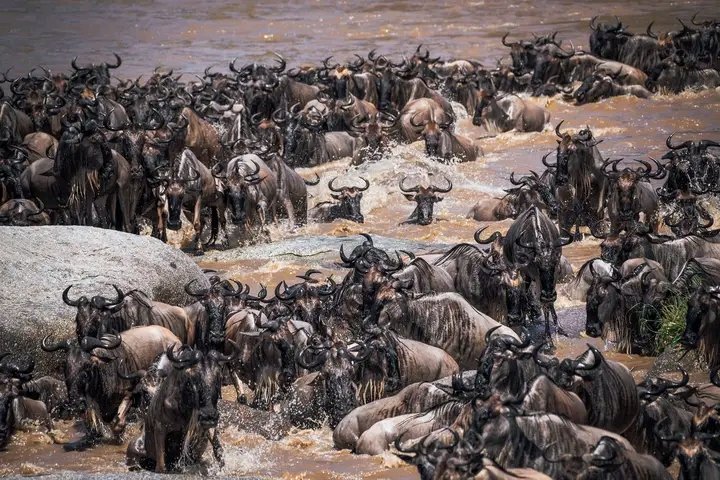
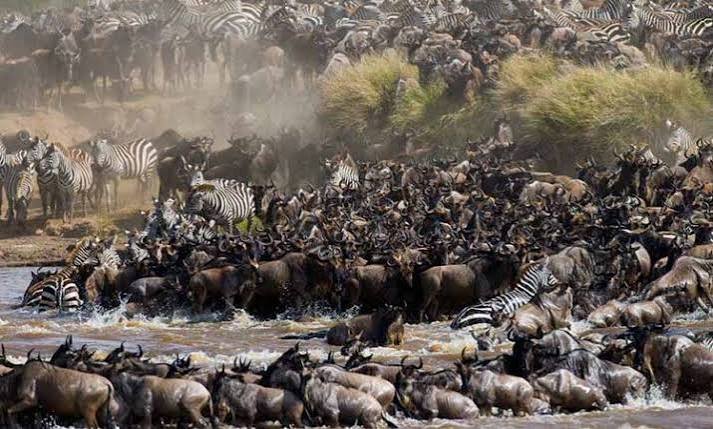
The Great Migration in Tanzania; is one of the most extraordinary wildlife spectacles on Earth. Every year, millions of wildebeest, together with large numbers of zebras and gazelles, move across the vast plains of the Serengeti ecosystem in search of fresh grass, water, and better grazing.
It is not simply a journey from one place to another. It is a continuous cycle of survival, reproduction, hunger, danger, and renewal.Imagine standing quietly on the open plains of northern Tanzania as thousands of wildebeest move across the horizon. You hear their calls, see dust rising from their hooves, and watch the herd stretch farther than your eyes can easily follow. Somewhere nearby, zebras and gazelles travel with them, while lions, cheetahs, hyenas, crocodiles, and other predators wait for opportunities.
This is the Great Migration.The migration takes place across the wider Serengeti Mara ecosystem, connecting Tanzania’s Serengeti National Park and surrounding areas with Kenya’s Maasai Mara. However, Tanzania is at the heart of the migration cycle, offering some of the most remarkable stages of the journey throughout the year.
For travellers planning a safari between 2026 and 2028, understanding how the migration changes from month to month is one of the best ways to choose the right time and location for your adventure.
What Exactly Is the Great Migration?:The Great Migration: What Is It? A Guide to the Serengeti, Month by Month 2026–2028
The Great Migration is the annual movement of huge herds of wildebeest across the Serengeti ecosystem in Tanzania and the Maasai Mara in Kenya.
The animals move according to the availability of fresh grazing and water. Rainfall determines where new grass grows, and the herds follow these changing conditions.
There is no single starting point and no single finishing point.
Instead, the migration is a year-round natural cycle.
Wildebeest move south, north, west, and east at different stages of the year. Some groups may be spread across enormous areas while others gather into spectacular concentrations.
Although the wildebeest are the stars of the migration, they do not travel alone. Zebras and gazelles are important companions, and their movements create opportunities for predators throughout the ecosystem.
The result is an ever-changing wildlife story.
One month you may find enormous herds gathering on the southern plains. A few months later, the same animals may be moving through the western Serengeti. Later in the year, they may be pushing toward the northern Serengeti and the Mara River region.
Why Do the Wildebeest Migrate?
At its simplest, the answer is food and water.
But the story is more fascinating than that.
The Serengeti ecosystem experiences seasonal changes in rainfall. When rain arrives, dormant grasslands can quickly become green and nutritious. Wildebeest instinctively respond to these changes and move toward areas where fresh grazing is available.
Their journey is therefore closely connected to Tanzania’s seasonal weather patterns.
This creates an extraordinary natural rhythm:
Rain → fresh grass → large herds → breeding → movement → survival → new rainfall → the cycle continues.
The migration also demonstrates how interconnected an ecosystem can be.
The movement of millions of herbivores provides food for predators. Their grazing influences the grasslands, while their dung returns nutrients to the soil. Births bring new life into the ecosystem, while natural predation maintains the balance between species.
The migration is not just about animals travelling.
It is about an entire ecosystem moving, feeding, reproducing, and surviving together.
The Great Migration Month by Month:The Great Migration: What Is It? A Guide to the Serengeti, Month by Month 2026–2028
The Great Migration: What Is It? A Guide to the Serengeti, Month by Month 2026–2028
One of the biggest questions safari travellers ask is:
“When is the best month to see the Great Migration?”
The honest answer is that it depends on what you want to experience.
There is no single month when everything happens.
Each period has its own character, and understanding the seasonal cycle can help you plan a much more rewarding safari.
January – February: Calving Season in Southern Serengeti
The beginning of the year can be an extraordinary time to visit Tanzania for the migration.
During January and February, large numbers of wildebeest are generally found in the southern Serengeti and the Ndutu area, where seasonal rains create nutrient-rich grasslands.
This period is famous for calving season.
Thousands of wildebeest calves are born during the broader calving period, transforming the plains into one of the most important nurseries in East Africa.
For a traveller, the experience can be incredibly emotional.
You may see a newborn calf standing beside its mother only minutes or hours after birth. Young wildebeest quickly learn to run because survival depends on staying close to the herd.
But birth also attracts danger.
Lions, cheetahs, hyenas, and other predators know that young animals are more vulnerable. The southern Serengeti can therefore become a dramatic stage where birth and predation occur side by side.
Why visit during this period?
- Excellent opportunity to see newborn wildebeest
- Large concentrations of animals
- Dramatic predator activity
- Green and beautiful landscapes
- Excellent wildlife photography opportunities
- A chance to experience the beginning of a new generation
March: Life on the Move
By March, the southern Serengeti and surrounding areas can still provide excellent migration experiences.
The calves are growing stronger, and the herds begin responding to changing environmental conditions.
This is a beautiful period for travellers who enjoy seeing animals with their young.
The landscape may still be green, and the combination of wildebeest, zebras, predators, and young calves creates a lively safari environment.
April: The Migration Continues
April is part of Tanzania’s wetter season, and safari conditions can vary.
The herds continue their natural movement as food and water availability changes.
For travellers who do not mind occasional rain and prefer quieter safari conditions, this period can offer a different experience from the busier peak seasons.
The landscape can be particularly lush, with dramatic skies and fresh vegetation.
May: The Herds Begin Moving North
As the season progresses, the migration begins shifting toward the western and central parts of the Serengeti.
By May, large groups can sometimes be seen moving across the plains.
This is also a fascinating time because the herds are no longer concentrated in the southern calving areas in the same way.
They are beginning another major stage of their journey.
The movement can create long lines of animals stretching across the landscape.
June: The Western Serengeti Comes Alive
June is an exciting month for migration enthusiasts.
The herds are generally moving toward the western Serengeti and beyond, depending on rainfall and grazing conditions.
The famous Grumeti River region can become an important part of the migration story.
Here, the animals face one of their many natural challenges as they move through river areas and surrounding grasslands.
The western Serengeti can also provide excellent general wildlife viewing, making June a strong month for a broader Tanzania safari.
July: Northern Serengeti and River-Crossing Season
July is one of the most popular months for travellers hoping to witness dramatic migration scenes.
Large herds begin reaching the northern Serengeti, where their journey brings them closer to the Mara River region.
This is where one of the most famous images associated with the Great Migration comes from:
the river crossing.
A river crossing can be spectacular, but it is important to understand that it is a natural event, not a scheduled performance.
The animals may gather at the riverbank for hours, days, or longer before deciding to cross. Sometimes they approach the water and turn back.
Then suddenly, the decision is made.
Thousands of wildebeest may rush toward the river.
The crossing can be chaotic, powerful, and unpredictable.
Crocodiles wait in the water, while animals must navigate steep banks and strong currents.
For visitors lucky enough to witness such a moment, it can become one of the most unforgettable experiences of a Tanzania safari.
August: Peak Migration Drama
August is often considered one of the strongest months for travellers hoping to experience the northern Serengeti migration.
Large herds may be concentrated around the northern Serengeti and Mara River areas.
River crossings can occur during this period, although their exact timing and location depend entirely on nature.
This is one of the most important things to remember when planning a migration safari:
Wildlife does not follow a calendar.
Rainfall, grass availability, water levels, animal behaviour, and countless environmental factors influence the movement of the herds.
That unpredictability is part of what makes the Great Migration so special.
September: The Journey Continues
September can continue to offer excellent opportunities in the northern Serengeti.
Some herds may still be around the Mara River region, while others are already moving into different grazing areas.
This can be an excellent month for travellers looking for a combination of migration and classic Serengeti wildlife.
The northern Serengeti also offers opportunities to see lions, elephants, leopards, cheetahs, giraffes, buffalo, and many other species.
October: Returning Toward Tanzania’s Southern Plains
As the year progresses, the herds begin moving south again.
The migration is gradually completing another major part of its annual cycle.
October can be particularly interesting because the northern Serengeti may still have migration activity while other groups are already beginning their journey south.
This transition period highlights the true nature of the migration.
It never really stops.
It simply changes direction.
November: Following the Rains
Short rains can begin influencing the Serengeti ecosystem around November.
As new grass appears in the southern areas, wildebeest gradually begin moving back toward the southern Serengeti.
For visitors, this can be a rewarding period because the landscape begins changing again.
The plains become greener, wildlife responds to the fresh vegetation, and the migration starts preparing for another calving cycle.
December: A New Migration Cycle Begins
December brings the herds closer to the southern Serengeti and Ndutu region as the annual cycle continues.
The plains can become increasingly important for the upcoming calving season.
It is a fascinating time to visit because you are witnessing the migration preparing to begin another chapter.
The animals have travelled enormous distances, survived predators, crossed challenging landscapes, and followed rainfall across the ecosystem.
Now they return to areas where the next generation will soon be born.
And the cycle begins again.
The Great Migration Is More Than a River Crossing:The Great Migration: What Is It? A Guide to the Serengeti, Month by Month 2026–2028
Many people first hear about the Great Migration because of dramatic photographs of wildebeest jumping into rivers.
Those scenes are unforgettable, but they represent only one small part of the story.
The migration is also:
- Newborn calves taking their first steps
- Mothers protecting their young
- Zebras travelling beside wildebeest
- Predators following the herds
- Huge gatherings on open plains
- Dust rising from thousands of hooves
- Long journeys in search of grass and water
- Survival against natural dangers
- The return of life after seasonal rains
In many ways, the most beautiful moments are not always the most dramatic.
Sometimes it is simply watching a mother wildebeest quietly walking beside her calf across the Serengeti.
Which Animals Can You See During the Great Migration?
Wildebeest are the main species associated with the migration, but Tanzania’s Serengeti ecosystem supports an incredible variety of wildlife.
Depending on where you travel and the season, you may encounter:
Wildebeest
They are the central characters of the Great Migration and travel in enormous herds.
Zebras
Zebras frequently travel alongside wildebeest and contribute significantly to the movement of herbivores across the ecosystem.
Gazelles
Thomson’s and Grant’s gazelles are among the antelope species that can be seen across the Serengeti.
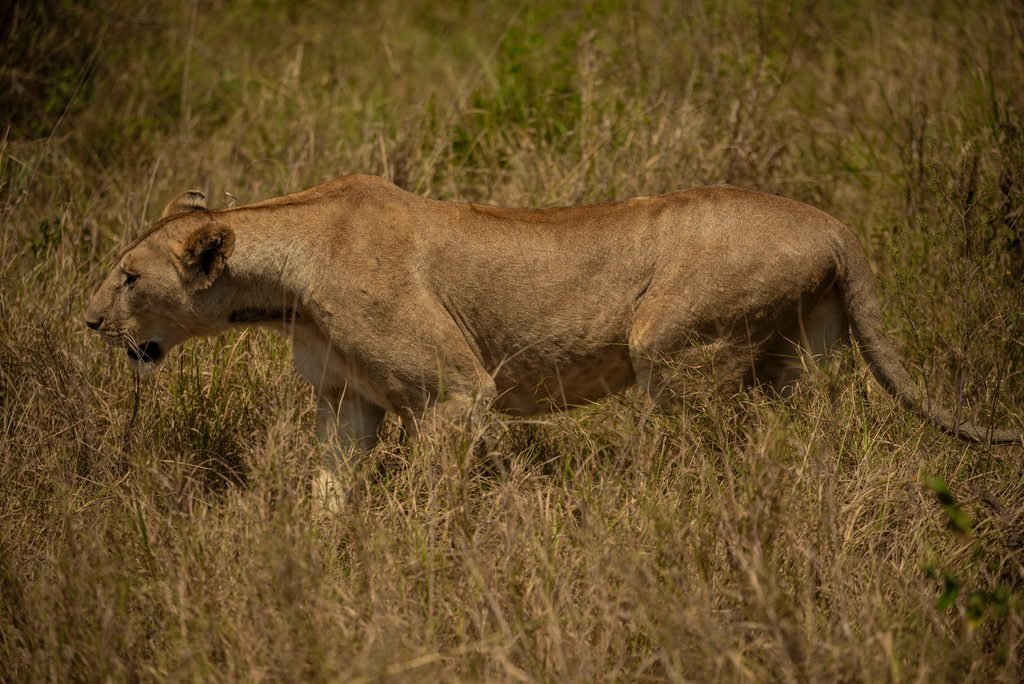
Lions
Where there are huge concentrations of prey, predators are never far away. Lions are among the most impressive predators to watch during migration season.
Cheetahs
Open plains provide excellent hunting environments for cheetahs, particularly where young or vulnerable animals are present.
Leopards
Leopards are more secretive, but the Serengeti offers opportunities to see them in suitable habitats.
Hyenas
Spotted hyenas are highly adaptable predators and scavengers that play an important role in the ecosystem.
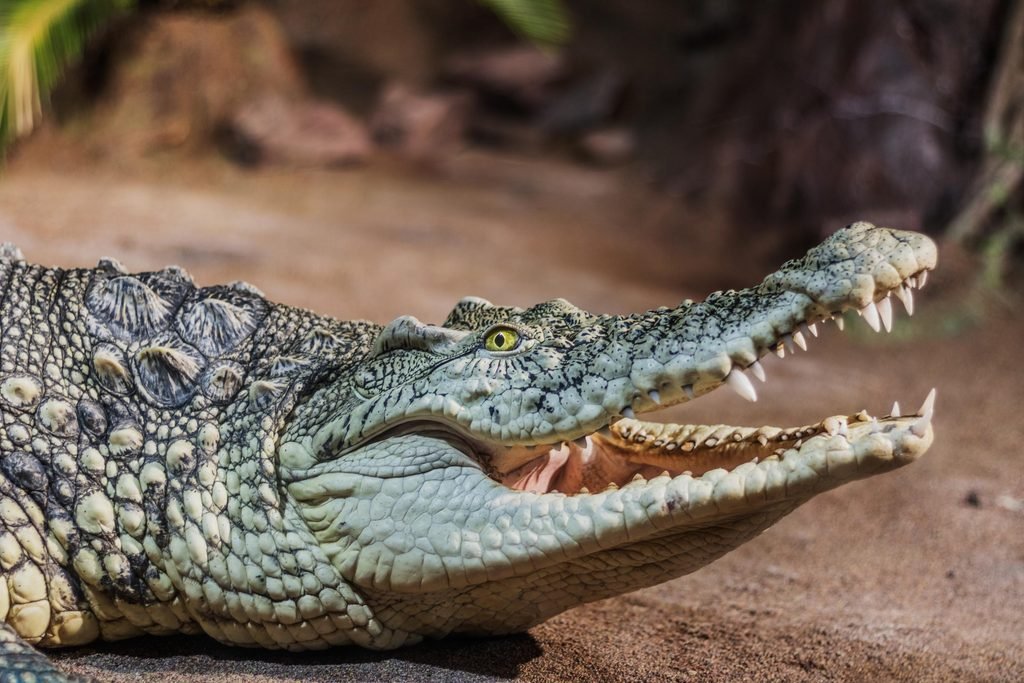
Crocodiles
In river areas, large crocodiles can become part of the migration story, particularly when herds attempt difficult crossings.
When Is the Best Time to See the Great Migration?
The answer depends on the experience you want.
For calving: January to March is generally the key period to consider, particularly around the southern Serengeti and Ndutu area.
For northern Serengeti migration: July to October can be particularly attractive.
For potential river crossings: July to September is often considered a strong period, especially in the northern Serengeti and Mara River region.
However, no responsible safari planner should promise a specific river crossing on a specific date.
Nature decides.
Rainfall patterns can shift the movement earlier or later, and different herds can be in different locations at the same time.
Why Tanzania Is So Special for the Great Migration
Tanzania offers something very important: the migration is not a short seasonal attraction.
The Serengeti is part of a vast ecosystem through which the herds move throughout the year.
This means travellers can experience different chapters of the migration depending on when they visit.
A January safari may focus on newborn calves and green southern plains.
A July safari may focus on the northern Serengeti and the possibility of river crossings.
An October or November safari may reveal the herds beginning their return south.
Each season tells a different story.
Planning Your Great Migration Safari 2026–2028
When planning a Great Migration safari, do not choose your travel dates based only on the phrase “peak migration.”
Instead, think about the experience you personally want.
Ask yourself:
Do I want to see newborn animals?
Consider the southern Serengeti and the calving period.
Do I dream of seeing massive herds near the Mara River?
Consider the northern Serengeti during the main northern migration period.
Do I want a quieter safari with beautiful landscapes?
Consider travelling outside the busiest periods.
Do I want to combine migration with the Big Five?
A longer northern Tanzania itinerary can combine the Serengeti with destinations such as Ngorongoro Crater and Tarangire National Park.
The most important thing is to build your itinerary around the seasonal movement rather than expecting the animals to appear in exactly one location.
How Long Should a Great Migration Safari Be?
For a first-time visitor, around 4–7 days can provide a good introduction to the Serengeti and other northern Tanzania destinations.
A longer safari gives you more flexibility.
This matters because wildlife sightings are never guaranteed.
If you have several days in the Serengeti, you have more opportunities to explore different areas and follow the changing movement of wildlife.
For travellers specifically interested in the migration, spending multiple nights in or around the Serengeti can be particularly valuable.
You are not simply checking off a destination.
You are giving yourself time to experience the ecosystem.
What Makes the Great Migration So Unforgettable?
There is something deeply human about watching millions of animals struggle to survive.
The wildebeest do not know that they are part of one of the world’s most famous wildlife spectacles.
They are simply following ancient instincts.
They move because they need food.
They cross rivers because they need to continue.
They give birth because life continues.
They run from predators because survival matters.
And that is what makes the experience so powerful.
A Great Migration safari is not a wildlife show created for tourists. It is a real, ongoing struggle for survival unfolding across one of Africa’s most remarkable ecosystems.
You are simply fortunate enough to witness part of it.
Book Your Great Migration Safari in Tanzania 2026–2028
If seeing the Great Migration has been a dream for you, Tanzania offers the opportunity to experience this extraordinary natural journey in different ways throughout the year.
At EKO Tanzania Adventures, we can tailor your safari around your preferred travel dates, the migration season you want to experience, the number of travellers in your group, your accommodation preferences, budget, and onward travel plans.
Whether your dream is to watch newborn wildebeest in the southern Serengeti, follow huge herds across the plains, explore the northern Serengeti during river-crossing season, or combine the migration with Ngorongoro Crater and Tarangire National Park, your itinerary can be designed around the experience you want.
The Great Migration is not just something to see.
It is something to feel, remember, and carry with you long after you leave Tanzania.