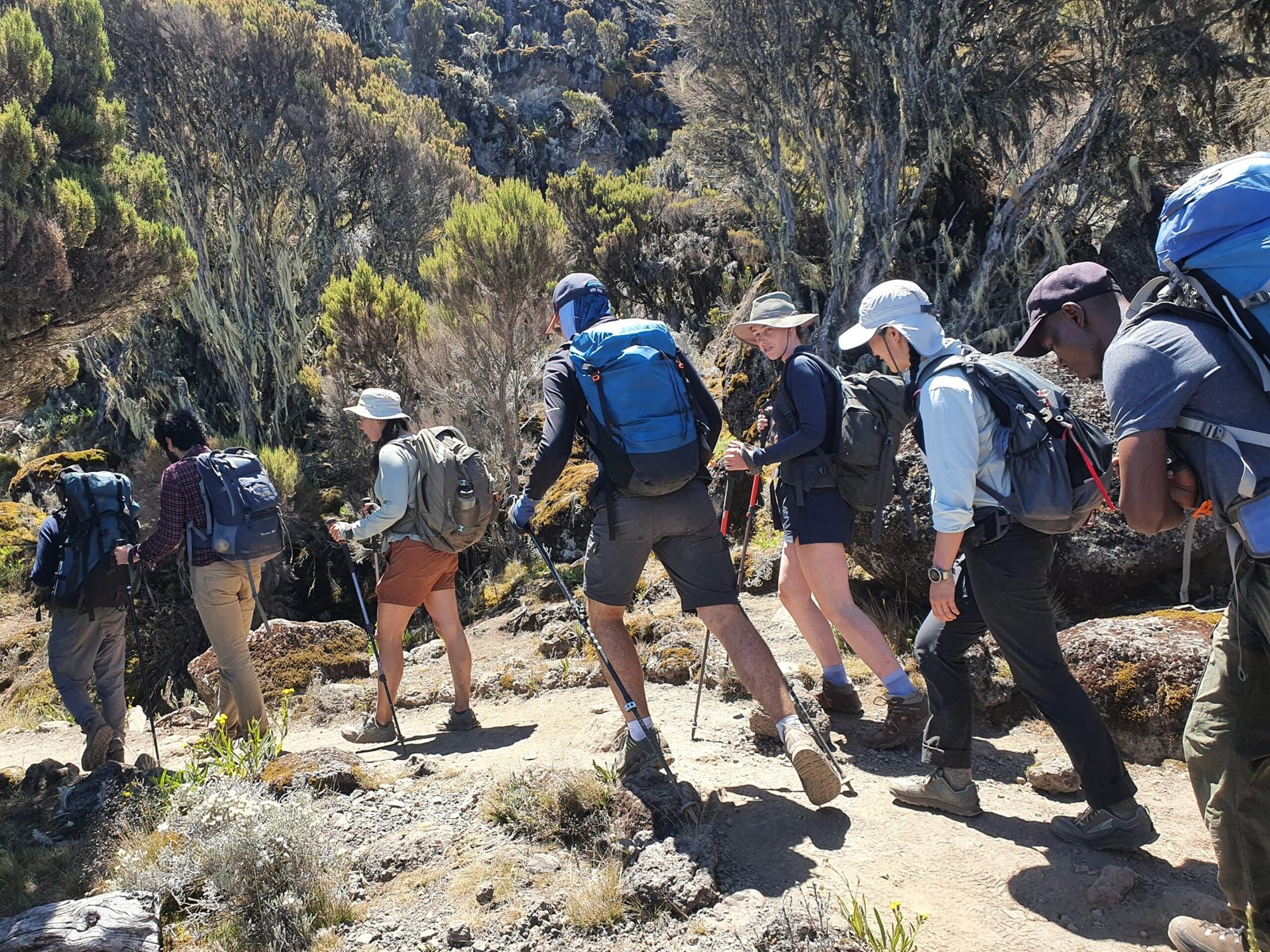
The Ultimate 8-Day Lemosho Route 2026–2028: An Epic Kilimanjaro Summit Adventure to Uhuru Peak: Climbing Mount Kilimanjaro is one of Africa’s greatest trekking experiences, and the 8-Day Lemosho Route is a remarkable choice for travelers who want a longer, scenic, and carefully paced journey toward Uhuru Peak, the highest point in Africa at 5,895 meters (19,341 feet).
The Lemosho Route is especially appealing because it combines beautiful wilderness, dramatic mountain scenery, gradual acclimatization, and a longer approach to the summit. Over eight days, trekkers move from the western side of Kilimanjaro through rainforest, moorland, alpine desert, and finally the high-altitude summit zone.
This itinerary is designed for travelers planning their climb in 2026, 2027, or 2028, including first-time high-altitude trekkers who want to give their bodies sufficient time to adjust to the increasing elevation.
The journey is challenging, but with proper preparation, experienced mountain support, appropriate pacing, and a positive mindset, the 8-day Lemosho Route can become an unforgettable personal achievement.
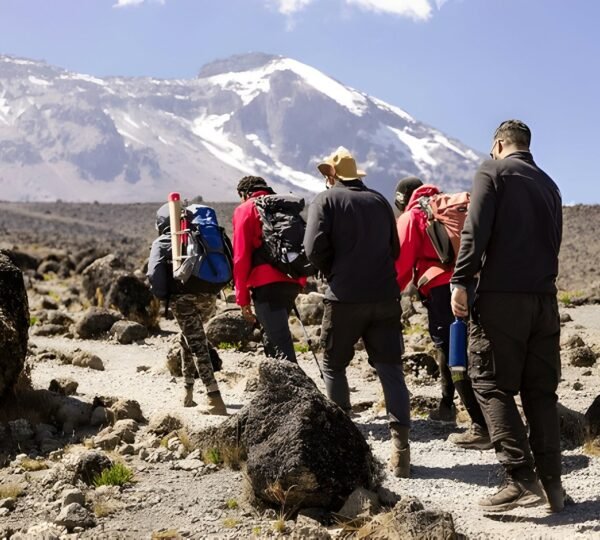
The Ultimate 8-Day Lemosho Route 2026–2028
Why Choose the 8-Day Lemosho Route?: The Ultimate 8-Day Lemosho Route 2026–2028
One of the biggest advantages of the 8-day Lemosho itinerary is the amount of time available for acclimatization.
Rather than rushing toward the summit, the route gradually increases elevation and includes the important principle of climb high, sleep low on suitable sections.
The route also provides spectacular scenery.
You can experience:
- Tropical rainforest
- Giant heather and moorland
- Shira Plateau
- Lava formations
- Barranco Valley
- Karanga Valley
- Alpine desert
- Glacial landscapes
- Uhuru Peak
- Kilimanjaro’s changing vegetation zones
Another major advantage is that the Lemosho approach begins in a relatively remote part of the mountain, giving the trek a wilderness character during its early stages.
8-Day Lemosho Route Itinerary:The Ultimate 8-Day Lemosho Route 2026–2028
Day 1: Londorossi Gate – Mti Mkubwa CampYour Kilimanjaro adventure begins with a transfer from your hotel in Arusha or Moshi toward the western side of Mount Kilimanjaro.
After completing registration procedures at Londorossi Gate, you begin trekking through lush rainforest.
The forest is alive with vegetation and birdlife, and depending on conditions, you may have opportunities to see monkeys.
The trail is relatively short compared with later stages of the climb, allowing your body to begin adjusting to the mountain environment.
You arrive at Mti Mkubwa Camp, where your mountain crew prepares your evening meal.
Enjoy dinner, organize your sleeping area, and rest for the following day’s trek.
Accommodation: Mountain tent
Meals: Breakfast, lunch and dinner
Day 2: Mti Mkubwa Camp – Shira 1 Camp:
After breakfast, leave the rainforest behind and continue toward the moorland zone.
The vegetation becomes shorter as you gain altitude.
The trail gradually opens into spectacular landscapes, with views across the mountain and surrounding plains when weather conditions allow.
Eventually, you reach the Shira Plateau.
Shira is one of Kilimanjaro’s most distinctive landscapes, characterized by open terrain and volcanic formations.
Spend the night at Shira 1 Camp.
Accommodation: Mountain tent
Meals: Breakfast, lunch and dinner
Day 3: Shira 1 Camp – Shira 2 Camp – Moir Hut Area:The Ultimate 8-Day Lemosho Route 2026–2028
Today’s trek continues across the spectacular Shira Plateau.
The trail provides beautiful views of Kilimanjaro’s volcanic landscape and, weather permitting, increasingly impressive views toward Kibo.
You gradually gain elevation while allowing your body more time to adapt.
Depending on the exact route arrangement and camping plan, you may continue toward the Moir Valley area.
The afternoon can be used for rest and acclimatization.
This stage is important because the climb becomes progressively more demanding as oxygen levels decrease.
Accommodation: Mountain tent
Meals: Breakfast, lunch and dinner

The Ultimate 8-Day Lemosho Route 2026–2028
Day 4: Moir Valley – Lava Tower – Barranco Camp
Today is one of the most important acclimatization days.
You climb toward Lava Tower, reaching an altitude of approximately 4,600 meters.
Although you do not sleep at this elevation, spending time higher on the mountain gives your body an opportunity to adapt before descending to Barranco Camp.
This is the classic climb-high, sleep-low approach.
After Lava Tower, descend toward the dramatic Barranco Valley.
The landscape changes dramatically as vegetation becomes sparse and volcanic formations dominate the scenery.
By late afternoon, you arrive at Barranco Camp beneath the impressive Barranco Wall.
Accommodation: Mountain tent
Meals: Breakfast, lunch and dinner
Day 5: Barranco Camp – Karanga Camp
After breakfast, prepare for one of the most memorable sections of the Lemosho Route: the ascent of the Barranco Wall.
Although it looks intimidating from camp, the route is primarily a scrambling trail rather than technical rock climbing.
Your guide will show you where to place your feet and hands while maintaining a safe pace.
Once above the wall, the landscape opens dramatically.
Continue toward Karanga Valley, where the trail rises and falls across a series of ridges.
Arrive at Karanga Camp and spend the afternoon resting.
This relatively shorter day is valuable because it provides additional recovery time before the summit push.
Accommodation: Mountain tent
Meals: Breakfast, lunch and dinner
Day 6: Karanga Camp – Barafu Camp
Today’s trek takes you toward Barafu Camp, the main staging point for the summit attempt.
The landscape becomes increasingly barren as you approach the high-altitude zone.
Once you reach camp, your mountain crew will prepare food while your guide explains the summit schedule.
This is normally an early night.
Try to eat, hydrate, organize your summit clothing, and sleep as much as possible.
Your summit attempt will begin around midnight or in the early hours of the morning, depending on the group’s pace and weather conditions.
Accommodation: Mountain tent
Meals: Breakfast, lunch and dinner

The Ultimate 8-Day Lemosho Route 2026–2028
Day 7: Barafu Camp – Uhuru Peak – Millennium Camp
This is the biggest day of the entire adventure.You begin climbing during the night.
The first stage takes you toward Stella Point along steep, rocky terrain.
The pace is deliberately slow.
Your guide will encourage a steady rhythm, often described as pole pole, meaning “slowly, slowly” in Swahili.
As dawn approaches, the sky can begin changing color over the mountain landscape.
After reaching Stella Point, continue along the crater rim toward Uhuru Peak.
Uhuru Peak – 5,895 meters
Standing at Uhuru Peak is the defining moment of the climb.
At 5,895 meters, you are at the highest point in Tanzania and on the African continent.
Take photographs, celebrate your achievement, and enjoy the moment—but remember that the summit environment is extreme, so your time at the top should be limited according to your guide’s advice and conditions.
After celebrating at Uhuru Peak, descend toward Barafu and continue to Millennium Camp.
The descent is long, but getting lower is extremely important after spending time above 5,000 meters.
Dinner and rest await you at camp.
Accommodation: Mountain tent
Meals: Breakfast, lunch and dinner
Day 8: Millennium Camp – Mweka Gate – Moshi
Your final trekking day begins with breakfast before descending through the rainforest.
The descent can feel surprisingly different after the intensity of summit day.
As you lose altitude, vegetation becomes increasingly dense.
Eventually, you reach Mweka Gate, where your trek officially ends.
After completing the required exit procedures, you meet your transfer vehicle and travel back toward Moshi or Arusha.
A hot shower, comfortable bed, and celebratory meal can be the perfect ending to your Kilimanjaro adventure.
Accommodation: Not included unless an extra night is requested
Meals: Breakfast
8-Day Lemosho Route Elevation Profile
| Day | Route | Approx. Elevation |
|---|---|---|
| 1 | Londorossi – Mti Mkubwa | 2,780 m |
| 2 | Mti Mkubwa – Shira 1 | 3,505 m |
| 3 | Shira – Moir Area | ~4,000 m |
| 4 | Moir – Lava Tower – Barranco | 4,600 m / 3,960 m |
| 5 | Barranco – Karanga | 4,035 m |
| 6 | Karanga – Barafu | 4,640 m |
| 7 | Barafu – Uhuru Peak – Millennium | 5,895 m / 3,800 m |
| 8 | Millennium – Mweka Gate | 1,640 m |
Exact camp locations and elevations can vary depending on the final itinerary, mountain conditions, and park arrangements.
Estimated 8-Day Lemosho Route Cost for 2026–2028
The price of a Kilimanjaro climb varies according to group size, accommodation before and after the trek, crew arrangements, park fees, season, and service level.
A practical planning range for an 8-day Lemosho climb can be:
| Package Type | Estimated Price Per Person |
|---|---|
| Group joining / budget | US$2,100 |
| Mid-range group climb | US$2,500 |
| Private climb | US$2,800 |
| Luxury/private upgrade | US$3,500 |
These figures are indicative planning ranges rather than fixed quotations. Exact costs should be confirmed according to your travel dates, group size, accommodation preferences, and included services.
What Is Included?
A comprehensive 8-day Lemosho package commonly includes:
- Professional mountain guide
- Assistant guides according to group size
- Mountain crew/porters
- Kilimanjaro National Park fees
- Camping fees
- Rescue or applicable mountain fees
- Tents
- Sleeping arrangements according to the package
- Three meals per trekking day
- Drinking water during the climb
- Transportation to the trailhead
- Transportation from the mountain
- Crew wages and required park-related payments
- Summit assistance
Before booking, travelers should receive a written list of inclusions because packages can differ considerably.
What Is Not Included?
Travelers should normally budget separately for:
- International flights
- Tanzania visa
- Travel insurance
- Personal trekking equipment
- Tips for guides, porters, and support staff
- Hotel nights outside the trekking package
- Personal purchases
- Alcoholic beverages
- Laundry
- Optional activities
What Should You Pack?
Packing correctly can make a major difference on Kilimanjaro.
Clothing
Bring layers rather than relying on one heavy jacket.
Recommended items include:
- Moisture-wicking base layers
- Trekking trousers
- Fleece jacket
- Insulated jacket
- Waterproof jacket
- Warm hat
- Sun hat
- Gloves
- Thermal underwear
- Hiking socks
- Waterproof trekking boots
Equipment
You should also consider:
- Headlamp
- Trekking poles
- Sleeping bag suitable for cold temperatures
- Water bottles or hydration system
- Backpack
- Duffel bag for porter transport
- Sunglasses
- Sunscreen
- Lip balm
- Personal first-aid supplies
- Camera
- Power bank
Your trekking company can provide a detailed packing list before departure.
Acclimatization: Why the 8 Days Matter
Altitude is one of the greatest challenges on Kilimanjaro.
The problem is not simply physical fitness. Even very fit people can experience altitude-related symptoms.
The 8-day itinerary provides more time for gradual elevation gain than shorter programs.
Common symptoms of altitude exposure can include:
- Headache
- Fatigue
- Reduced appetite
- Nausea
- Dizziness
- Difficulty sleeping
- Shortness of breath
Trekkers should always tell their guide if they feel unwell.
Severe altitude illness can become dangerous, and descent is the primary response when serious symptoms develop.
Physical Preparation for the Lemosho Route
You do not need to be an elite athlete to attempt Kilimanjaro, but preparation is strongly recommended.
Begin training several weeks or months before your trip.
Useful activities include:
Hiking
Regular hikes help your legs and feet adapt to long days of walking.
Stair Training
Stairs and hill walking can strengthen your legs and improve cardiovascular endurance.
Long Weekend Walks
Gradually increase walking duration so your body becomes comfortable spending several hours on your feet.
Strength Training
Focus on:
- Squats
- Lunges
- Step-ups
- Calf raises
- Core exercises
Mental Preparationhe Ultimate 8-Day Lemosho Route 2026–2028: An Epic Kilimanjaro Summit Adventure to Uhuru Peak
Kilimanjaro is also a mental challenge.
There may be moments when you are tired, cold, uncomfortable, or questioning whether you can continue.
A patient mindset is valuable.
The Importance of Going Pole Polehe Of Ultimate 8-Day Lemosho Route 2026–2028: An Epic Kilimanjaro Summit Adventure to Uhuru Peak
One of the most important lessons on Kilimanjaro is to walk slowly.
Your goal is not to finish each day’s route as quickly as possible.
A slower pace helps conserve energy and gives your body more time to adjust to altitude.
Your guide may repeatedly say:
Pole pole.
It means slowly, slowly.
This simple philosophy is central to many successful Kilimanjaro climbs.
Is the 8-Day Lemosho Route Suitable for Beginners?
Yes, it can be suitable for beginners who are reasonably fit and properly prepared.
However, “beginner-friendly” does not mean easy.
Kilimanjaro remains a high-altitude mountain, and the summit day is physically demanding.
The advantages for beginners include:
- Longer acclimatization period
- Gradual elevation gain
- Scenic route
- Experienced mountain support
- Several days before the summit attempt
- Time to adapt physically and mentally
Previous high-altitude trekking experience can be helpful but is not necessarily required.
Why Lemosho Is a Memorable Kilimanjaro Experience
The Lemosho Route is not simply a path to the summit.
It is a journey through several ecological zones.
You begin in the rainforest, where the mountain feels green and alive.
You then enter the moorland, where giant vegetation and open landscapes dominate.
Higher up, the environment becomes increasingly sparse until you reach the alpine desert.
Finally, the summit zone becomes cold, dry, and dramatically exposed.
This changing landscape makes the climb feel like several adventures within one expedition.
Responsible Kilimanjaro Trekking
A responsible climb should respect both the mountain environment and the people who make the expedition possible.
Travelers should:
- Avoid littering.
- Follow park regulations.
- Use established trails.
- Respect wildlife.
- Minimize unnecessary plastic waste.
- Treat mountain crew members respectfully.
- Follow appropriate tipping practices.
- Avoid pressuring staff to carry unsafe loads or move at unsafe speeds.
A successful summit should also be a responsible one.
Why Choose Eko Tanzania Adventures?
For travelers planning an 8-day Lemosho climb with Eko Tanzania Adventures, the focus can be placed on careful itinerary planning, experienced mountain support, appropriate pacing, safety procedures, and clear communication before the trek.
Before booking, travelers should ask for:
- A detailed day-by-day itinerary
- Full price breakdown
- Inclusion and exclusion list
- Crew arrangements
- Accommodation details
- Equipment recommendations
- Airport transfer arrangements
- Emergency procedures
- Tipping guidance
- Pre-climb briefing information
Clear communication before the trek helps you understand exactly what you are paying for and how the expedition will operate.
Final Thoughts Of The Ultimate 8-Day Lemosho Route 2026–2028 o
The Ultimate 8-Day Lemosho Route 2026–2028: An Epic Kilimanjaro Summit Adventure to Uhuru Peak;The The Ultimate 8-Day Lemosho Route offers an extraordinary way to experience Mount Kilimanjaro.
From the forests of the western mountain to the open Shira Plateau, from Barranco’s dramatic cliffs to the high-altitude landscape around Barafu, every day brings a different perspective of Africa’s highest mountain.
The greatest challenge arrives on summit night, when you climb toward Uhuru Peak at 5,895 meters. The final ascent requires patience, determination, and careful pacing.
But the journey is not only about reaching the summit.
It is about the changing landscapes, the mountain crew supporting you, the friendships developed along the trail, the quiet mornings above the clouds, and the feeling of standing on one of Africa’s most iconic peaks.
For travelers planning a 2026, 2027, or 2028 Kilimanjaro adventure, the 8-day Lemosho Route provides a comprehensive trekking experience with valuable acclimatization time and spectacular scenery.
Your Kilimanjaro journey begins long before you reach Uhuru Peak. Prepare well, walk pole pole, respect the mountain, and make every step count.