The Ultimate 5-Day Marangu Route 2026–2028: An Unforgettable Kilimanjaro Summit Adventure to Uhuru Peak
Explore Tours
The Ultimate 5-Day Marangu Route 2026–2028;The 5-Day Marangu Route is one of the most popular ways to climb Mount Kilimanjaro, especially for travelers who prefer sleeping in mountain huts rather than camping in tents. Known as the Coca-Cola Route, Marangu follows a relatively direct trail through rainforest, moorland, alpine desert, and finally the high-altitude volcanic landscape leading to
For 2026–2028, this itinerary can be an attractive option for climbers with limited vacation time and a controlled budget. However, the five-day schedule is physically demanding because it provides less acclimatization time than a six-day Marangu itinerary. Current 2026 market data shows published 5-day Marangu prices varying considerably, with examples around $1,250–$1,500 at the lower end, while a broader 2026 price index reports published group-climb prices of about $2,067–$2,450 among four operators.
5-Day Marangu Route at a Glance:The Ultimate 5-Day Marangu Route 2026–2028
| Item | Details |
|---|---|
| Duration | 5 Days / 4 Nights |
| Route | Marangu Route |
| Highest Point | Uhuru Peak – 5,895 m |
| Starting Point | Marangu Gate – approximately 1,860 m |
| Accommodation | Mountain huts |
| Difficulty | Moderate to challenging |
| Best for | Climbers with limited time who prefer huts |
| Lowest advertised price found | About US$1,250 per person |
| More realistic budget target | About US$1,400–US$1,600+ per person |
| Recommended alternative | 6-Day Marangu for better acclimatization |
The lowest advertised price I found for a 5-day Marangu climb is US$1,250 per person, while another published 2026–2028 rate starts around US$1,502. These are advertised starting prices rather than a universal market price, so the exact quotation depends on group size, inclusions, season, accommodation before/after the climb, transfers, and operator arrangements.
5-Day Marangu Route Itinerary
Day 1: Marangu Gate to Mandara Hut:The Ultimate 5-Day Marangu Route 2026–2028
Your Kilimanjaro adventure begins at Marangu Gate, where registration and park formalities are completed before you enter Kilimanjaro National Park.
The first section of the trek passes through beautiful montane rainforest. The environment is very different from the landscapes around Moshi, with tall trees, ferns, moss, birds and occasional wildlife.
The pace should be deliberately slow. Your guide will normally encourage you to walk “pole pole”, allowing your body to gradually adjust to increasing altitude.
After several hours, you arrive at Mandara Hut, where you spend your first night on the mountain.
The first day is not normally the most physically difficult, but it establishes an important rhythm for the rest of the climb: slow walking, hydration, eating properly and conserving energy.
Day 2: Mandara Hut to Horombo Hut:The Ultimate 5-Day Marangu Route 2026–2028
After breakfast, you leave the rainforest behind and enter the moorland zone.
The vegetation gradually changes as you climb higher. Giant heathers and distinctive high-altitude plants replace the dense forest.
On clear days, you may begin getting impressive views of Kibo, the volcanic cone that contains Uhuru Peak, as well as Mawenzi Peak.
The hike to Horombo is considerably longer than Day 1. By the time you reach the hut, you may begin noticing the effects of altitude.
This makes hydration and nutrition particularly important.
At approximately 3,720 m, Horombo is a significant acclimatization point on Kilimanjaro. Unfortunately, on the standard five-day itinerary, you do not have a dedicated extra acclimatization day here.
That is one of the major differences between the five-day and six-day Marangu programs.
Day 3: Horombo Hut to Kibo Hut:The Ultimate 5-Day Marangu Route 2026–2028
Today you enter the high-altitude alpine desert.
The landscape becomes increasingly barren as you approach Kibo. Trees disappear and vegetation becomes sparse. You cross the Saddle, the broad high-altitude area between Kibo and Mawenzi.
The environment can feel dramatically different from the rainforest where your climb began.
This is an important day because you are sleeping at approximately 4,700 m before your summit attempt.
Once you arrive at Kibo Hut, the objective is to rest, eat and prepare your equipment for the summit push.
Your summit attempt usually begins around midnight or shortly afterward.
Because the summit day is extremely demanding, you should avoid unnecessary activity at Kibo.
Day 4: Kibo Hut – Uhuru Peak – Horombo Hut:The Ultimate 5-Day Marangu Route 2026–2028
This is the most challenging and unforgettable day of the entire adventure.
You normally begin climbing during the night, when temperatures can fall significantly below freezing.
The trail rises slowly through steep volcanic terrain toward Gilman’s Point at approximately 5,681 m.
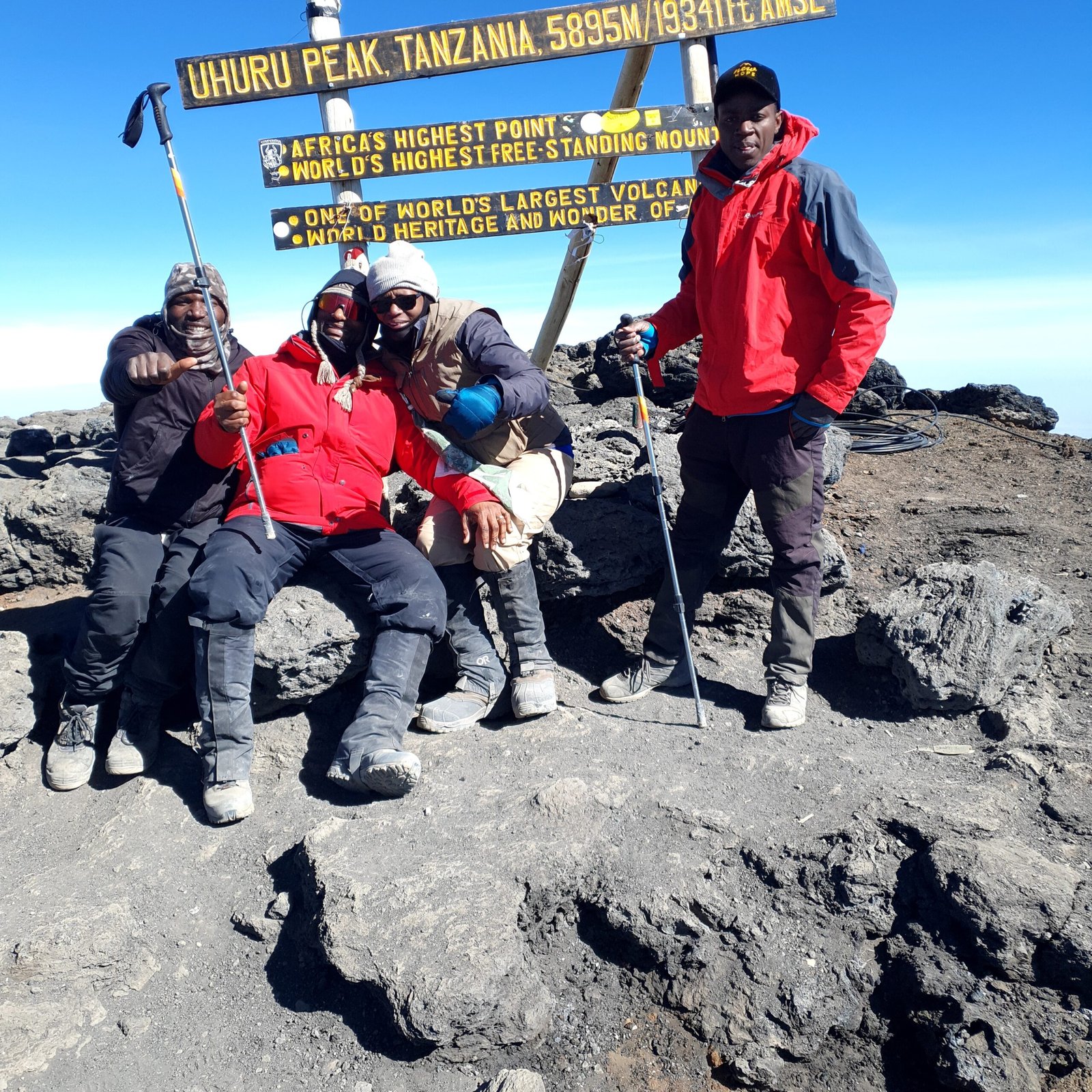
From there, successful climbers continue around the crater rim toward Stella Point, before making the final push toward Uhuru Peak, the highest point in Africa at 5,895 m.
Reaching Uhuru Peak is the defining moment of the trek.
At the summit, you can celebrate your achievement, take photographs and enjoy the extraordinary high-altitude environment—weather permitting.
But the day is far from finished.
After the summit, you descend toward Kibo Hut and continue to Horombo Hut, where you spend the night.
The descent can be surprisingly tiring because of the long distance covered during the day.
Day 5: Horombo Hut to Marangu Gate:The Ultimate 5-Day Marangu Route 2026–2028
After breakfast, you begin the final descent.
You retrace the trail through the moorland and rainforest until you reach Marangu Gate.
At the gate, your trek officially ends. After completing the necessary procedures, you can transfer back to Moshi or your next destination.
For many climbers, this final descent is filled with mixed emotions: relief, exhaustion and pride after completing one of Africa’s most famous mountain adventures.
What Is Included in the 5-Day Marangu Price?:The Ultimate 5-Day Marangu Route 2026–2028
When looking at a quotation, it is important not to compare prices based only on the headline figure.
A proper Kilimanjaro package will normally include many of the following:
Usually Included
- Kilimanjaro National Park entry/conservation fees
- Marangu hut accommodation
- Mountain rescue fee
- Professional mountain guide
- Assistant guides where required
- Porters
- Porter wages
- Cook and mountain meals
- Drinking water during the trek
- Park registration
- Government taxes and applicable fees
- Airport or hotel transfers, depending on the package
- Emergency mountain communication arrangements
- Pre-climb briefing
- Trekking support
TANAPA confirms that park-related payments are handled through the government’s electronic payment system and that applicable fees include VAT.
What Is Usually Not Included?
Your personal budget should also allow for:
- International flights
- Tanzania visa
- Travel insurance
- Personal trekking equipment
- Personal clothing
- Tips for guides, porters and support crew
- Hotel accommodation before or after the climb if not included
- Alcoholic beverages
- Personal snacks
- Laundry
- Personal expenses
- Additional rescue or medical expenses outside the package terms
Tips are particularly important to budget for separately, because the mountain crew forms an essential part of the climbing operation.
The Minimum Price for 2026–2028:The Ultimate 5-Day Marangu Route 2026–2028
If your main goal is to find the lowest realistic starting price, I would structure the package like this:
Budget 5-Day Marangu Climb:The Ultimate 5-Day Marangu Route 2026–2028
Starting from: US$1,250 per person
However, I would recommend presenting it commercially as:
5-Day Marangu Route from US$1,400 per person
rather than promising every traveler a $1,250 price.
Why?
Because the final cost can change depending on group size, season, inclusions and logistical arrangements. Published prices in 2026 demonstrate a wide range. One advertised package starts at $1,250, another published rate is around $1,502, while a current independent price index reports a much higher range among its surveyed operators.
Therefore, US$1,250 should be treated as a promotional/lowest starting price, not as the universal cost of a five-day Marangu climb.
Package Price Table
| Package | Starting Price |
|---|---|
| 5-Day Marangu – Budget/Group Joining | From $1,250 pp |
| 5-Day Marangu – Standard Budget | From $1,400 pp |
| 5-Day Marangu – Mid-Range Service | From $1,600+ pp |
| Private Climb | Quotation required |
Prices should be confirmed at the time of booking because park fees, crew costs, seasonality, group size and other operating costs can affect the final quotation.
Why Choose the Marangu Route?
1. Mountain Huts Instead of Tents
Marangu is famous because it uses mountain huts rather than tented camps. This can be particularly appealing to travelers who don’t want to sleep in a tent during their Kilimanjaro adventure.
2. A Relatively Direct Route
The trail follows a straightforward approach from Marangu Gate toward Kibo and then returns along the same general route.
3. Suitable for Limited Vacation Time
Five days allows travelers with a tight schedule to attempt Kilimanjaro without spending a full week or more on the mountain.
4. Beautiful Environmental Changes
You experience several ecological zones:
Rainforest – Moorland – Alpine Desert – Arctic/Summit Zone
This makes the journey much more than simply walking uphill.
5. Uhuru Peak
The ultimate objective is Uhuru Peak at 5,895 m, the highest point on Mount Kilimanjaro and the highest mountain summit in Africa.
An Important Point About the 5-Day Itinerary
Although five days is attractive from both a time and price perspective, acclimatization is the main concern.
A current 2026 route guide specifically notes that the standard five-day Marangu itinerary provides less acclimatization time and recommends six days for climbers who can accommodate the additional day.
Another 2026 guide similarly describes the six-day option as offering additional acclimatization compared with the five-day itinerary.
This does not mean that every five-day climber will fail to reach the summit. Rather, it means that the shorter schedule gives your body less time to adapt to altitude.
For anyone prioritizing a more gradual acclimatization profile, adding an extra day at Horombo is worth considering.
Who Is the 5-Day Marangu Route Best For?
The five-day itinerary can suit:
- Experienced hikers with previous high-altitude experience
- Travelers with limited vacation time
- Physically fit adventurers
- People who strongly prefer hut accommodation
- Travelers looking for a lower-cost Kilimanjaro option
- Climbers who understand the additional acclimatization challenge
For a first-time high-altitude trekker with flexible time, six-day Marangu deserves serious consideration because the additional acclimatization day can make the experience more gradual.
Preparation for Your 5-Day Kilimanjaro Climb
Even though Marangu is sometimes called the easier Kilimanjaro route, you should not treat it as an easy walk.
You should prepare through:
Physical Training
Include:
- Long-distance walking
- Hill walking
- Stair climbing
- Cardiovascular exercise
- Leg-strength exercises
- Weekend hikes with a backpack
Altitude Preparation
Fitness does not completely prevent altitude sickness. A strong climber can still experience altitude-related symptoms.
Walk slowly, stay hydrated and communicate immediately with your guide if you feel unwell.
Essential Equipment
Your packing list should include:
- Waterproof hiking boots
- Warm thermal layers
- Fleece jacket
- Down or insulated jacket
- Waterproof jacket and trousers
- Warm hat
- Gloves
- Headlamp
- Trekking poles
- Sunglasses
- Sunscreen
- Water bottles or hydration system
- Sleeping bag
- Backpack/daypack
- Personal medication
- Snacks
- Headwear for sun protection
Your guide or operator should provide a detailed packing list before departure.
5-Day Marangu Route: Complete Cost Summary
For a travel website or package page, you can present the price clearly like this:
5-Day Marangu Route Kilimanjaro Climb 2026–2028
Price: From US$1,250 per person
Recommended standard budget: US$1,400–US$1,600+ per person
Duration: 5 days / 4 nights
Accommodation: Mountain huts
Summit: Uhuru Peak – 5,895 m
Starting point: Marangu Gate
Best feature: Hut accommodation and a direct Kilimanjaro route
Important: The lowest price is subject to group size, availability, season, inclusions and final quotation.
Final Thoughts
The Ultimate 5-Day Marangu Route 2026–2028 offers a classic Kilimanjaro experience combining rainforest scenery, high-altitude landscapes, comfortable hut accommodation and the ultimate goal of standing at Uhuru Peak.
For travelers searching specifically for the cheapest possible package, a starting price of approximately US$1,250 per person is currently advertised in the market. A safer commercial price to advertise for a standard budget package would be from US$1,400 per person, with the final quotation depending on what is included.
The most important consideration, however, should not be price alone. A five-day climb is a compressed itinerary, and the additional acclimatization provided by a six-day Marangu itinerary can be valuable.
For Eko Tanzania Adventures, this package can therefore be positioned as an affordable, professionally guided Kilimanjaro adventure for travelers who have limited time, while clearly explaining the difference between the lowest promotional price and the final customized package price.
Related Tours
Your Tanzania journey starts here
Ready to Plan Your Perfect Adventure?
Whether you want a Tanzania safari, Mount Kilimanjaro climb, Zanzibar beach holiday or a combination of all three, EKO Tanzania Adventures will help you plan it around your travel dates, group and budget.
Helpful Tanzania travel information