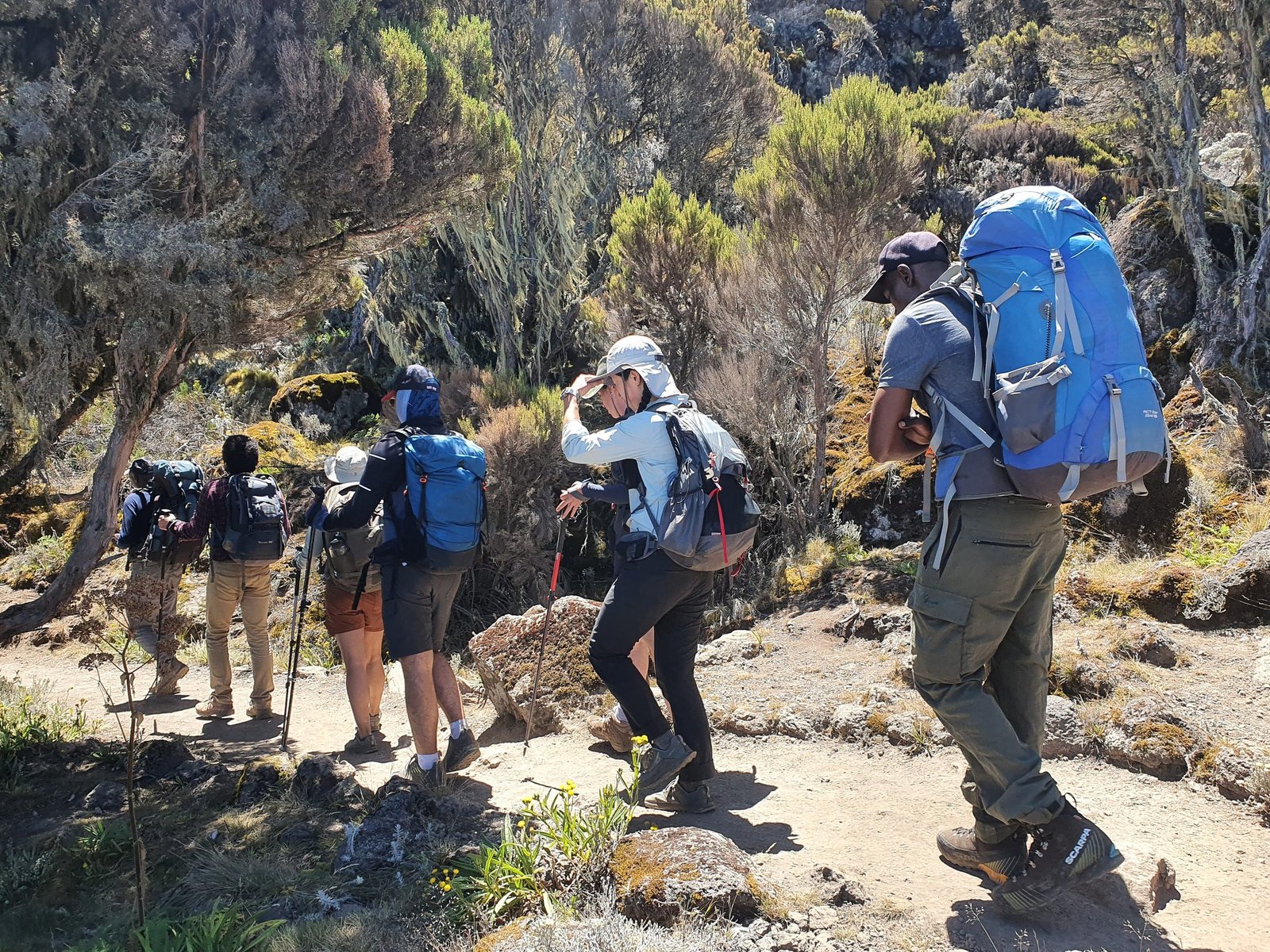
Overview of the 7-Day Machame Route Kilimanjaro Climb
The Best 7-Day Machame Route Kilimanjaro Climb 2026–2027;The 7-Day Machame Route Kilimanjaro Climb is one of the most rewarding ways to experience Mount Kilimanjaro, Africa’s highest mountain, standing at 5,895 meters (19,341 feet) above sea level. Known for its beautiful scenery, changing landscapes, and challenging trekking sections, the Machame Route offers an unforgettable adventure for climbers who want to reach Uhuru Peak while exploring the mountain’s remarkable natural environments.
With EKO Tanzania Adventures, your journey is organized around safety, preparation, experienced mountain guides, and a gradual ascent through several ecological zones. You will begin in the lush rainforest, continue across heathland and moorland, cross dramatic alpine terrain, and eventually reach the high-altitude environment near the summit.
Often called the “Whiskey Route,” Machame is popular because of its scenic variety and the opportunity to experience the mountain from different perspectives. However, the route is physically demanding, and the seven-day itinerary requires proper preparation, a steady walking pace, and attention to altitude acclimatization.
This climb is suitable for reasonably fit hikers who are comfortable walking for several hours a day and are prepared for changing weather conditions. Previous high-altitude experience can be helpful but is not essential. No one can guarantee a successful summit, and your guide will monitor your condition throughout the climb.
Whether you are planning your first Kilimanjaro adventure or fulfilling a long-held dream of standing on Africa’s highest point, EKO Tanzania Adventures can help you prepare for a meaningful and well-organized mountain experience.

Why Choose the Machame Route?
The Machame Route is an excellent choice for trekkers who want a scenic and challenging Kilimanjaro experience. It approaches the mountain from the south and follows a varied trail through forests, open ridges, valleys, and high-altitude landscapes before joining the summit approach.
One of its major attractions is the variety of scenery. During the first days, you walk beneath the rainforest canopy, where moss-covered trees and dense vegetation create a completely different atmosphere from the open landscapes higher on the mountain. As you gain altitude, the vegetation becomes shorter, the views open up, and the landscape gradually changes into a dramatic alpine environment.
Another advantage is the route’s climbing-high-and-sleeping-lower profile on certain days. The trek from Shira to Lava Tower and then down toward Barranco, for example, provides an opportunity to gain elevation during the day before sleeping at a lower altitude. This can support acclimatization, although individual responses to altitude vary.
The seven-day itinerary also allows more time than the six-day version for adjusting to the mountain environment. Even so, the ascent remains demanding, and climbers should never assume that extra days completely eliminate altitude-related risks.
Day 1: Machame Gate to Machame Camp
Elevation: Approximately 1,800 m to 3,000 m
Hiking time: Approximately 5–7 hours
Habitat: Montane rainforest
Your adventure begins after breakfast in Moshi or Arusha, depending on your arrangements. Your EKO Tanzania Adventures team will meet you for a briefing and transfer to Machame Gate, where the registration process and final preparations take place.
At the gate, you will meet your mountain crew and begin walking through the lush rainforest on the lower slopes of Kilimanjaro. The trail can be muddy or slippery, particularly during rainy periods, so sturdy hiking boots and trekking poles are useful.
The forest is filled with towering trees, thick undergrowth, ferns, and moss-covered branches. Listen for birds calling from the canopy, and keep an eye out for colobus monkeys or other forest wildlife, although sightings are not guaranteed.
Your guide will establish a comfortable pace, encouraging you to walk slowly and conserve your energy. This approach, commonly expressed as “pole pole” in Swahili, is especially important as you begin gaining altitude.
After several hours on the trail, you will reach Machame Camp, situated above much of the dense forest. Your mountain crew will prepare camp, and you will have time to rest, enjoy a warm meal, and prepare your equipment for the following day.
Your guide will check how you are feeling and explain what to expect on the next stage. Drink fluids regularly, eat well, and report any symptoms of altitude sickness.
Accommodation: Mountain tents at Machame Camp.
Meals: Lunch, dinner, and drinking water according to your package arrangements.
Day 2: Machame Camp to Shira Camp
Elevation: Approximately 3,000 m to 3,840 m
Hiking time: Approximately 4–6 hours
Habitat: Heathland and moorland
After breakfast, leave the rainforest behind and follow a trail that climbs across steeper ground and rocky ridges. As you gain altitude, the vegetation becomes less dense, and the views gradually expand across the surrounding countryside.
This section provides a clear sense of how quickly Kilimanjaro’s environment changes. The tall trees of the lower slopes give way to giant heathers, grasses, shrubs, and unusual high-altitude plants.
The climb can feel strenuous because the trail continues upward, but your guide will help you maintain a steady pace. Take short breaks when needed, protect yourself from the sun, and drink water throughout the day.
As you approach the Shira Plateau, the landscape becomes more open. On clear days, you may enjoy impressive views of Mount Meru in the distance and the rugged slopes of Kilimanjaro.
Eventually, you will reach Shira Camp, where your crew will prepare your tent and meals. The camp’s open setting makes it a wonderful place to appreciate the mountain scenery and the changing light toward evening.
After dinner, rest and prepare for the next day’s longer trek. Although you may feel energetic, avoid unnecessary exertion because your body is still adjusting to the altitude.
Accommodation: Mountain tents at Shira Camp.
Meals: Breakfast, lunch, and dinner.
Day 3: Shira Camp to Lava Tower and Barranco Camp
Elevation: Approximately 3,840 m to 4,630 m at Lava Tower, then down to 3,960 m at Barranco Camp
Hiking time: Approximately 6–8 hours
Habitat: Alpine desert and high-altitude moorland
Today is an important day for both scenery and acclimatization. After breakfast, you will leave Shira Camp and cross the plateau toward Lava Tower, a striking volcanic rock formation rising above the surrounding landscape.
The trail gradually climbs through increasingly rugged terrain. Vegetation becomes sparse, the air grows colder, and the landscape takes on the stark character of an alpine desert.
As you approach Lava Tower, you may notice that walking feels more demanding than it did at lower elevations. This is normal for many climbers, but headaches, nausea, dizziness, unusual fatigue, or worsening breathlessness should never be ignored. Tell your guide immediately if you feel unwell.
Depending on conditions and the group’s progress, you will stop for lunch around the Lava Tower area before descending toward Barranco Camp. This descent is an important part of the day: you gain elevation before returning to a lower sleeping altitude.
The trail offers dramatic views of cliffs, ridges, and the enormous mountain landscape. As you approach Barranco Valley, you may see the distinctive giant groundsels and lobelias that thrive in Kilimanjaro’s high-altitude environment.
Barranco Camp sits beneath the impressive Barranco Wall, which you will climb the following morning. The surrounding cliffs create a spectacular setting, especially when clouds move across the mountain.
Enjoy dinner, keep warm, and prepare for the next stage. Follow your guide’s advice regarding hydration, rest, and symptoms of altitude illness.
Accommodation: Mountain tents at Barranco Camp.
Meals: Breakfast, lunch, and dinner.

Day 4: Barranco Camp to Karanga Camp
Elevation: Approximately 3,960 m to 4,035 m
Hiking time: Approximately 4–5 hours
Habitat: Alpine desert
After an early breakfast, begin the ascent of the famous Barranco Wall. From camp, the wall can look intimidating, but the route follows a established scrambling trail that most properly prepared trekkers can negotiate with the guidance of their mountain team.
You will use your hands for balance in some sections, so move carefully, pay attention to your guide, and allow other climbers enough space. This is not a technical rock-climbing route under normal conditions, but it requires concentration and sure footing.
As you gain the top of the wall, you will be rewarded with remarkable views of the valleys and ridges surrounding Kilimanjaro. The changing perspectives make this one of the most memorable parts of the Machame Route.
The trail then follows a series of ridges and valleys toward Karanga Camp. Although the net elevation gain is relatively small, the repeated ascents and descents can make the walk tiring.
Your guide will maintain a manageable pace and encourage you to conserve energy for the summit attempt. Once you arrive at camp, enjoy lunch or a warm drink, depending on the schedule, and take time to rest.
The afternoon is generally an opportunity to recover, hydrate, and prepare for the higher camp ahead. Your mountain crew will provide dinner and explain the next day’s route.
Accommodation: Mountain tents at Karanga Camp.
Meals: Breakfast, lunch, and dinner.
Day 5: Karanga Camp to Barafu Camp
Elevation: Approximately 4,035 m to 4,640 m
Hiking time: Approximately 3–5 hours
Habitat: Alpine desert
Today you will climb toward Barafu Camp, the high camp used for the summit attempt. The route crosses rocky terrain with limited vegetation, and the increasing altitude makes a slow, steady pace especially important.
Although the hiking distance is shorter than on some previous days, the thinner air can make the ascent feel challenging. Follow your guide’s instructions, take breaks when needed, and avoid rushing to keep up with faster trekkers.
On arrival at Barafu Camp, you will have time to settle into your tent, organize your summit equipment, and rest. Your guides will review the summit plan, discuss the expected weather, and check that you have the clothing, headlamp, gloves, and other essential equipment required for the night ascent.
You will usually have an early dinner and try to sleep before the summit attempt. Because departure is generally around midnight, conserving energy is essential.
The summit night is physically demanding, and conditions can be very cold and windy. Your guide will assess the group’s condition and the weather before proceeding. If anyone develops concerning altitude symptoms, safety takes priority over reaching the summit.
Accommodation: Mountain tents at Barafu Camp.
Meals: Breakfast, lunch, and early dinner.

Day 6: Barafu Camp to Uhuru Peak and Mweka Camp
Elevation: Approximately 4,640 m to 5,895 m, then descending to approximately 3,080 m
Hiking time: Approximately 10–15 hours in total
Habitat: Alpine desert and upper mountain slopes
This is the most demanding and potentially emotional day of your Kilimanjaro climb. After resting at Barafu Camp, you will begin the summit attempt during the night, accompanied by your experienced mountain guides.
The trail climbs steadily through darkness and cold conditions toward Stella Point on the crater rim. The terrain is steep and rocky, and progress may feel slow because of the altitude. Your guides will set a careful pace and monitor how everyone is coping.
As dawn approaches, the horizon may begin to glow with changing colors. Reaching Stella Point is a significant achievement, but the journey to Uhuru Peak continues along the crater rim.
If conditions and your physical state allow, continue toward Uhuru Peak, at 5,895 meters, the highest point in Africa. Standing at the summit is a remarkable moment after days of effort, preparation, and perseverance. You can take photographs, appreciate the surrounding landscape, and celebrate your achievement, subject to weather and safety conditions.
After spending an appropriate amount of time at the summit, begin the descent toward Barafu Camp. The descent requires concentration because loose gravel and fatigue can increase the risk of slipping.
After a short rest and refreshments at Barafu, continue down toward Mweka Camp. The lower elevation generally provides more oxygen, although the long descent can be hard on tired legs and knees.
Once you arrive at Mweka Camp, enjoy a warm meal and a well-earned rest. Your mountain crew will help you settle in after one of the longest days of the entire trek.
Reaching Uhuru Peak is the goal, but summit success cannot be guaranteed. If your guide determines that continuing would be unsafe, turning around is the correct decision.
Accommodation: Mountain tents at Mweka Camp.
Meals: Breakfast, lunch, and dinner, arranged around the summit schedule.
Day 7: Mweka Camp to Mweka Gate and Departure
Elevation: Approximately 3,080 m to 1,640 m
Hiking time: Approximately 3–5 hours
Habitat: Montane rainforest
After breakfast, begin the final descent through the rainforest toward Mweka Gate. Compared with the summit day, the air will feel richer in oxygen, and the forest will become greener as you lose elevation.
The trail can be muddy and slippery, so take your time and use trekking poles if you have them. Your legs may be tired after the long summit descent, and careful footing remains important.
As you walk through the forest, enjoy the final opportunity to appreciate Kilimanjaro’s natural diversity. The sounds of birds, the thick vegetation, and the warmer air provide a welcome contrast to the cold, exposed terrain near the summit.
At Mweka Gate, you will complete the required exit procedures and receive your summit certificate if you have reached the corresponding official summit point. Your guide and mountain crew will congratulate you on completing the trek.
Your vehicle will then transfer you to Moshi or Arusha, depending on your arrangements. After several days on the mountain, a hot shower, comfortable bed, and relaxed meal can feel especially rewarding.
If you are continuing with a Tanzania safari or Zanzibar holiday, EKO Tanzania Adventures can help coordinate the next stage of your travel.
Accommodation: Not included after the climb unless requested.
Meals: Breakfast and any additional meals specified in your package.
Estimated Cost of the 7-Day Machame Route Kilimanjaro Climb 2026–2027
The cost of climbing Mount Kilimanjaro depends on the number of climbers, group size, travel season, service standards, and the inclusions in the package. The following figures are indicative estimates for a guided seven-day climb, not a confirmed quotation.
| Service level | Estimated price per person |
|---|---|
| Budget group climb | $1,800–$2,200 |
| Standard group climb | $2,000–$2,700 |
| Private climb | $2,500–$3,500 |
| Premium private climb | $3,500–$5,000+ |
Prices can change with park fees, applicable taxes, crew wages, equipment, transport, and the level of service. Ask EKO Tanzania Adventures for a current quotation based on your dates and group size.
What Is Included in the Kilimanjaro Climb?
The final package should clearly specify which of the following services are included:
- Park entrance and applicable camping fees.
- Required rescue and conservation charges.
- Professional mountain guides and supporting crew.
- Porter support and camp staff according to the agreed service standard.
- Mountain tents and camping arrangements.
- Meals on the mountain and treated drinking water.
- Transfers between the agreed meeting point and the mountain gate.
- Pre-climb briefing and equipment checks.
- Emergency procedures and communication arrangements according to the operator’s setup.
- Applicable taxes and levies listed in the quotation.
What Is Not Included?
Unless specifically stated in your quotation, the following are generally excluded:
- International flights and airport taxes.
- Tanzanian visa fees.
- Travel insurance covering high-altitude trekking and emergency evacuation.
- Personal hiking equipment, including suitable boots, sleeping bag, and warm clothing.
- Hotel accommodation before or after the climb.
- Tips for guides, porters, cooks, and other mountain crew.
- Personal purchases, snacks, and drinks outside the agreed package.
- Optional activities and additional services not listed in the confirmed itinerary.
How to Prepare for the Machame Route
Physical preparation is an important part of a successful Kilimanjaro experience. Start training several months before your planned departure, if possible. Regular walking, hiking on hills, stair climbing, and cardiovascular exercise can help you build endurance.
Practice walking for several hours with a daypack and wear the hiking boots you intend to use on the mountain. This helps you identify discomfort before the trek begins.
Pack clothing in layers so you can adjust to changing temperatures. Essential items generally include moisture-wicking base layers, insulating layers, a waterproof outer jacket and trousers, warm gloves, a hat, a headlamp, sunglasses, sunscreen, and a suitable sleeping bag.
Hydration, regular meals, and adequate rest are also important. Follow your guide’s instructions and tell the crew promptly if you experience a headache, nausea, dizziness, unusual fatigue, or other symptoms that could indicate altitude illness. Severe or worsening symptoms require immediate assessment and may mean descending.
Consult a qualified healthcare professional before your climb about altitude-related risks, recommended vaccinations, and any personal medical concerns. Travel insurance should explicitly cover high-altitude trekking to at least 5,895 meters and emergency evacuation.
Best Time to Climb Mount Kilimanjaro
Mount Kilimanjaro can be climbed throughout the year, but weather conditions vary.
January to March: These months often offer good climbing opportunities, with cold conditions at higher elevations and variable weather.
June to October: This is a popular climbing period, often associated with relatively drier conditions, though the mountain’s weather can change quickly.
November to December: Short rains may affect trail conditions, and weather can be variable.
March to May: The long-rain period can bring wetter trails, cloud, and more difficult conditions, although climbs remain possible with suitable preparation.
The best dates depend on your weather preferences, availability, and tolerance for cold or wet conditions. No season guarantees clear skies or a successful summit.
Why Climb with EKO Tanzania Adventures?
A well-organized Kilimanjaro climb requires more than a good itinerary. It depends on professional guiding, appropriate equipment, responsible crew arrangements, careful pacing, and sound decisions when conditions change.
EKO Tanzania Adventures can help you plan your trek around your travel dates, group size, budget, accommodation preferences, and onward travel plans. Before booking, ask for clear information about guide qualifications, emergency procedures, crew welfare, equipment standards, and the services covered by the price.
The seven-day Machame Route offers a memorable journey through rainforest, moorland, alpine desert, and the high mountain environment. With preparation and a responsible approach to altitude, you can focus on the experience while your team supports you throughout the trek.
Book Your 7-Day Machame Route Kilimanjaro Climb 2026–2027
Are you ready to take on the challenge of Mount Kilimanjaro and experience the incredible landscapes leading to Africa’s highest peak?
Contact EKO Tanzania Adventures to plan your seven-day Machame Route climb. Share your preferred dates, number of climbers, trekking experience, equipment needs, and budget so the team can prepare an itinerary and quotation tailored to your trip.
EKO Tanzania Adventures
Website: ekotanzaniaadventures.com
WhatsApp/Call: +255 761 353 184
Email: info@ekotanzaniaadventures.com
Alternative Email: ekotanzaniaadventure@gmail.com
Your Kilimanjaro adventure begins with careful preparation, a steady step, and a willingness to embrace the journey. Take your time, respect the mountain, and ma