The Ultimate 7-Day Rongai Route 2026–2028; is a remarkable way to experience Mount Kilimanjaro from its quieter northern side. Unlike routes approaching the mountain from the south or west, Rongai begins near the Kenya–Tanzania border and gradually crosses toward the eastern and southern slopes before the final summit attempt.
The route is especially attractive to trekkers who want a different perspective of Kilimanjaro, a wilderness-oriented atmosphere, and a gradual multi-day ascent toward Uhuru Peak at 5,895 metres (19,341 feet).
The seven-day itinerary gives travelers valuable time for acclimatization and allows the climb to unfold at a steady pace. It combines forest, moorland, alpine desert, volcanic landscapes, and the spectacular summit environment into one unforgettable expedition.
7-Day Rongai Route at a Glance
| Feature | Details |
|---|---|
| Route | Rongai Route |
| Duration | 7 Days |
| Summit | Uhuru Peak |
| Elevation | 5,895 m |
| Starting side | Northern Kilimanjaro |
| Starting point | Rongai Gate |
| Summit approach | Kibo/Barafu area depending on itinerary |
| Descent | Marangu side |
| Accommodation | Mountain camps |
| Difficulty | Challenging |
| Scenery | Forest, moorland, alpine desert and summit terrain |
| Main attraction | Northern approach and quieter trekking experience |
Why Choose the 7-Day Rongai Route?:The Ultimate 7-Day Rongai Route 2026–2028
Rongai is one of the most distinctive Kilimanjaro routes because of its northern approach.
The northern slopes generally receive less precipitation than the southern and western sides, although weather conditions can still vary significantly.
The route provides a different perspective of the mountain and can appeal to travelers who want a trekking experience that feels somewhat more remote during its early stages.
Another important feature is the seven-day schedule.
Rather than compressing the ascent, the itinerary provides several days for gradually gaining elevation before the summit attempt.
The journey can take you through:
- Montane forest
- Moorland
- Kikelewa and Mawenzi surroundings
- Alpine desert
- Kibo’s high-altitude slopes
- Summit terrain
- Uhuru Peak
7-Day Rongai Route Itinerary
Day 1: Rongai Gate to Simba Camp
Rongai Gate: approximately 2,000 m
Simba Camp: approximately 2,600 m
Your Kilimanjaro adventure begins on the northern side of the mountain.
After completing registration and park formalities at Rongai Gate, you begin walking through the forest.
The first day is generally moderate, allowing you to settle into the rhythm of mountain trekking.
The northern forest can feel peaceful, with vegetation gradually changing as you gain elevation.
You may encounter a variety of birdlife and signs of wildlife, although sightings are never guaranteed.
After several hours of trekking, you arrive at Simba Camp.
This is your first night on the mountain.
Overnight: Simba Camp.
Day 2: Simba Camp to Kikelewa Camp
Simba Camp: approximately 2,600 m
Kikelewa Camp: approximately 3,630 m
Today the trail gradually leaves the forest behind.
The landscape opens into moorland, and the views become wider as you climb higher.
The vegetation becomes shorter and more adapted to the high-altitude environment.
One of the attractions of this section is the growing view of the surrounding Kilimanjaro landscape.
As you approach Kikelewa Camp, the terrain becomes increasingly alpine.
The altitude is now significantly higher than on the first day, so maintaining a slow pace and staying hydrated becomes increasingly important.
Overnight: Kikelewa Camp.
Day 3: Kikelewa Camp to Mawenzi Tarn Camp
Kikelewa Camp: approximately 3,630 m
Mawenzi Tarn: approximately 4,330 m
This is a spectacular section of the Rongai Route.
The trail climbs toward the dramatic volcanic formations around Mawenzi Peak.
Mawenzi is one of Kilimanjaro’s three volcanic cones and creates an impressive backdrop.
The terrain becomes more rugged as you enter the high-altitude zone.
Mawenzi Tarn Camp is located in a striking setting near the volcanic mountain landscape.
Because you are now sleeping above 4,000 metres, your body is being exposed to significantly higher altitude.
This makes rest, hydration, nutrition, and careful pacing particularly important.
Overnight: Mawenzi Tarn Camp.
Day 4: Mawenzi Tarn Camp to Kibo Hut
Mawenzi Tarn: approximately 4,330 m
Kibo Hut: approximately 4,703 m
Today you cross the famous Saddle, the broad high-altitude area between Mawenzi and Kibo.
The environment becomes increasingly barren.
There is very little vegetation, and the landscape takes on the appearance of a volcanic desert.
The summit of Kibo dominates the horizon.
Kibo is the highest of Kilimanjaro’s three volcanic cones and is home to Uhuru Peak.
The hike toward Kibo Hut is not necessarily extremely long, but the altitude makes it physically demanding.
Once at Kibo, the priority becomes rest and preparation.
You will normally eat an early meal and prepare your equipment for the summit attempt.
Overnight: Kibo Hut.
Day 5: Kibo Hut to Uhuru Peak and Horombo Hut:The Ultimate 7-Day Rongai Route 2026–2028
This is the most demanding day of the entire Rongai expedition.
The summit attempt usually begins during the night.
The combination of darkness, cold, steep terrain, fatigue, and extreme altitude makes this section particularly challenging.
Kibo Hut to Gilman’s Point
You climb slowly toward the crater rim.
The trail becomes steeper as you approach the upper slopes of Kibo.
Trekkers generally follow a deliberately slow pace.
Depending on conditions and the guide’s assessment, the climb continues toward Gilman’s Point at approximately 5,685 metres.
Gilman’s Point to Uhuru Peak
After reaching the crater rim, the route continues toward Uhuru Peak.
The final section follows the crater rim toward the highest point.
Eventually, you reach:
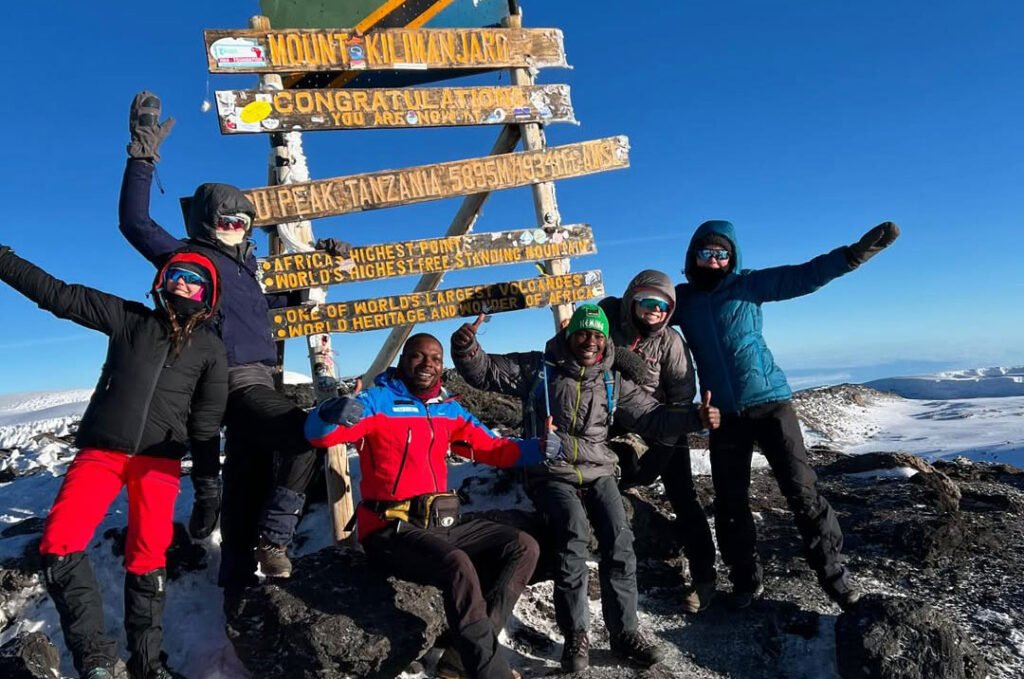
Uhuru Peak – 5,895 metres above sea level.
Standing at Uhuru Peak represents the culmination of the expedition and the highest point of Mount Kilimanjaro.
Because the altitude is extreme, time at the summit is normally limited.
Uhuru Peak to Kibo Hut
After the summit, you begin descending toward Kibo Hut.
The descent is substantially quicker than the ascent, although the steep terrain can still be tiring.
After reaching Kibo, you rest briefly before continuing toward the lower elevation of Horombo Hut.
The dramatic reduction in altitude can provide welcome relief.
Overnight: Horombo Hut.
Day 6: Horombo Hut to Marangu Gate
Horombo Hut: approximately 3,720 m
Marangu Gate: approximately 1,860 m
After the demanding summit day, you continue descending through Kilimanjaro’s ecological zones.
The trail passes through the moorland before eventually returning to the rainforest.
As you descend, the vegetation becomes increasingly dense and the temperatures become warmer.
Eventually, you reach Marangu Gate.
Depending on the specific itinerary, some operators may structure the post-summit descent differently, so travelers should confirm the exact route before booking.
Overnight: Depending on the package arrangement, this may be the final trekking day with transfer to accommodation.
Day 7: Departure or Post-Climb Program
Because Rongai itineraries can be structured differently by operator, the seventh day may be used for the final transfer, relaxation, or continuation to another Tanzania experience.
For travelers flying out of Tanzania, this day can provide useful flexibility for airport transfers.
Others may use the opportunity to continue with:
- A Tanzania safari
- A cultural experience
- An Arusha excursion
- A Zanzibar beach holiday
- Additional accommodation and recovery
The exact Day 7 arrangement should be confirmed in your booking itinerary.
Important Note About Rongai Itinerary Variations
Unlike a simple point-to-point hiking trail, Kilimanjaro itineraries can be arranged in slightly different ways.
The 7-Day Rongai Route may have variations in:
- Camp names
- Daily distances
- Summit-night structure
- Descent route
- Final overnight arrangement
Therefore, travelers should always request the exact day-by-day itinerary before paying for the climb.
The itinerary should specify where you sleep each night, the expected hiking time, elevation changes, and the descent route.
The Most Memorable Highlights of the Rongai Route
1. Northern Approach
Rongai provides a different perspective of Mount Kilimanjaro compared with routes beginning on the southern or western sides.
2. Quieter Atmosphere
The route’s northern approach can provide a more peaceful trekking atmosphere, although visitor numbers vary by season.
3. Mawenzi Peak
The dramatic volcanic formations around Mawenzi are among the visual highlights of the journey.
4. The Saddle
The expansive high-altitude landscape between Mawenzi and Kibo creates an unforgettable volcanic environment.
5. Uhuru Peak
The ultimate goal is the summit of Uhuru Peak at 5,895 metres.
How Difficult Is the 7-Day Rongai Route?
The 7-Day Rongai Route is a challenging high-altitude trek.
One of the most important things to understand is that Rongai’s trail characteristics do not eliminate altitude-related challenges.
At higher elevations, trekkers may experience:
- Headaches
- Fatigue
- Nausea
- Reduced appetite
- Dizziness
- Difficulty sleeping
- Shortness of breath
Altitude affects individuals differently.
Physical fitness is helpful but does not guarantee that a person will avoid altitude-related illness.
The mountain guide’s instructions should always be followed, particularly if symptoms develop or become worse.
Training for the 7-Day Rongai Route
Preparation should ideally begin well before your arrival in Tanzania.
Build Hiking Endurance
Regular hiking is one of the most effective ways to prepare.
Gradually increase both distance and elevation.
Practice Uphill Walking
Include:
- Hills
- Stairs
- Incline treadmill sessions
- Long uphill walks
Strengthen Your Legs
Useful exercises include:
- Squats
- Lunges
- Step-ups
- Calf raises
Improve Cardiovascular Fitness
Walking, cycling, jogging, and swimming can help improve endurance.
Practice Long Trekking Days
Occasionally complete several hours of continuous walking so your body becomes accustomed to prolonged activity.
Acclimatization on the Rongai Route
Acclimatization is essential.
The seven-day itinerary provides more time for your body to adjust than compressed itineraries.
The route gradually moves from approximately 2,000 metres to more than 4,000 metres before the summit.
The section around Mawenzi can be particularly useful for exposing trekkers to higher elevation before the summit attempt.
However, acclimatization cannot completely eliminate altitude risk.
If you experience significant or worsening symptoms, tell your guide immediately.
What to Pack for the 7-Day Rongai Route
Kilimanjaro passes through several climatic zones, so your equipment must be suitable for very different conditions.
Clothing
Bring:
- Moisture-wicking base layers
- Trekking trousers
- Fleece jacket
- Warm insulated jacket
- Waterproof outer layer
- Thermal underwear
- Warm hat
- Gloves
- Hiking socks
Footwear
Use comfortable, waterproof hiking boots that are already broken in.
Essential equipment
You should also consider:
- Headlamp
- Trekking poles
- Sleeping bag
- Backpack
- Duffel bag
- Water bottles or hydration system
- Sunglasses
- Sunscreen
- Personal toiletries
- Personal medication
- Small first-aid supplies
Always request a final packing list from your trekking operator before departure.
Food and Hydration During the Climb
A seven-day mountain expedition requires consistent energy.
Meals should provide adequate calories and a mixture of carbohydrates and protein.
Hydration is equally important.
Drink regularly during the day.
At higher elevations, appetite can decrease, so snacks can be useful when full meals become difficult to consume.
Best Time to Climb the Rongai Route
Kilimanjaro is climbable throughout much of the year, but weather conditions differ between seasons.
Many travelers prefer the generally drier periods.
Commonly preferred periods include:
- January to February
- June to October
- Some periods around December
The wetter periods can produce muddy trails and cloudier conditions, particularly in lower forest areas.
Even during traditionally favorable months, mountain weather can change rapidly.
Estimated Cost of the 7-Day Rongai Route
The price of a seven-day Rongai climb depends on several factors.
These may include:
- Group size
- Private or shared climb
- Travel season
- Park fees
- Mountain crew
- Meals
- Camping equipment
- Transfers
- Pre- and post-climb accommodation
- Equipment rental
- Additional services
When comparing quotations, look beyond the advertised headline price.
A complete quotation should clearly identify:
Park fees + guides + mountain crew + accommodation + meals + transportation + transfers + included equipment + excluded costs.
Travelers should also confirm payment schedules and cancellation conditions.
7-Day Rongai vs Other Kilimanjaro Routes
Each route has its own characteristics.
| Feature | Rongai | Machame | Lemosho | Marangu |
|---|---|---|---|---|
| Starting side | North | South | West | South |
| Typical accommodation | Camping | Camping | Camping | Huts |
| Scenery | Northern wilderness and alpine terrain | Highly varied | Highly varied | Forest, moorland and alpine zones |
| Route character | Northern approach | Scenic and adventurous | Scenic and gradual | Classic and established |
| Acclimatization | Good on longer itineraries | Good on longer itineraries | Strong on longer itineraries | Depends on itinerary |
Rather than choosing solely according to popularity, travelers should consider the route’s scenery, duration, accommodation style, acclimatization profile, and personal trekking preferences.
Who Is the 7-Day Rongai Route Suitable For?
The route may appeal to travelers who:
- Want to approach Kilimanjaro from the north
- Prefer a quieter trekking environment
- Want a seven-day expedition
- Enjoy wilderness and mountain scenery
- Are comfortable camping
- Have reasonable physical fitness
- Want additional time for acclimatization
- Want to combine Kilimanjaro with a Tanzania safari afterward
It is suitable for determined first-time trekkers as well as experienced hikers, provided they prepare properly and understand the challenges of high altitude.
Tips for a Successful Rongai Climb
Follow the pole pole principle
The Swahili expression “pole pole” means slowly.
On Kilimanjaro, a controlled pace is far more useful than rushing.
Stay hydrated
Drink consistently throughout the trek.
Eat regularly
Your body requires energy even if your appetite decreases.
Protect yourself from the sun
Use sunscreen, sunglasses, and appropriate head protection.
Dress in layers
Temperatures can change dramatically during the expedition.
Keep your summit equipment accessible
Do not bury your warmest clothing at the bottom of your luggage.
Communicate with your guide
If you feel unwell, report your symptoms immediately.
Combining Rongai With a Tanzania Safari
One of the advantages of completing your Kilimanjaro expedition in northern Tanzania is the possibility of combining the mountain adventure with a safari.
After recovering from the climb, travelers can consider visiting destinations such as:
- Tarangire National Park
- Ngorongoro Conservation Area
- Serengeti National Park
- Lake Manyara National Park
A combined Kilimanjaro and Tanzania safari holiday can provide an excellent contrast between mountain trekking and wildlife viewing.
Travelers with additional time can also continue to Zanzibar for a beach and cultural holiday.
Final Conclusion:The Ultimate 7-Day Rongai Route 2026–2028
The Ultimate 7-Day Rongai Route 2026–20288; offers an extraordinary opportunity to experience Mount Kilimanjaro from its northern side while gradually progressing toward the highest point in Africa.
The journey combines the peaceful northern approach with dramatic mountain scenery, the volcanic landscape around Mawenzi, the expansive Saddle, the high-altitude slopes of Kibo, and the final ascent toward Uhuru Peak at 5,895 metres.
The seven-day schedule provides valuable time for acclimatization while allowing the expedition to develop at a steady pace. Nevertheless, Kilimanjaro remains a demanding high-altitude environment, and reaching the summit is never guaranteed.
For travelers planning their climb in 2026, 2027, or 2028, preparation should include endurance training, appropriate clothing and equipment, hydration, nutrition, gradual acclimatization, and careful communication with the mountain crew.
The Rongai Route is more than a journey toward a summit. It is an expedition through changing ecosystems, volcanic landscapes, high-altitude wilderness, and some of the most remarkable scenery on Mount Kilimanjaro.